
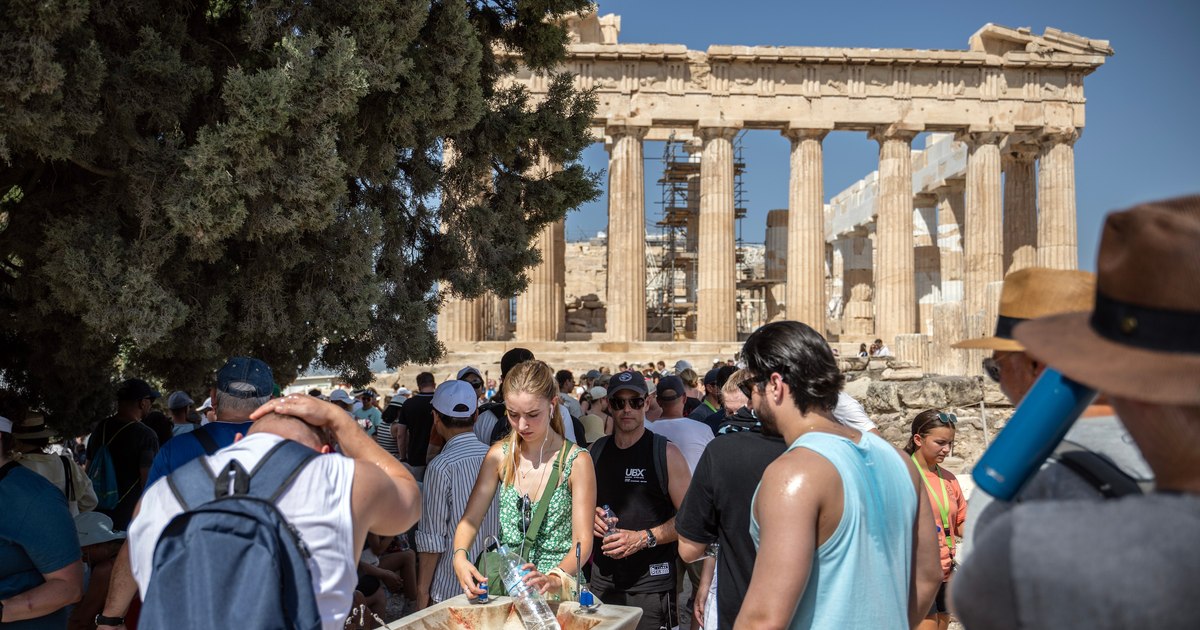
While travel warnings appear almost every day for Greece due to the risk of forest fires, Romanian tourists already on vacation claim that the weather is perfect.
Heatwave in Greece (Archive) – PHOTO Profimedia
In Greece and Cyprus, extreme temperatures soared to 43 degrees Celsius, causing devastating fires. In Greece, a wildfire 90km from Athens sent 10 people to hospital and destroyed several homes and closed schools.
In Cyprus, five villages in Paphos were evacuated and flames destroyed more than eight square kilometers of land. Greek firefighters intervened to help put out the fires in Cyprus.
Meanwhile, Greece and Turkey are experiencing record temperatures of up to 45°C. In Greece, on Thursday the island of Milos recorded 44°C, 42.2°C in Elefsis, +42.1°C in Lamia and over 40°C in Athens. This in the conditions where the usual temperatures fall between 20 and 28 degrees Celsius during this period. Greece remains under the threat of forest fires due to drought and extreme heat.
“<<High summer temperatures in Greece are common>> – someone would say. Or maybe not? However, it is the first time in 50 years that we have had a heat wave since the beginning of June and even with temperatures exceeding 40 degrees in several areas“, draws the attention of Greenpeace Greece.
In Turkey, temperatures exceeded 45 degrees and we haven't even reached the middle of June, they were recorded at 45.7°C at the Mansion.
The nights were also very warm, with lows of 28-30°C.
Archaeological sites in Greece closed due to heat wave
Greece closed several archaeological sites, including the Acropolis in Athens, between 12:00 and 17:00 on Thursday due to the heat wave, with 43 degrees Celsius expected in some regions. The Greek Ministry of Culture took this decision to protect visitors from the risks associated with extreme temperatures.
The Acropolis in Athens is the most visited site in Greece and had nearly 4 million visitors last year. The popular target was also subjected to such a measure in July 2023, during a heatwave episode unprecedented in its duration.
In addition to the Acropolis, sites in Crete, the Dodecanese, the Cyclades and the Peloponnese are closed during the hottest hours of the day. However, famous sites such as Delphi, Olympia and Knossos remain open without interruption.
Weather services forecast 41-42 degrees Celsius in Athens and Attica on Thursday, but at noon the temperature was 37 degrees Celsius. Fire risk remains very high in eight regions. Temperatures are expected to drop starting Friday.
In contrast, Spain, Bulgaria are experiencing severe flooding. In the Spanish city of Murcia, torrential rain flooded streets in less than an hour, and in Bulgaria, hailstones as large as walnuts smashed car windscreens as rain caused massive flooding.
This summer's extreme weather is affecting various regions of the world, causing devastating fires and floods.
Travel warning for Greece due to fire risk
The authorities in Romania issued, a few days ago, a travel warning for Greece due to the increased risk of fires, against the background of extremely high temperatures, which can reach up to 42 degrees Celsius.
“The Ministry of Civil Protection and Climate Crisis warns that, between June 11-14, there will be an increased risk of fires, especially in the regions of Attica, Peloponnese, respectively in mainland Greece – the areas of Viotia, Fthiotida and Fokida“, announced the MAE.
Romanian citizens can request consular assistance at the telephone numbers of the Embassy of Romania in Athens and the Consulate General of Romania in Thessaloniki, also available for emergency situations.
Romanian tourists: “Do you think we're all stupid?”
The travel and vacation groups on Facebook don't feel the heat. While some see the heat wave in Greece as “a stroke of luck”, others argue that the media is exaggerating the subject.
“June? More like August this week… Good luck to those who have been and are around these days. The water? 24 in the north, 26 in the south”, someone posted on the travel group dedicated to Greece, alongside the map with the temperatures of June 12. While some netizens agreed that “it's lucky”, others wrote “Why great luck? That they fry at 40 degrees?“.
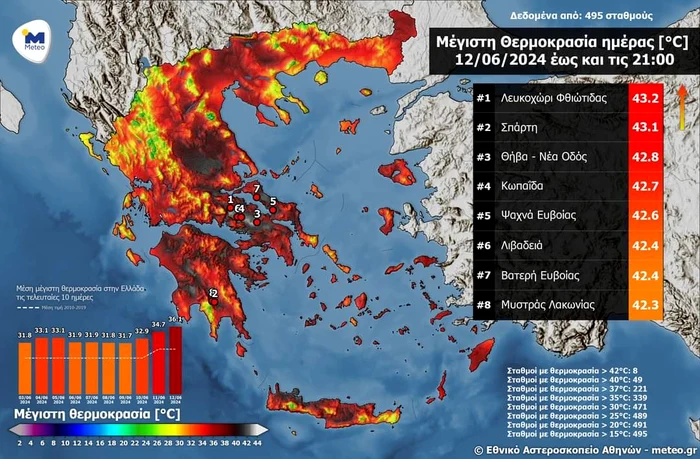
Temperature map Greece June 12 – Photo Facebook Greenpeace Greece
Other people were advising tourists to cancel planned holidays in Greece or Turkey because of the extreme temperatures. On the other hand, someone wrote “Heat wave alert in Greece at 27 degrees! Do they think we're all fools?“.
“Breaking news! In Thassos no one died of heatstrokethe sea is gorgeous, the taverns welcome you with open arms and a smile on their faces, with normal prices, the island came alive.“, a tourist described the atmosphere in one of the most popular destinations in Greece for Romanians.
“It rained a little, lightly, as if to spite the “apocalyptic news” about suffocating heat!,” someone else wrote next to a picture of a rainbow.
Recently, tourism consultant Ana Maria Călin stated for “the truth” that holidays in Greece are not at risk from the fires as the Greek authorities are well prepared. Last year, although there were fires, there were no massive cancellations and tourists were not at risk.
Fires affect areas with dry vegetation, not hotels, and tour operators are prepared to assist tourists in an emergency, she added. Travel insurance and cancellation insurance are recommended, although most do not cover natural disasters, so it is essential that tourists carefully compare the available insurance offers. Tourists are protected, stressed Ana Maria Călin.
Recommendations of the Civil Protection of Greece, in case of extreme weather and fires
Fire protection:
- Avoid burning dry grasses and twigs.
- Do not use equipment that generates sparks, such as saws and welding machines.
- Avoid using outdoor grills and smoking in wooded areas.
- Do not throw away lit cigarettes.
- Field burning is prohibited during the fire protection period.
Self-protection against heat:
- Stay in cool and shady places.
- Use air conditioning or fans.
- Avoid intense physical work in hot environments.
- Eat light meals rich in fruits and vegetables.
- Drink plenty of fluids, avoiding alcohol.
- Pay special attention to children, the elderly and people with chronic conditions.
Recommendations for severe weather conditions:
- Avoid crossing streams and rivers during and after storms.
- Avoid outdoor activities and coastal areas during storms.
- Secure objects that can be blown away by the wind.
- Take shelter immediately in case of hail.
- Check drainage systems to prevent blockages.
