
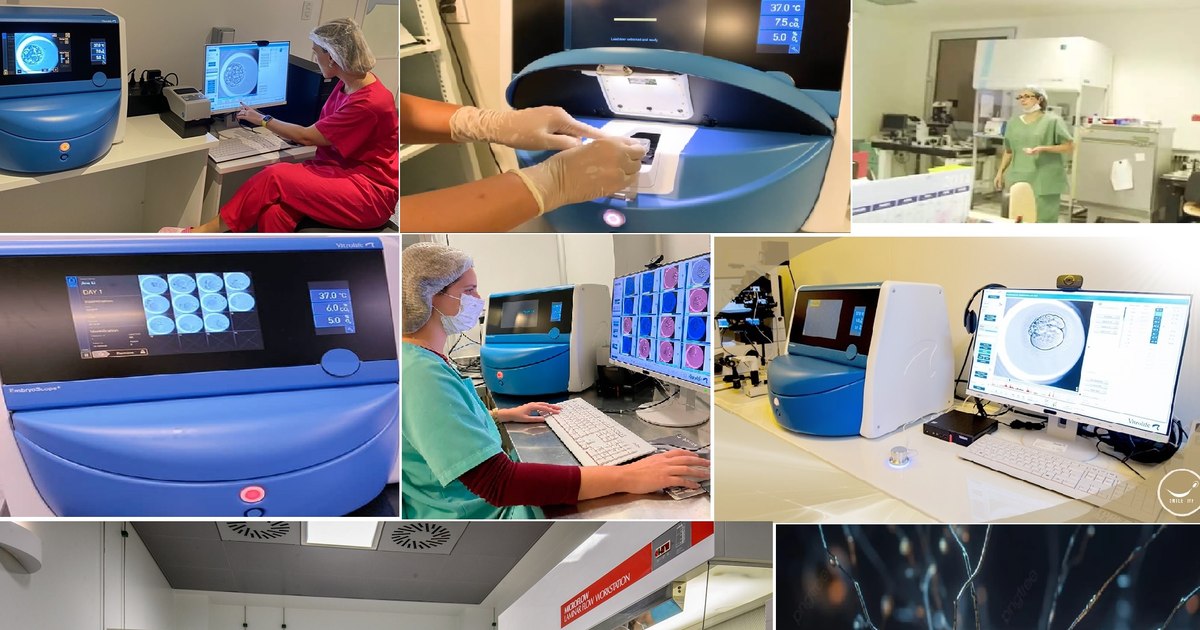
Modern technology, especially artificial intelligence (AI), opens new horizons in the medical field, providing faster and more accurate diagnoses. A significant example of this innovation is the use of AI in cancer diagnosis, a technology that is already making a major impact globally.
Artificial intelligence (AI) opens new horizons in the medical field Collage
Dr. Ángel Alberich, a Spanish engineer with a PhD in engineering, is a pioneer in this field. At just 23 years old, he started developing artificial intelligence algorithms to analyze healthcare data with the aim of improving the medical diagnosis process: “I saw a very wide range of fields in which I could be involved and decided to focus my career in this direction”.
After 17 years of research and development, Dr. Alberich was able to create a system that combines telecommunications engineering with medicine – biomedical imaging – to diagnose conditions such as cancer.
How AI technology works in cancer diagnosis
The technology developed by the company Quibim, founded by dr. Alberich, applies high-precision algorithms to analyze medical images, especially radiological images such as those obtained by magnetic resonance imaging (MRI). AI / AI algorithms quickly process these images to detect abnormalities or tumors that might be overlooked by the human eye.
For example, in the case of an MRI, the algorithm can identify tissue loss or small tumors, thus facilitating an early diagnosis. These discoveries allow for more effective treatment and a better prognosis for patients, given that early interventions are essential in the fight against cancer. “When you already have symptoms, it may be too late to act”admits the Spanish engineer.
Global Impact: How Dr. Alberich’s Technology Saves Lives
To date, the algorithms developed by Quibim have been used to diagnose more than 150,000 cancer cases, a significant success in the prevention and early treatment of the disease. This global impact was made possible by collaborations with medical institutions in more than 24 countries, including the United States, Japan, France and India.
In addition, products developed in Spain are used in leading diagnostic centers, contributing to the improvement of medical precision on a large scale.
Innovative products created by this engineer include QP-Prostatea leader in detecting prostate cancer (the second most common type of cancer in men), QP-Brainwhich automates the quantitative analysis of brain images and helps prevent Alzheimer’s, and QP-Liverdesigned for the personalized management of liver disease. Also, QP-Longan advanced tool for analyzing the mutational status of lung tumors, is among the solutions developed, along with other high-precision diagnostic services.
The transition to active prevention: Alberich’s vision for the future
Another important goal of Ángel Alberich and his team is to promote a preventive health system, where diagnosis does not occur only when symptoms become apparent, but long before they appear.
Thus, with the help of artificial intelligence and medical image analysis, dr. Alberich wants a health care system that prioritizes continuous health monitoring, offering more effective solutions before conditions become difficult to treat.
Thus, with the help of artificial intelligence and medical image analysis, this vision can completely transform the way we manage prevention and medical treatments.
“If we are shown a photo of a highway full of vehicles and asked to count the cars, it is quite a complicated, tedious and time-consuming task. Following artificial intelligence and computational data analysis, we can find out how many cars there are, what colors they are, what size they are, what models they are… and all this in seconds. We do exactly the same thing, only applied to medical cases and health purposes”explained the engineer.
The Challenges and Achievements of Diagnostic Technology: How Innovation Succeeded
Algorithm development requires a rigorously regulated approach, given that products involved in medical diagnosis and treatment must meet extremely strict safety and efficacy standards.
Thus, despite the challenges encountered over the years, such as the need to perfect algorithms and obtain certifications for various international markets, the technology developed by Quibim has managed to meet the rigorous requirements of the medical field.
Cloud technology for global accessibility
Another important step in the implementation of these technologies was the creation of a cloud infrastructure, which allows global access to diagnostics made through AI: “To make the products accessible to everyone, we implemented our artificial intelligence in the cloud. In this space, there are no limits; you can have all the computing resources you need, instead of installing the software in each hospital. In the end, we created a space with multiple connections and a centralized service in the cloud that analyzes the images and sends the results back to the appropriate center. The images travel through the network, the AI analyzes them and then sends them back to their place of origin.”
This approach has significantly expanded the accessibility of advanced diagnostic technologies globally.
“When an MRI image arrives, for example, artificial intelligence they analyze it and return it to the hospital in seconds. With these products we can find out if the patient has a loss of five millimeters of gray tissue in one area or another, if they have a tumor or we can see all the lesions caused by multiple sclerosis. What the human eye cannot see or would have difficulty noticing, the machine does instantly and automatically”the Spanish entrepreneur also mentioned.
Future perspectives in the medical field: a healthier world
For dr. Alberich, the integration of artificial intelligence in medicine is not just a technological step, but a true revolution, destined to transform the way diseases are treated and redefine health management globally. He emphasizes the importance of continuing research and applying innovative solutions to create a more accurate, efficient and accessible medical system.
In conclusion, the use of artificial intelligence in the diagnosis of cancer and other medical conditions is a clear example of how technology can answer some of the biggest challenges of the global health system. With the help of algorithms and advanced infrastructure, early diagnosis and active prevention are now within the reach of a growing number of patients worldwide.
