
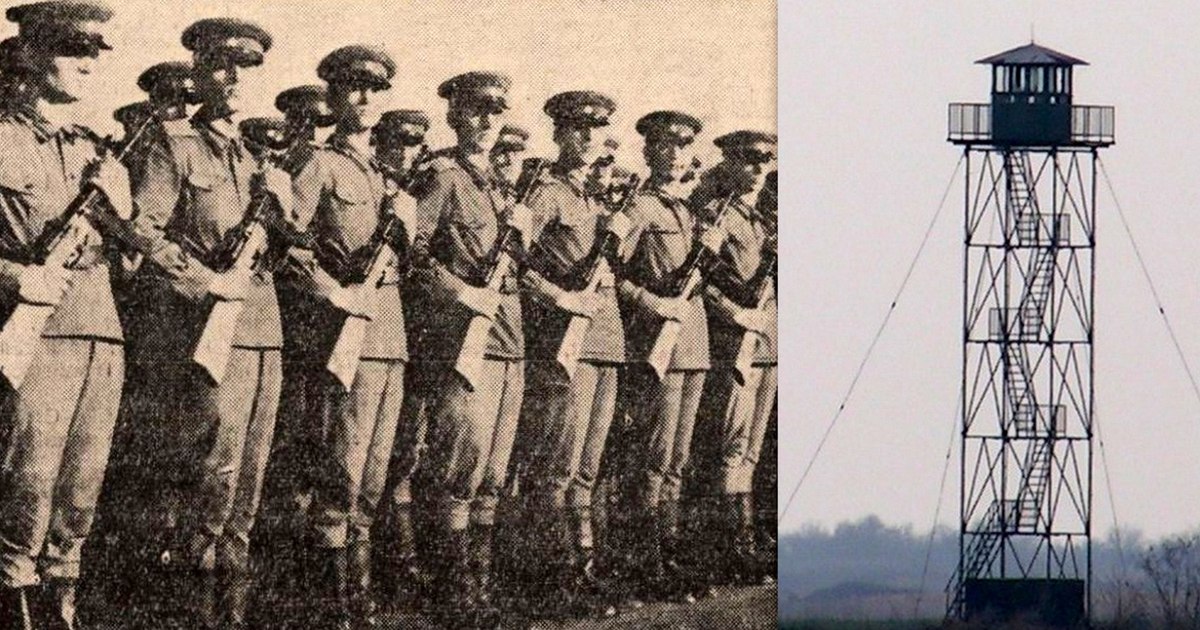
Many Romanians kept the disturbing memories of the abuses they were subjected to or became witnesses, during the fear of leaving Romania, passing the “green strip” from western Romania to the former Yugoslavia.
Border guards in the 1960s. Photo: Defense of the homeland. 1961
Located in western Romania, a few kilometers from the border with Serbia, the city of Jimbolia has a past marked by disturbing stories. In the middle of the eighteenth century, in the Măștinos and almost deserted land from Banat, the first families of swabs, brought from western Germany, were set to transform the area into a productive one.
Jimbolia, landmark of green strip
In the 19th century, Jimbolia, called Hatzfeld, had gradually become a prosperous town, with brick and ceramic factories, related to Timisoara, less than 50 kilometers, through a railway inaugurated since 1857. Here they lived together Romanians, Germans
After the Second World War, the communist regime nationalized the old factories of Jimbolia, and over time, the German community, which dominated the settlement in the past, has diminished. In the decades of communism, the city with over ten thousand inhabitants became known to the Romanians not only as a landmark of Banat, but also as one of the best -guarded areas of the borders of Romania with the former Yugoslavia.
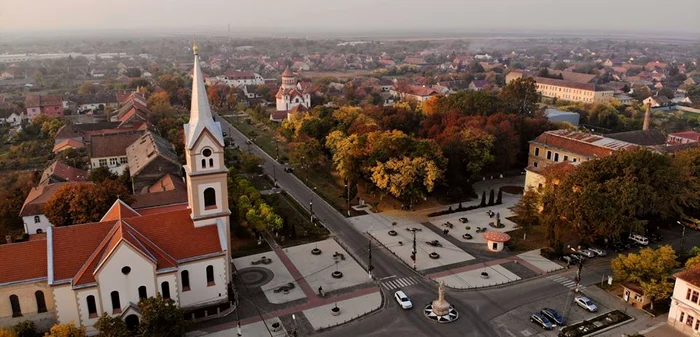
Jimbolia. Photo: Jimbolia City Hall.
The surroundings of Jimbolia were militarized, and those traveling by the train whose route was approaching the borders of Romania were subjected to strict controls by the militiamen.
“Those who did not live in Jimbolia had to present a special permit and explain the reason for their journey. If the police suspected them or were not satisfied with their answers, they were brought in a police station to be interrogated,” They showed testimonies from the 1950s.
The locals also had special passing permits in order to get closer to the border area where they worked. Some found myself on their fields with explosive, used to discourage those who wanted to flee to Yugoslavia. The borders were guarded by military regiments, and the observation stations were often located. The horse patrols were not missing, and the authorities were based on the wolf dogs to inspire fear to the Romanians.
“I lived in Jimbolia, on the last street, 200 meters from the picket. I can not speak or express myself, as a child, about how and what a minor goes by when he hears firearms, summons, executions. Dad was raised from home, beaten, fined and sent to prison. Jimbolia, you were already suspicious. He remembered a local.
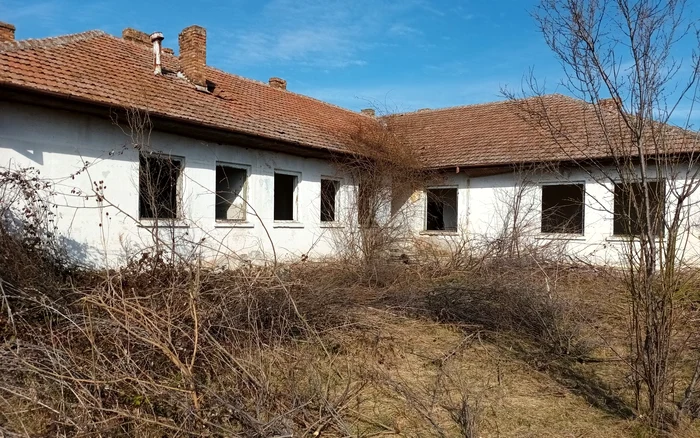
Pichet, Jimbolia. Source: Facebook
Some locals reported that they do not understand the brutal behavior of the border guards, who had families in the locality.
“Some officers had a family in the village, apparently they were the most accurate fathers, husbands, neighbors, friends, but at the picket they became devils – torture, they beat, some used medieval methods of torment.”he remembered another local.
In the more than four decades of communism, thousands of Romanians have dared to risk their lives trying to pass Romania, by approaching Jimbolia, which, despite the fact that they inspire fear, had vulnerable points.
Some of the former soldiers at the Jimbolia border crossing point offered testimonies about how they were trying to stop the fugitives and what their work meant.
The border guards, trained to be ruthless
The border guards received a special instruction, meant to help them cope with any circumstance during the risky missions on the border, a former border police report reported. They were also trained not to show mercy towards the Romanians who forced the fraudulent crossing over the border.
“About those who entered the border device with the thought of passing uncontrolled in the neighboring state, and I refer to the circumstances of the green strip during the RSR period, the soldiers, everything was presented to us in the darkest colors. chicken.”, Wrote the former border.
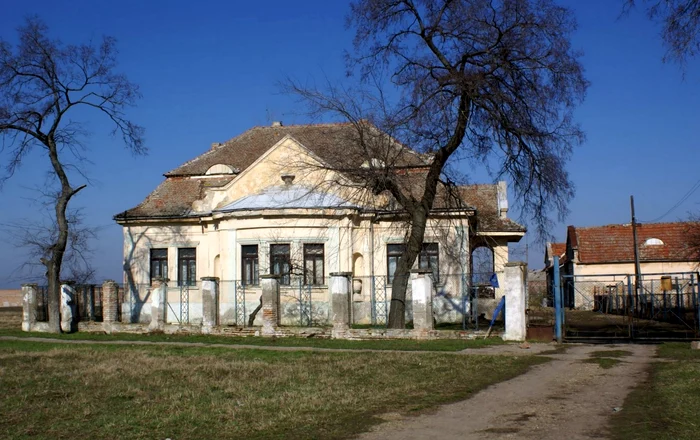
Pichet, Jimbolia. Photo: Facebook
The strip supervised by the border guards was a completely unfriendly area for any civilian, and the military often looked at their job as a fighting mission.
“The soldiers were acting individually, having all the time, especially in the nights of tuxedo, the loaded weapon and the hawthorn. In addition, as I already said, they had inoculated in mind that anyone would have entered their range could only be a dangerous malice. Deviation, anything could happen … If the soldier met the one who wanted to run, they were just the two. Note the former border guards from Jimbolia.
In addition to the risk they assumed to be observed by the border guards, the Romanians trying to leave the country passing the “green strip” welcomed a series of well-hidden obstacles, meant to stop them.
“Until you get as a fugitive to the strip, it shows the control of the traces of passage, a few hundred meters before – in the directions with the highest probability of the possible transfuges – you were in the area of the famous metal carriages, but also of the fixed launchers of light rockets. Pass over there, due to the infernal noise and the lights produced for a few minutes, although in the middle of the night, it was seen on a radius of half a kilometer.says the former border.
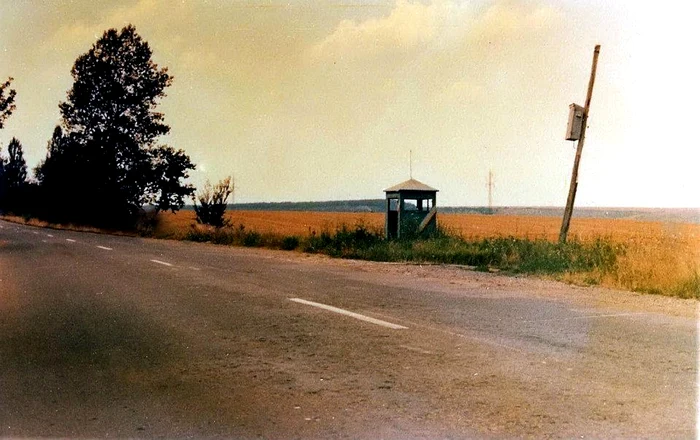
Border crossing. Photo: John Pîrva
However, he confesses that, in the early 1980s, when for 18 months he was a border on the western border, he was protected from confrontations and tried to avoid incidents.
“If I met in the district a brigade of one hundred beets, I did not start asking all the bulletins. Then, I did not take down all the trips from the busy bus that brought the workers in the city at night, hungry and tired, hoping to find among them any possible fugitive. With the driver, on the list of supporters of the border guards, I guarantee the lack of headaches, etc. ”, This note.
Women, abused by the bars
The stories of the Romanians who forced the passing of the western border in the 1980s reveal a much more brutal image of the border guards. George Sava, one of the Romanians who fled the country in 1989, reported on the abuses that occurred during one of his escape attempts in Romania, over the “Green Border” with the former Yugoslavia.
On the morning of October 20, 1989, George Sava, a young man from Lupeni, together with his friend, left for the western border of Romania with the intention to flee the country. The two were caught by the border guards near the town of Otelec, and shortly afterwards were taken to the jimbolia border unit.
“The two or three cells, as they were there, were arrested. I think in total there were about 70 and some people, gathered from all over the Romanian borders. There were brought Romanians even from Yugoslavia, from the border with Austria, young people who closed in containers, from Romania, with water, Austria. The Romanian relationship later arrived in the US, according to the “Places of the Memory of the Nation” platform, made by the Non-Profit Post Bellum organization.
During the time spent in Jimbolia, George Sava did not only bear the crush, but also attended the abuse of the border guards.
“The border guards, about 11 at night, took the girls to the investigation. In fact, I felt that they did not take them to the investigation, but they took them to rape them, which happened with the women arrested at that time,” he reports. After three days spent in the arrest of the position of border guards from Jimbolia, both George Sava and his friend were released. In the 1990s, the Romanian left the country, managing to emigrate to Canada.
The cruelty of the Romanian border guards
After three failed attempts to cross the border of Romania in Yugoslavia, John Pîrva managed to leave the country, in 1981, facing his fear of being caught by the Romanian border guards or ending on the dangerous fields of the “green border”.
Arriving in the US and then returned, after 20 years, to Romania, John Pîrva published, in 2011, the book “Memories of a border”, in which he told his risky adventure, reminiscent of the cruelty with which some of the Romanian border guards met the fugitives.
“” I was also caught at the border and I was beaten, but other Romanians remained with their physical sequelae after they were hit by the border guards. Many Romanians were killed. A soldier told that he could go out almost daily, as in a kind of permission, from his picket, “reported John Pîrva.
The military man had been praised, after he had drunk, that he had mocked the bodies of women killed on the green strip, which he had to transport to the morgue of Oravița. Other border guards, troops subordinate to the Ministry of Interior, were waiting for the opportunity to escape themselves to Yugoslavia, and deserts in this way were frequent, some testimonies from the communism.
