
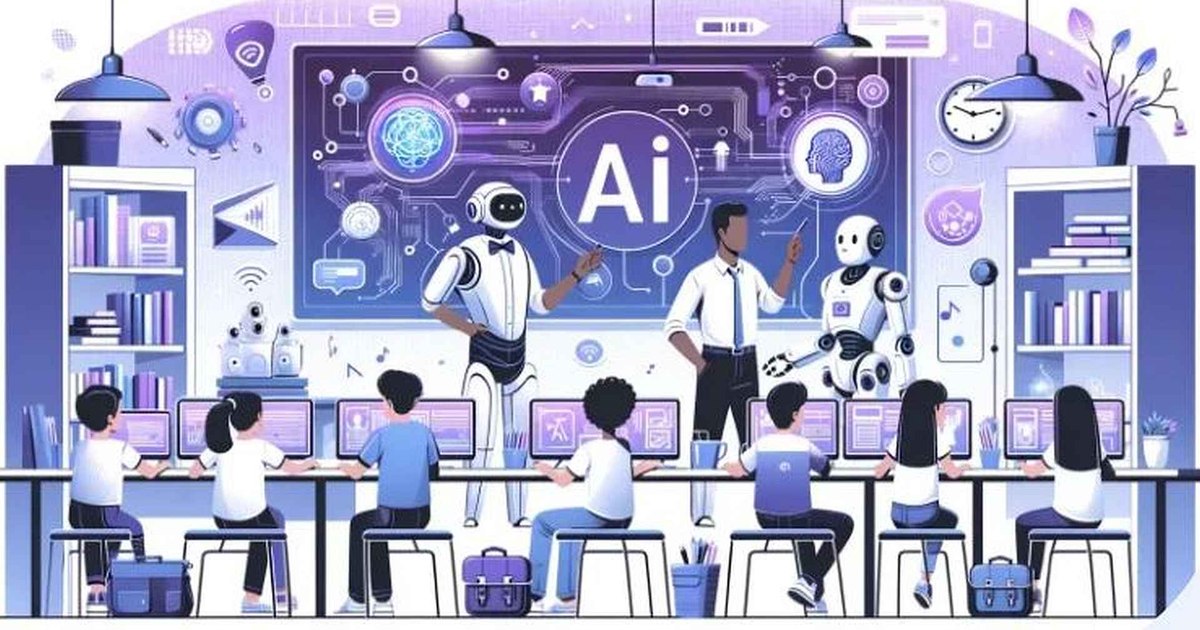
Through collaboration between teachers, students, parents and technology experts, we can harness the potential of AI to create a more inclusive, efficient and future-ready education system.
Artificial Intelligence (AI) is already central to discussions about the future of education, with the potential to completely transform the way we learn and teach. However, for AI to have a positive impact, the technology must be adopted in a responsible, equitable and inclusive way, taking into account the needs of all students. Here are the main ways AI can support education and the challenges we need to address to successfully make this transition.
Automating administrative tasks and freeing up teachers’ time
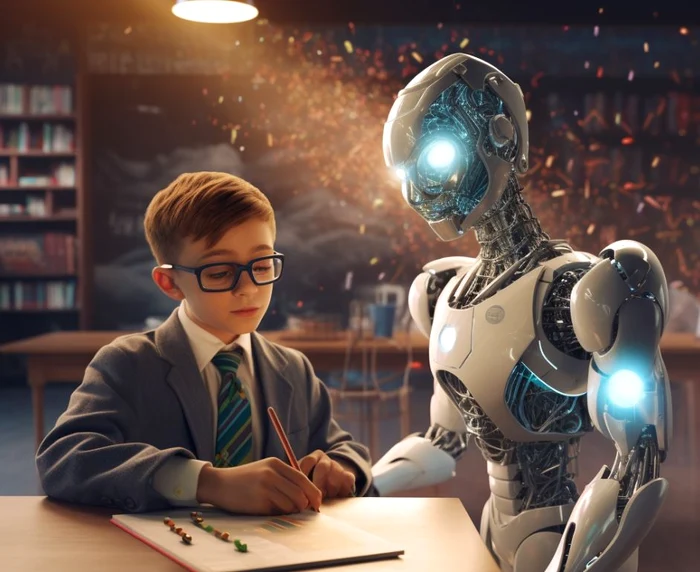
One of the most significant contributions that AI can make in education is the automation of administrative tasks: marking tests or managing documents. This would free up valuable time for teachers, allowing them to focus more on direct and personalized interactions with students.
For example, instead of spending hours grading standardized tests, teachers could use AI to provide immediate and detailed feedback and thus invest more time in teaching tailored to each student’s needs.
A quality education remains human, based on empathy and connection with students. In this new paradigm, AI should not replace the role of teachers, but give them the necessary tools to become more effective and involved in the learning process.
Personalizing learning and supporting students with diverse needs
Another area where AI can have a significant impact is the personalization of learning. Every student has a unique learning style, and AI can help identify those styles and tailor educational materials to better meet individual needs.
By analyzing student performance data, AI can provide personalized recommendations, helping them understand concepts better and progress at their own pace.
This type of customization is especially useful for students with special educational needs or those who experience learning difficulties. For example, AI can provide adaptive interfaces for students with disabilities or who have neurodivergence, allowing them to actively participate in the educational process without feeling excluded.
“I think teachers need to understand that artificial intelligence is like that solar calculator we used to have in math. All students are tempted and will use ChatGPT in their interaction with the school. That is why the teacher must relate differently to the way he will teach at school. Because artificial intelligence gives you the answer one click away, the teacher must make the student curious to discover the answer. Not to find it, but to discover it”, said Adrian Posteucă, speaker and brand ambassador AI Expo Europe.
There is one month left until the start of the largest conference on Artificial Intelligence in South-Eastern Europe, AI Expo Europe, which was held between October 6-7 at Radisson Blu, Bucharest. More than 30 speakers from the most important international and national institutions and companies, as well as from the Ministry of Research, Innovation and Digitization will gather under the creative umbrella of this conference that aims to decipher the impact of AI on the present and the future.
The event AI Expo Europe (October 6-7, Radisson Blu) will be both a dynamic and comprehensive platform in the field of education, as well as an excellent opportunity for networking and the development of new business opportunities.
For more information, to buy tickets or promotional packages:
www.aiexpoeurope.com
Discussion topics will be vast: from education, to ecology, from the legal field to that of profound changes in society!
Equity in AI-assisted education
For all its benefits, AI also brings challenges, one of the biggest being ensuring equity in education. AI technologies must be accessible to all students, regardless of social, geographic or economic background. There is a risk that the integration of AI will accentuate already existing discrepancies in education, especially between rural and urban schools or between public and private schools.
To avoid this, the design and implementation of AI in education must be done with a clear focus on equity. All students must have access to the same tools and resources, and educational policies should support the development of digital infrastructure in disadvantaged areas.
Preparing students for a world dominated by AI
In addition to using AI as an educational tool, it is essential to educate students about AI. The world of the future will depend more and more on technologies that use artificial intelligence, and today’s students must be prepared to understand these technologies and develop the necessary skills to contribute to their development. Digital literacy and AI-related skills will be essential for the workforce of the future.
Education about AI should include both the technical aspects of the development of these technologies, as well as the ethical implications and associated risks. Students need to understand how AI works, what it can do, and more importantly, how it can be used responsibly and ethically.
AI can transform education, but doing so effectively and equitably requires strategic and responsible adoption. Educating students about AI is crucial to preparing them for a future where these technologies will play a central role.
Through collaboration between teachers, students, parents and technology experts, we can harness the potential of AI to create a more inclusive, efficient and future-ready education system.
