
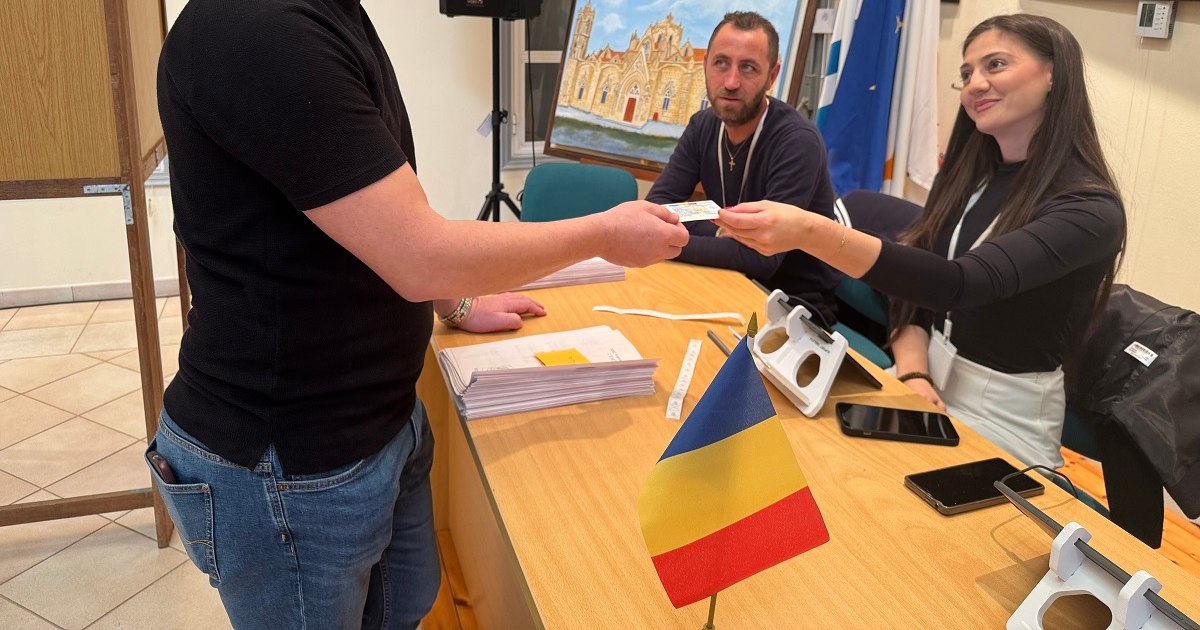
The vote from the Romanian diaspora has significantly influenced presidential elections in Romania in the past, and in 2024 it is expected to play a crucial role in the final results.
The vote from the diaspora. Photo: Facebook MAE
In recent years, the diaspora played a crucial role in the election of Romania’s president, decisively influencing the election results. “Considering that after 2009 the vote from the diaspora tipped the balance to one side or the other, Băsescu in 2009, Iohannis in 2012 and 2019, it is very likely that he will play a role this time as well”, emphasizes the political analyst Cristian Pîrvulescu.
Candidates who will benefit from the diaspora vote
The history of the diaspora vote has been pro-European, however, in 2024, the situation seems to change, and the analyst predicts a change in direction: “If until now it was leaning in favor of a pro-European candidate, it is very likely that now it is leaning in favor of anti-European candidates.”
This means that this time the diaspora vote could favor parties with nationalist platforms or anti-EU messages, which is a change from previous trends. Thus, Pîrvulescu states: “I expect Simion, possibly Georgescu, to get a very good score in the diaspora and probably Lasconi after. These three will be the ones who will benefit the most from the diaspora vote, probably followed by Ciucă and then Ciolacu and the others with very low scores.”
Voting polarization in the diaspora: The differences between Romania and the Republic of Moldova
Another important point pointed out by Pîrvulescu is the polarization of the vote in the diaspora. He emphasizes that we will witness a differentiation between the vote in the Republic of Moldova and that of the rest of the world. “We will have a differentiation between the diaspora from the Republic of Moldova who will vote PSD-PNL, as they voted in the European ones, and the diaspora from the rest of the world who will vote for Simion, probably Georgescu, I expect that the votes of Soșoacă will be transferred to Georgescu and then Lasconi“the analyst explains. This is a topic of interest, given that Romanians in the Republic of Moldova have tended to vote for traditional parties, while those in other parts of the world may opt for candidates with more radical platforms.
Anti-establishment voting and the influence of conspiracy theories
Another key element mentioned by analyst Cristian Pîrvulescu is the link between the anti-system vote and conspiracy theories. He points out that the diaspora vote was influenced by deep-seated resentments on social media, and diaspora voters no longer vote out of self-interest, but out of a sense of revenge. “They have nothing to do with the candidates’ plans for the country. They have to do with conspiracy theories and social media. It’s about resentments that have simply been built on social media and based on who they vote for. Vote against their interests, because a Romania that is not well regarded within the EU, is a Romania that can no longer help where those in the diaspora are at the moment“, states Pîrvulescu.
This means that diaspora voters were influenced by online information and narratives that present Romania as a victim of a political conspiracy. “The people of the diaspora believe that they are the victims of a conspiracy that the Romanian leaders led against them and now they have the opportunity to take their revenge. This sentiment was maintained on social media largely related to the hybrid warfare that mr Ciolacu and Mr. Iohannis have never seen him”emphasizes Pîrvulescu.
The Hybrid War Effect and Voting Radicalization
Pîrvulescu adds another important factor that influenced the change in the diaspora’s political options: the hybrid war and information intoxication. “The difference with 2019 is that AUR and SOS came along, plus the intoxication of hybrid warfare, which made them very reactive and resentful”the analyst explains. Thus, in 2024, not only will the anti-system vote manifest itself in a more radical form, but it will also be fueled by the new narratives in the public space, which contribute to the polarization and radicalization of Romanians’ political options in the country’s business.
