
Doctors draw attention to the fact that in recent years there has been an explosion in the number of people allergic to ragweed, the most allergenic plant in Romania. According to statistical data, over 2.5 million Romanians are allergic to ragweed.
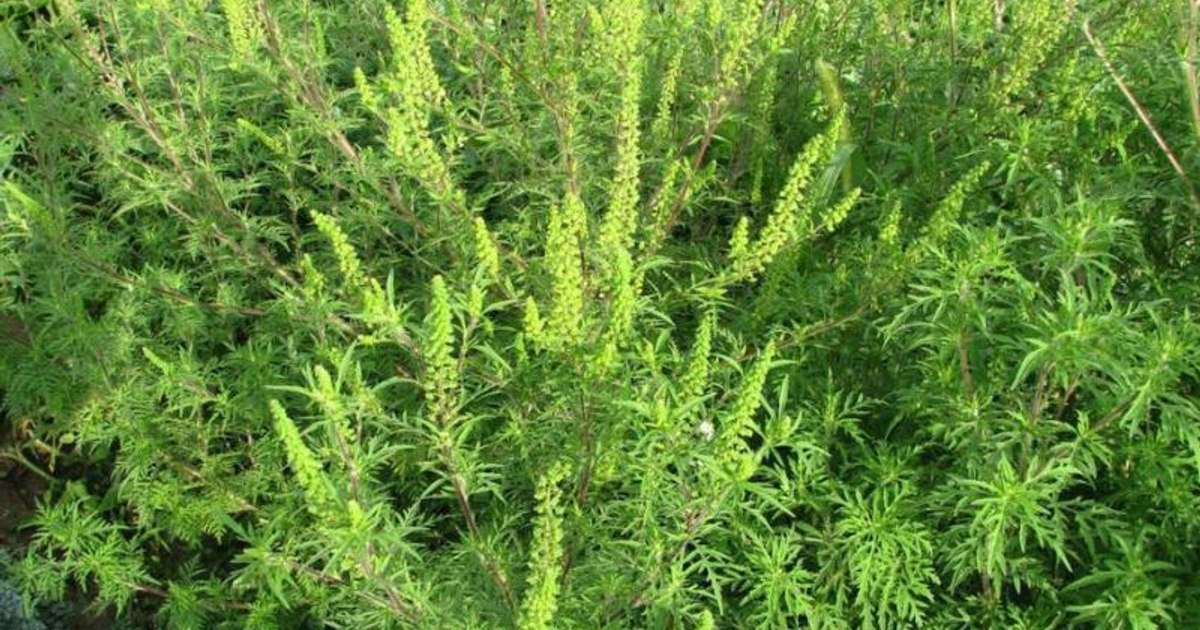
The dangerous plant that produces very serious allergies PHOTO: Archive, Adevărul
Ambrosia is found on roadsides, on abandoned agricultural land, which is why it is also popularly called “the grass of fallow fields”. It is the most allergenic plant in Romania, and more and more people have serious allergies.
It has a semi-high waist of 50-100 cm, the ambrosia leaves are elongated and pointed at the tip, lobed. Ambrosia pollination is carried out with the help of air currents, therefore when the wind blows the allergy symptoms are more pronounced. The pollination period is long, from late July to late October.
Allergist: none of the most aggressive pollens is ragweed pollen
Ragweed pollen reaches peak levels in mid-September, usually. This type of pollen, carried by the wind, can cause allergic rhinitis, allergic conjunctivitis, bronchial asthma, hives. It can also worsen asthma symptoms, leading to persistent coughing and wheezing in the fall.
“Symptoms of ragweed allergy are similar to those of other pollen allergies: sneezing, stuffy nose, nasal congestion, headache, irritated, watery eyes, itchy throat. If you suffer from allergy symptoms in late summer or early fall, see an allergist about the possibility of ragweed allergy. He can confirm this allergy through specific tests and the treatment recommendation can be short-term and target only the symptoms that appear in the season or long-term, immunotherapy (the only curative treatment of the allergy)”claims Dr. Irina Alexandru, allergist, in a material on his Facebook page.
Doctors draw attention to the fact that prolonged exposure over time, in addition to aggravating symptoms, can lead to the appearance of allergic bronchial asthma. Pulmonologist Sorin Bivolaru, from Galati Military Hospital, explains what to do in case of an asthma attack.
“If the patient is already diagnosed with asthma and has an attack, the first thing they have to do is to administer the emergency inhaler treatment – the patient being trained in this regard with the establishment of the initial diagnosis and the prescription of the treatment. If after 2-4 minutes of the administration of the first inhaler puff of the emergency treatment, breathing does not begin to ease, the patient can give you 2 more puffs, followed by another 2 puffs 15-20 minutes after the second administration. If breathing does not improve, go to an emergency room“, wrote the pulmonologist doctor Sorin Bivolaru, on his Facebook page.
When should you start your in-season treatment plan?
As a general rule, says Dr. Irina Alexandru, treatment should be initiated at least a few weeks before the start of the allergy season, to prevent the appearance of sneezing, nasal or eye secretions, itching and wheezing.
“Most allergy medications work best if given before the pollen season begins. So don't wait until the symptoms are unbearable to start the treatment and don't hesitate to give it throughout the season and even a few weeks after if you are not sure about the season passing (symptoms may return if the treatment is stopped too soon)“, explains the allergist.
According to the specialist, a frequently recommended treatment option is immunotherapy or “vaccines” against allergies (in the form of pills, drops or subcutaneous injections) – the only type of treatment of the cause of the allergy and not just the symptoms.
What risks those who do not clear their fields of ragweed
Since ragweed allergy has become a public health problem, in 2018 the authorities passed a law obliging the owners of inner-city or extra-urban land to periodically carry out works to prevent, combat and destroy ragweed.
If within 15 days of sending the warning the local authorities find that no clean-up work has been carried out, they can intervene to remove the ragweed. The costs for the works will be borne by the owners, land holders, administrators of public roads, railways, water courses, lakes, irrigation systems and fish ponds, according to the law.
If the owner does not allow access to the land to carry out ragweed cleaning, the mayor requests the authorization of the competent court, by presidential ordinance, issued with the summons of the parties.
Law no. 62/2018 regarding the fight against the ambrosia weed says that non-compliance with the provisions of the warning constitutes a contravention and is sanctioned with a fine of 1,000 lei to 5,000 lei for natural persons and with a fine of 10,000 lei to 20,000 lei for legal entities.
Statistics show that over 2.5 million Romanians are allergic to this weed.
