
The British government encourages the inhabitants to take an unusual measure to preserve the water during the current drought in the country: to wipe the emails, photos and old files.
The British government urges the inhabitants to delete the old files. Photo archive
The recommendation, mentioned in a press release of the National Drought Group, comes in the context in which officials are looking for ways to reduce the pressure on water resources, including those related to the operation of data centers.
“Simple, everyday choices-such as closing the tap or deleting old e-mails-also contributes to collective effort to reduce demand and contribute to the preservation of river and wildlife“Said Helen Wakeham, director of the Water Department of the Environment Agency, in the statement quoted by Intestingengineering.com.
Five regions of the United Kingdom have officially declared drought, and another six are facing “prolonged dry weather”. The crisis was intensified by the record heat, August marking the fourth wave of summer heat and the most dry period of six months until July 1976.
According to the Agency, the messages addressed to the public on water saving have already made the difference; In the Severn Trent region, the demand decreased by 20% compared to the peak reached on July 11, following public calls.
Why is it using digital storage water
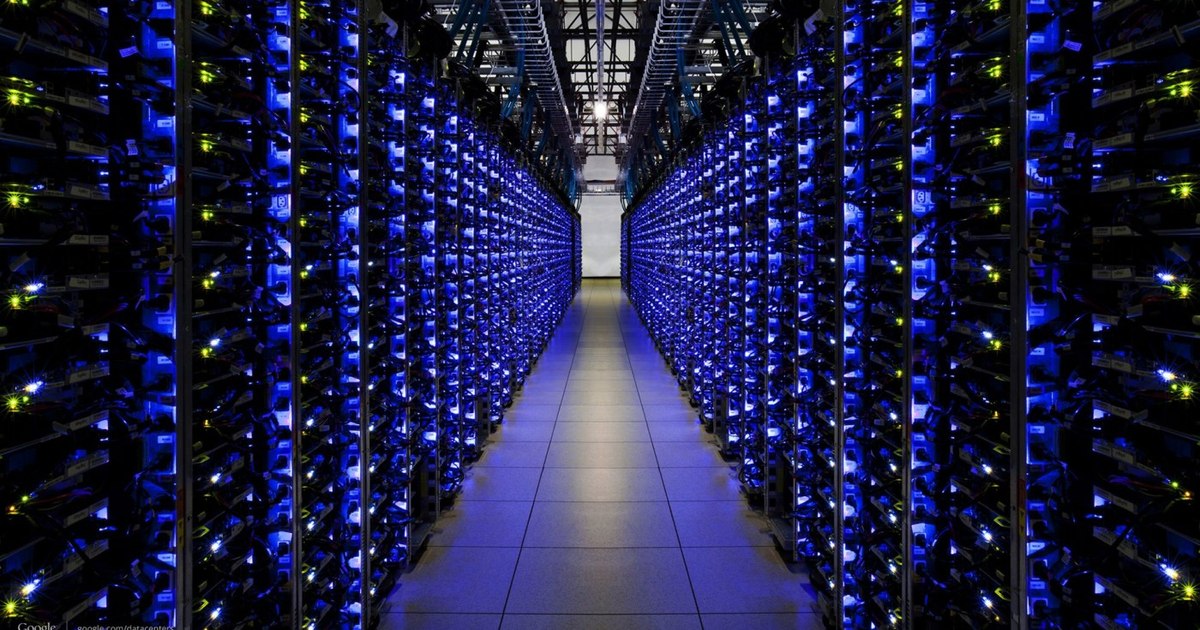
Although the connection between deletion of files and saving water may seem indirect, logic consists of how data is stored and processed. The data centers, which host servers for anything, from storing emails to training artificial intelligence models, consume significant amounts of water, mainly for cooling.
According to the Department of Engineering and Science of Oxford University, a relatively small data center of 1 megawatt, enough to supply about 1,000 homes, can use 26 million liters of water annually for traditional cooling systems. The generation of the electricity necessary for the operation of these installations contributes to the water imprint, because the fossil and nuclear fuel power plants also require large amounts of water for cooling and steam generation.
Some technology companies have developed more efficient solutions in terms of water consumption to address these concerns. Microsoft has experienced the location of underwater data centers and using liquid immersion. Meta has implemented its StatePoint Liquid Cooling (SPLC) system, which uses a membrane separation process to reduce water consumption compared to traditional cooling.
Google has also adopted several solutions, such as using recycled wastewater to cool its factory in Douglas County, Georgia, and aims to become “positive in terms of water consumption” by 2030.
Other approaches are based on local environmental resources. In Toronto, Equinix uses a deep lake (DLWC) cooling system that extracts cold water from the bottom of Lake Ontario to cool the servers without relying on evaporation cooling towers. In some parts of Sweden, Denmark and Finland, centralized heating networks reuse the residual heat in the databases to heat the residential and commercial buildings, instead of release it.
Wider solutions and individual actions
The Environment Agency did not specify how much water would save by deleting files in the drought areas of the United Kingdom, but the initiative highlights an increasing awareness of the ecological fingerprint of the digital infrastructure. Although systemic changes undertaken by technology companies and political decision -makers can bring the most significant discounts, the government claims that public participation is still important.
In addition to eliminating digital disorder, the agency continues to promote more traditional conservation measures, such as repair. Only a toilet that has leaks can waste between 200 and 400 liters of water every day.
Given that it is expected that water reserves will be limited, British officials believe that both large -scale industrial changes and smaller individual changes are needed to reduce demand. As Wakeham noted, these little steps “Help truly” When they are combined for millions of people, even if that means emptying a mailbox to help keep the flow of river.
How serious is the situation of drought in England at this time
England is facing one of the most severe drought of the last decades. Currently, it is the most dry period of six months until July 1976. Five regions, such as Yorkshire, West Midlands and Greater Manchester, are officially drought, while another six are facing “prolonged dry weather ”.
Deleting emails and files does not directly save water, but can potentially reduce the volume of energy and cooling in data centers that consume a lot of water. The main justification: less stored data can mean a lower processing and cooling need in massive servers that consume a lot of water.
Although complete figures are not disclosed, estimates indicate that the UK databases consume almost 10 billion liters of water annually, the equivalent of using approximately 190,000 people. This number continues to increase as the artificial intelligence infrastructure extends.
