
The debates on the schedule of high school students, from which history and geography are eliminated in the 11th and 12th grades, continues. Fabiola Hosu, an education specialist, explained the great changes that could take place, coming with a few clarifications. In addition, the expert also revealed the recipe that is successfully applied in Western countries. “History is not just a succession of events,” said the specialist.
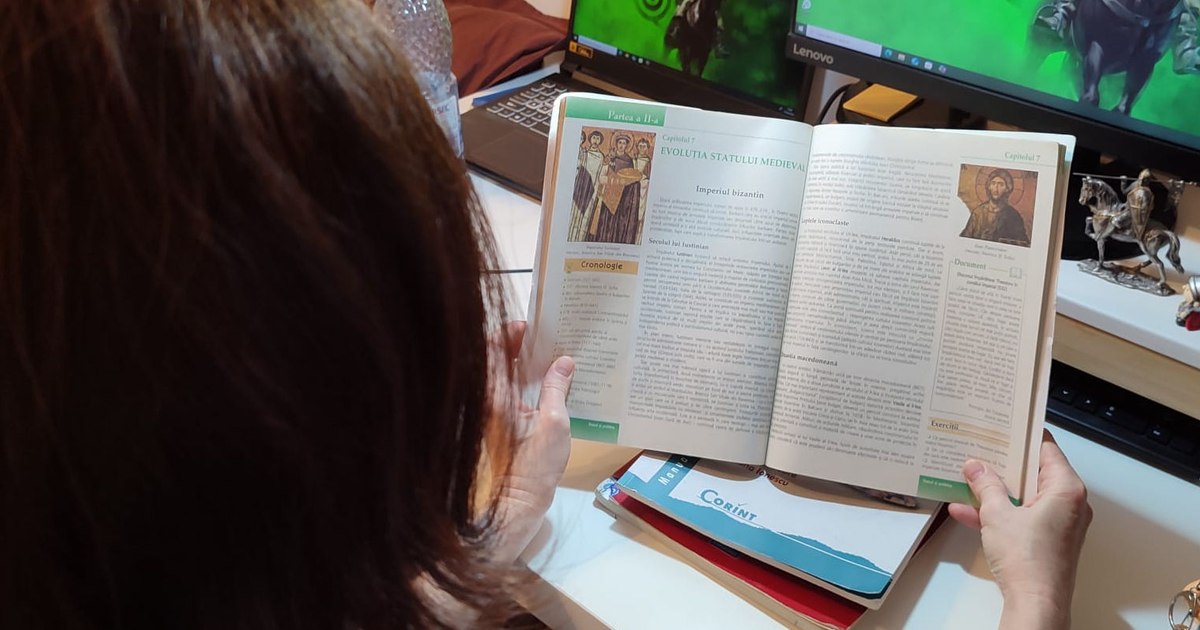
History taught in high school has aroused heated controversy. Archive
What changes in history
“Recently, the Ministry of Education has presented the proposed changes in the framework plans for high school, and history and geography are two subjects where, apparently, important adjustments are made”, the expert states. What changes in history?
- Mathematics-information & Nature sciences-1 hour/week every year of high school, with the possibility of supplementation through cdeo;
- Social sciences & philology – 2 hours/week every year of high school, with the same possibility of additional hours, if there is interest.
As part of these hours, in all profiles the history of the Holocaust (11th and history of communism are introduced (cls. XII). “Indeed, content should be updated so as to contain national history in the CLS. 9th and 10th, ” Fabiola Hosu also states.
What changes to geography
- Mathematics-information & Nature sciences-1 hour/week in cls. IX and XA (with the possibility of addition through cdeo)
- Social sciences & philology – 2 hours/week every year of high school, with the same possibility of additional hours, if there is interest.
The expert recognizes a high dose of flexibility for students: “If a student from the real profile realizes that he wants more geography or history, he has two options: to access overtime through CDEOș (curriculum at the school’s decision) or to change his specialization to a profile where geography/history has a higher number For hours, assuming that this interest comes from his career option ”.
Interested teachers can propose to their students overtime and personalized subjects, such as: Mun (Model United Nations); Global perspectives; Local history; Medieval history, etc.
The conclusion? “The total number of hours for these subjects remains exactly the same for the teacher with the one in the current framework plan in a high school that offers all the specializations, and the students have the opportunity to deepen the disciplines that are passionate about the options in CDEOș ”explained the expert on his Facebook page.
How should history be taught as outside
One of the great challenges of history teachers is the strictly chronological approach they take from the University, considers Fabiola Hosu. “This approach often prevents them from realizing that history is not only a succession of events, but an essential instrument of training of critical thinking.” writes Fabiola Hosu on her social page.
In educational systems in the UK, USA, Canada or Australia, history is not taught as a long range of data and events, but through themes, case studies and key questions, the expert continues: “The students analyze the great historical processes to understand the connections between the past and the present.” For example: How were the great empires formed and collapsed? How did human rights and democracy evolve? What patterns can we see in historical revolutions? How have the world we live today influenced by global conflicts?
“If we teach history only chronologically, students risk seeing the past as a series of fixed facts, not as a constantly reinterpretation. But history should teach them how to analyze sources, ask questions, evaluate different perspectives and understand why events have happened, not just when. ” continues the specialist. “Can we make this change in Romania too?”, she asks. Yes, because the new framework plans offer more flexibility, and history teachers now have the chance to transform how students perceive the past. “It is time to overcome the simple memory of the facts and to build lessons that stimulate critical curiosity and thinking. ”
History is, first of all, a “good questioning” training, says Fabiola Hosu: “It helps us to ask the right questions, to see beyond data and events, to decipher prints and to understand why it happened. If students only learn to memorize information, but not to question them, then we lose the true stake of history as a discipline. Instead of asking them only “what happened in year X?”, Maybe we should challenge them with “Why was this event possible?”, “What different prospects exist on it?” or “How does it influence us today?”.
This is the great challenge for history teachers: to transform this discipline from a data holding exercise into a training field for critical thinking and strong questions, the specialist said.
