
One of the explanations of the success of Russia’s interference in the Romanian elections is the help from the networks of people from the communist state that remained ubiquitous in parties and institutions, shows Oana Popescu-Zamfir, an expert in international relations.
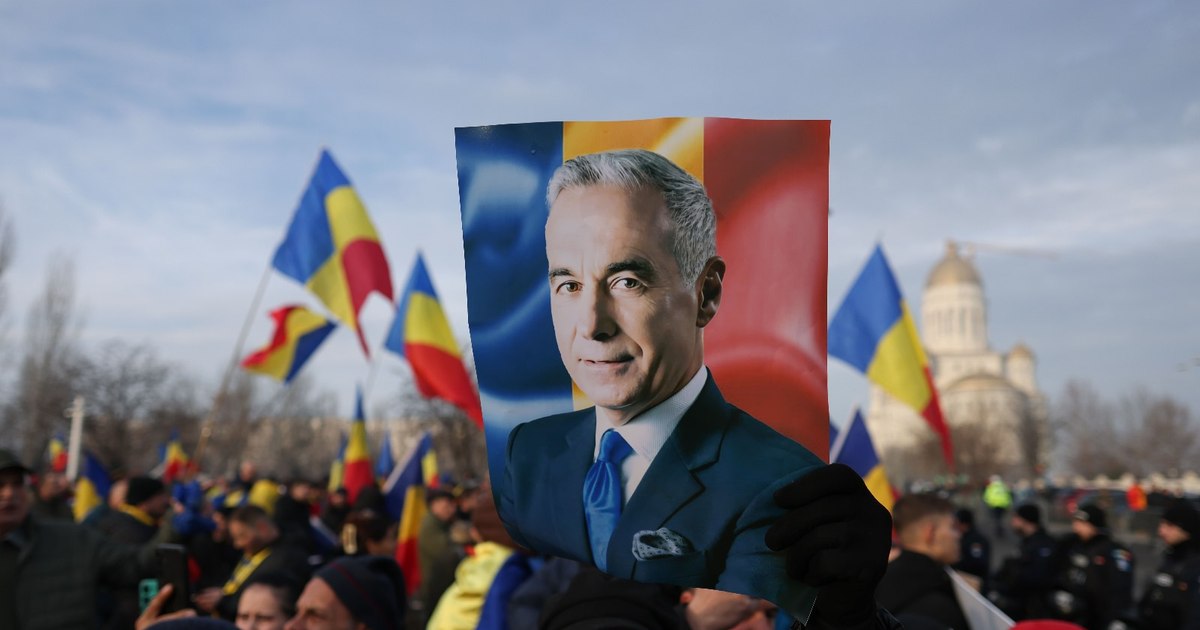
Georgescu would have supported by the networks of the former communist state apparatus. Photo: Inquam Photos
Carnegie Europe- a Think Tank that offers independent and interdisciplinary analyzes on European foreign and security policy- has published an analysis on Russia’s interference in Romanian elections.
“The political disorders in Romania perfectly exemplify how Russia can rely on internal actors To execute much of his plane to weaken the EU and NATO ”shows the author of the analysis, Oana Popescu-Zamfir, the director of the Global Focus Center, an NGO analyzing foreign policy, European affairs and security issues and good governance. The author studied “Executive Education Program in 21st Century Global Governance” at Harvard Kennedy School and international relations at Yale University.
The annulment by the Constitutional Court of Romania of the first tour of the November presidential elections on reasons of Russian interference, illegal financing of the campaign and handling of the Tiktok algorithms underlines the vulnerabilities that the country faces.
“Although it is possible that Europeans may have made some progress in strengthening the resistance to foreign malignancies, they remain unprepared to face a complex ecosystem of cross-border networks of Russian interests and internal actors aligned with Russia, which have been cultivated along time”, Decreases the study author.
“Russia, a threat from the inside”
Popescu-Zamfir shows that Russia’s interference can be visible-as in the Republic of Moldova on the occasion of the presidential elections, held in November 2024-and in this case the authorities can take measures against the interpres. This is the case of the Moldovan oligarch Ilan Shor, who organized a large voting scheme on behalf of his owners in Moscow against President Maia Sandu and her pro-European agenda. The Kremlin has invested 100 million euros ($ 104 million) and all the subversive methods in its tool kit, but failed to overturn the results, the specialist shows.
“In other cases, such as in Georgia or Romania, the Russian mixture is much harder to isolate from organic political dynamics”, Supports the quoted report.
In this context, strengthening the resistance against Russia’s interference should become the highest priority for Europe.
“A good place to start is to recognize that Russia is no longer just a threat of foreign interference; It has become a threat from the inside ”concludes the expert.
In Tbilisi, at the end of 2024, Moscow worked through the Georgian oligarch Bidzina Ivanishvili, who had already taught the strategic infrastructure of China and its political direction of Russia. His ruling party The Georgian dream won the elections, installed a loyal president and suspended the nation’s accession to the EU.
Popescu-Zamfir briefly describes the situation of elections in Romania: “About the same period, Romania, a Euro-Atlantic, anti-Russian visceral country, was orbit by the insidious and successful mixture I would Russia in elections. Despite the awaited victory of the great coalition of the Social Democrats (PSD) and the National Liberal Party (PNL), which governs in 2021, an extreme-right, pro-Russian, anti-NATO contestant appeared unexpectedly and occupied The first place in the first round. Calin Georgescu pushed his radical anti-eastblishment platform in a social media campaign only on the Tiktok platform owned by China and with opaque funding.“
The report shows that the failure of the Romanian authorities to reveal more details about the reasons for the cancellation of the elections has led to a significant political instability, and this week, President Klaus Iohannis had to resign while the Government is facing a censorship vote.
Pro-Moscow networks that undermine Romania from within
The author of the analysis claims that Romania has long worn in its political body the seeds of this destabilization.
The post-communist transition has largely managed by the people in the second echelon of the former state apparatus. “Some of these people had close ties with Moscow. As the country was directed to the west, those individuals and those networks were marginalized for over two decades, but remained ubiquitous both in political parties and in the state institutions. “says Popescu-Zamfir.
The people in these networks were not pro-Russian, but sovereignty and were upset by the transparency and responsibility that Western integration brought, which narrowed their privileges and control, explains the author. “The connections with Russia were indirect, passing through third countries such as Moldova or Ukraine and served to facilitate corrupt affairs and political interests of influential politicians ”details the report.
These networks have recently become strategic for Moscow again, which used corruption, economic pressure, interference in democratic processes, propaganda and cyber attacks as tools to influence public opinion from abroad.
“The networks became of strategic importance for Romanian politicians, when the anti -corruption campaign supported by the EU became an existential threat and risked long penalties with imprisonment and loss of assets”, Explains the report.
UK, Germany, France, vulnerable to these influences
Such complex networks of malignant influence are not present only in the former communist block, concludes Popescu-Zamfir.
“Economic addiction and pro-Russian business connections in Germany, which is about to organize federal choices, have raised concerns about Berlin’s ability to undermine the Kremlin’s influence on its political decisions. The capture of London by the Russian money and Brexit reveal the vulnerabilities of one of the main NATO powers. Historical anti -Americanism and romance towards Russia among some of the French cultural and political elites make France vulnerable beyond the Russian financing of the far right national party ”supports the author.
In this context, it is very easy for Russia to install a “friendly” government.
“Without strong tools to counteract the incorporated vulnerabilities of the open information environment of liberal democracies, all that Russia has to do to” install “a friendly government in any of these countries and, therefore, to change the votes in the European Council is to activate this ecosystem preset by listener domestic actors. Add some money and social media strategies capable of using non -transparent platform algorithms, such as Tiktok, Telegram, X or Meta, and you will get the necessary mixture to change public opinion in already polarized societies.”, Shows Popescu-Zamfir.
The expert claims that it is very difficult to find clear evidence about Russia’s intervention. In this case, the attribution must be based on the principle that “If he walks like a duck and does like a duck, it is probably a (Russian) duck ”.
The author’s conclusion is that “How things are now, both the federal elections in Germany from the end of February, as well as the resumption of presidentials in Romania, in May, remain extremely vulnerable.”
