
In 17 years after joining the EU, Romania obtained 64 billion euros more than it contributed, say government officials, who drew attention to the importance of belonging to the European project, both in the context of marking Europe Day (May 9), as well as in the perspective of the European Parliament elections.
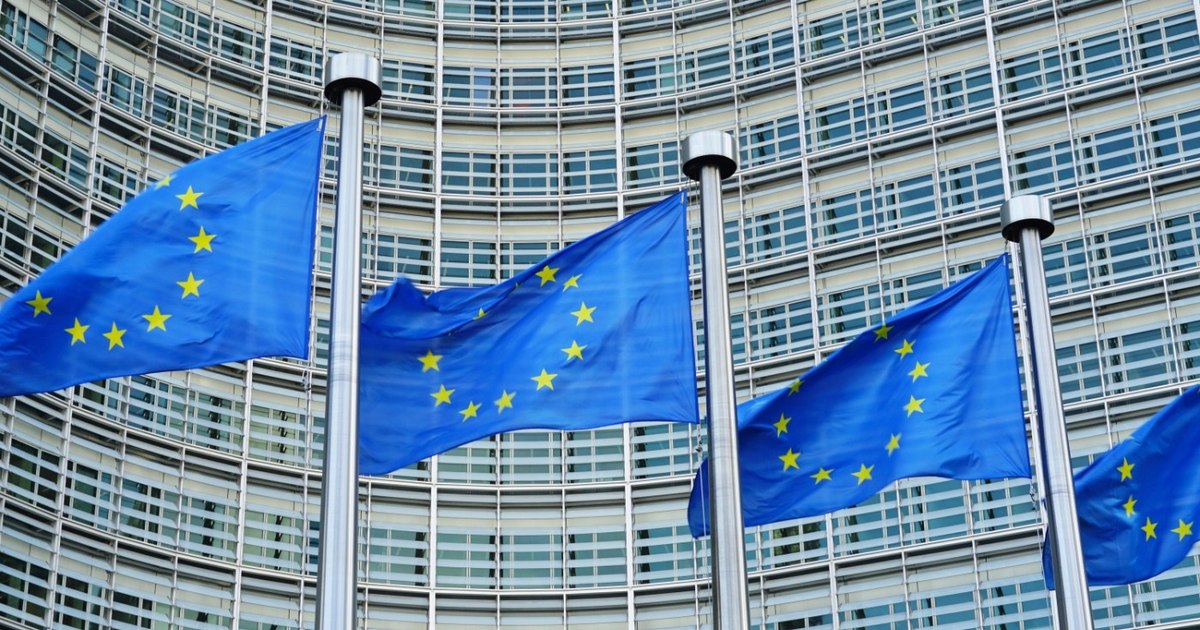
How much money did Romania receive from the EU? Photo: Shutterstock
The country's political leaders signaled, on Europe Day, the benefits of EU membership both from a security point of view, given the global context, and from an economic perspective.
“Looking back, in the years that have passed since our accession, Romania has benefited from over 64 billion euros from European funds, money that our country received in addition to the total amount with which it contributed to the EU budget”. said Prime Minister Marcel Ciolacu.
The Minister of Finance, Marcel Boloş, came with explanations: “For every 1 euro I contributed, I received 3 euros back. (..) Romania's entry into the EU also meant integration into the single market. It means the freedom of movement of goods, people, services and capital. We see that foreign investments have doubled since accession: from 42 billion (2007) to approximately 108 billion euros (2022). The fact that Romania became attractive for European companies did not only mean investments, but also the development of areas that were neglected in the past. For Romanians, it also translated into higher salaries. In the last 17 years, the minimum wage has been increased 20 times. Then, in 2007, the minimum wage in the economy increased by 390 gross lei, to 3,300 gross lei”.
And Nicolae Ciucă, Ciolacu's governing partner, emphasized the importance of the funds received from Brussels, claiming that “Europe means every street, school and hospital that has been rehabilitated or built with funds received from Brussels“.
President Klaus Iohannis referred to the importance of the European Parliament elections, noting that “Mrivization between states, discourses that promote faults within democratic societies are weapons that threaten our peace and prosperityto”.
“They are worrying phenomena, which include extensive disinformation campaigns, fake news, increased aggression in the public space. All this tests the health of our democracies and generates a sharp polarization in society“, the president pointed out
What to do next
Adrian Băzăvan, PhD in economics and former European diplomat, claims that Romania has made significant progress after joining the EU: “Romania has the sixth largest population in the EU. (..) From an economic point of view, Romania is currently the 13th largest economy. (..) Romania stands out as a major growth pole of the EU, since in the last two decades it had the highest economic growth in Europe. In fact, almost every year, Romania's economy exceeds that of another member state. In 2016, Romania's economy surpassed that of Greece, in 2018 it surpassed Portugal, in 2019 – the Czech Republic, and in 2022 – Finland. According to current trends, the next country that Romania will surpass is Austria, until 2030″.
However, although the evolution should be reflected in the ability to influence the European agenda and obtain key positions, Adrian Băzăvan draws attention to the fact that this is not happening, being a phenomenon that affects the majority of Eastern European states that have joined late to the EU.
“Of these, however, due to Romania's size and dynamism, the discrepancy is more visible. The effects of this discrepancy between Romania's “weight” and its real capacity to participate effectively in the democratic process of shaping the agenda in the European Union, are concretely reflected in the lives of citizens and in the opportunities of companies“, the economist claims, giving as examples the delay in full accession to Schengen, the small subsidies in agriculture or the disadvantageous regulations for Romanian companies in fields in which they are competitive, such as the transport of goods or steel production.
“However, I consider it desirable that Romania tends to the role of initiator and even leader in some aspects of the European agenda. (..). But it is time to strengthen the reverse flow, namely Romania's contribution to the EU, as a source of leaders, opinions, legitimate economic and political agendas“, concluded the specialist.
