
A new study published Wednesday in the journal Nature shows that the Moon is 80 to 180 million years older than previous estimates.
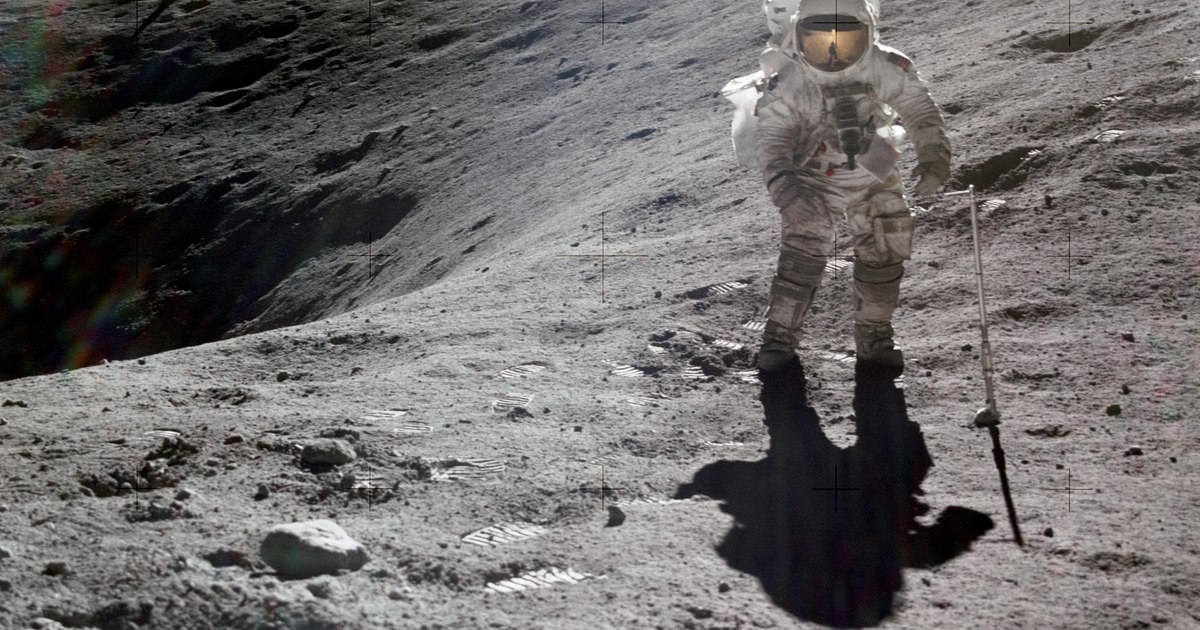
Astronaut Charlie Duke on the Moon. NASA PHOTO
The study that advanced this age, carried out by three researchers from the United States, France and Germany, claims that rock samples taken from the surface of the Moon were interpreted incorrectly in the past, according to DPA, cited by Agerpres.
According to the authors of the study, 4.35 billion years ago, the Moon was moving very close to the Earth in a highly elliptical orbit.
Earth’s powerful tidal forces rapidly heated the Moon during that time, causing it to release large amounts of magma from its interior to the surface, the authors of the new study say.
They argue that most rock samples from the Moon’s surface reflect the cooling of this magma and not the actual formation of the Moon.
Researchers have explained how the Moon was formed
The authors of the study also explain that shortly after the formation of the Earth, about 4.5 billion years ago, it collided with a celestial body the size of the planet Mars, called Theia.
The impact catapulted large amounts of incandescent rock from the crust and mantle of the two celestial bodies into space, and some of that debris formed the Moon, scientists say.
Samples of lunar rocks brought back to Earth by astronauts on the first Apollo missions and a series of unmanned missions indicated that the Moon’s surface cooled 4.35 billion years ago, and scientists assumed that this was the age Earth’s natural satellite.
The researchers found crystals of a mineral called zircon in the lunar rocks, which were much older, raising doubts about the supposed age of the Moon.
Francis Nimmo, Thorsten Kleine and Alessandro Morbidelli suggest in their study that the Moon is between 4.43 billion and 4.53 billion years old.
They note that this explanation fits better with dynamic models of planet formation in the Solar System.
