
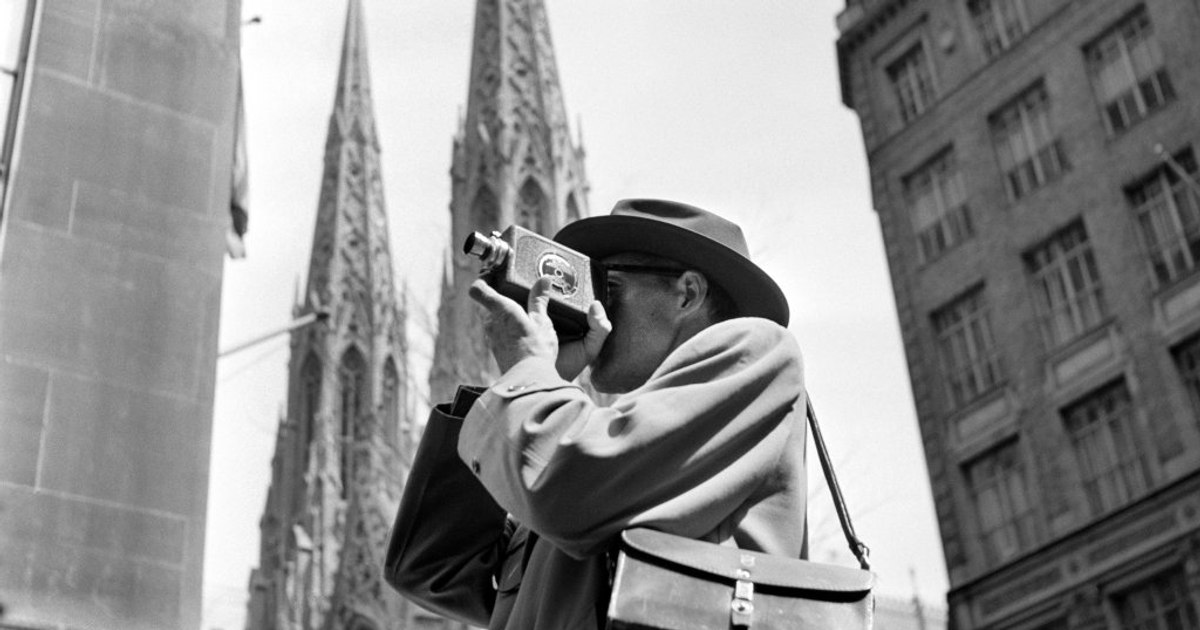
In “Flashes of Brilliance”, Anika Burgess, writer and photo editor, takes us back in the 19th century to present to us the artists and innovators who developed this revolutionary technology.
Photo: Anika Burgess
The prevalence of photography in contemporary life has inspired many criticisms on unprecedented narcissism of culture based on social networks.
From the moment it became possible to capture an image of life and freeze it for posterity, people have made extraordinary efforts to produce captivating, inspiring photos that will enhance them.
In “Flashes of Brilliance: The Genius of Early Photography and How It Transformed Art, Science, and History“(Genius glitter: the genius of the early photography and the way he transformed art, science and history), Anika Burgess, writer and photo editor, takes us back in the 19th century to present to us the artists and innovators who developed this revolutionary technology and the deep cultural changes that followed, according to Washington Post.
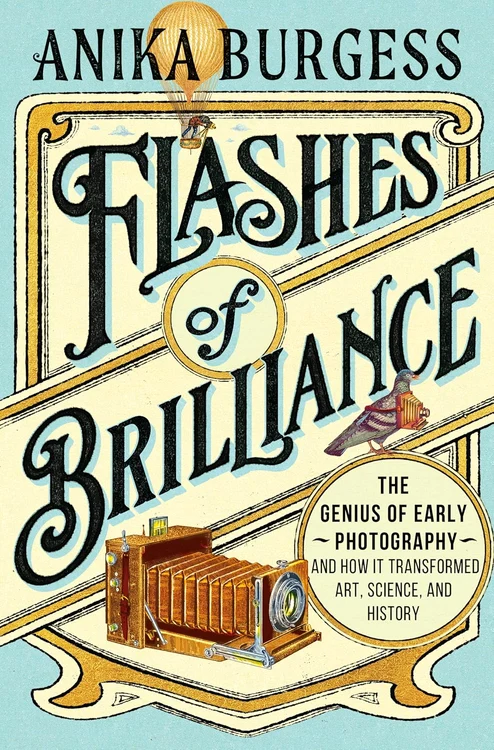
Flashes of Brilliance Photo: X
It is an elegant written history that speaks of the immutable desire of man “to seek knowledge, to create something beautiful, to record a moment in time. “
It is also very fun, because Burgess gives a large space to the eccentric and adventurous spirits that played an important role in the uncertain decades between 1839 and 1910. “These innovations were sometimes wrong, occasionally obsessive, periodically dangerous and perpetually fascinating”, she writes.
When the process of Louis Daguerre to capture a positive image on a silver -covered copper plate was first revealed on January 7, 1839, the reaction was enthusiastic and immediate; “miraculous“It was the verdict of the scientist Sir John Herschel. The public was quickly captivated until the end of the year. The French artist Théodore Maurisset appeared a huge and frantic crowd that was in the queue to pose for the unique prototype.
A little more than a decade later, Frederick Archer replaced Daguerre’s method, offering superior clarity and the possibility of producing prints on paper that could be distributed, starting from a negative on the glass plate. The disadvantage was that the photos had only 15 minutes available to expose and develop the image before the wet plate was dry. This meant that they had to carry hundreds of pounds of equipment – including volatile chemicals, an obscure room and fragile glass plates – wherever they hoped to photograph a scene.
The investment of time and resources needed to practice photography at this time meant that it was mainly accessible to those that Susan Sentag once called “The intelligent, the rich and the obsessed ”. Their exploitations, in Burgess’s story, were often more picare than picturesque. From poisonous chemical baths to explosive powders for flash, these pioneers risked their lives and physical integrity every time they opened the shutter.
“Deadly Explosions”
Daguerreotipists “They were exposed to toxic mercury and iodine vapors every time they made an image ”, Write Burgess, and volatile flash powders “They were throwing houses and factories, they were breaking windows and destroying equipment.”.
In 1889, a flash powder promoted as “the strongest light under the sun“It was the cause of several deadly explosions in Philadelphia.
Despite these dangers, the first photographers were eager to exceed the limits. Burgess tells the dangerous adventures of famous photographers, such as Louis Boutan, the pioneer of underwater photography, and the French artist Nadar, who flew above Paris in a series of hot air balloons (and hard to control) in his attempt to capture a perfect image of the city. In 1863, Nadar rose in the air in an aircraft of 196 feet called Le Géant, carrying a two-storey basket containing “A typography, an obscure room, a kitchen, bunk beds for twelve people, a toilet and, perhaps most importantly, a wine warehouse. “ In the second journey, the ball was caught in a strong storm, was shot down on the ground and dragged for 40 kilometers, before finally stopping at a short distance locomotive. Remarkably, all passengers survived.
While these artists sought to use new technologies to change the way we see the world around us, Burgess is convinced that the deepest change was how we see ourselves. As the photos have become more accessible – and more marketed – they introduced “notions about celebrity culture, self -image, authenticity, property and representation that have a deep resonance today.”
Burgess’s report on fashion from the 1860s for “Visit Cartes ”, Portraits of the size of a wallet changed between friends and collected in albums, sounds like a primitive social media form. Burgess cites from a magazine edited by Charles Dickens, who described the attraction of this fashion in surprisingly recognizable terms, wondering the enthusiasm of “To distribute yourself among your friends and let you see you in your favorite posture and your favorite expression. Then you reach those wonderful books that everyone has, and foreigners see you there in the company of distinguished people and asks who that person is so impressive? ”.
Burgess wisely avoids an arid chronological structure, in favor of a more thematic approach, which allows him to focus on the most impressive achievements of the time and to understand the challenges of the past with those of the present. Through thorough research and her obvious love for this environment, Burgess manages to remind us how special this is “Little miracle of chemistry, optics and light ”. It allows us to see it with new eyes and to recognize that, whenever we struggle to find the right angle or let ourselves be trapped in the endless unfolding of the galleries, we participate in a rich and decisively human tradition.
