
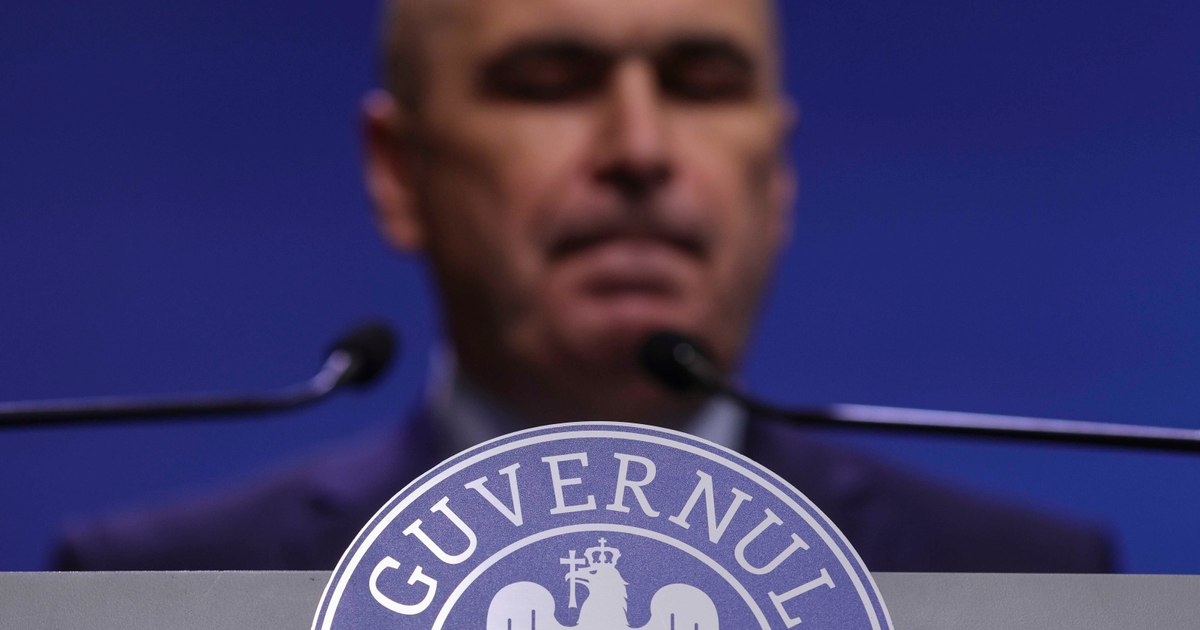
The new proposals of the Bolojan government for the elimination of the special pensions of the magistrates have aroused heated debates in the public space. Few know, however, that the pensions that today are trying to cut the executive have been born as a rescue collage for the justice system almost 30 years ago.
Photo inquam Photos / Octav Ganea
The debate that has warmed the spirits in the public space, regarding the special pensions of the magistrates is not a new one. Over the years several governments have tried to eliminate special pensions. Some initiatives partially succeeded, and others have reintroduced them. Now the executive led by Ilie Bolojan wants to increase the retirement age of the magistrates to 65 years and to cap the amount of pensions for magistrates to 70% of the last net salary, as far as he is currently.
The initiative, also supported by the head of state, Nicușor Dan, who asked the magistrates more predictability, is hit by the rejection of the Superior Council of Magistracy (CSM), who states that the project of the Bolojan Government does not comply with the legal provisions in the absence of a consultation with the representatives of the Justice. The head of the institution, Elena Costache, said that a pension of 11,000 lei is small for judges and prosecutors.
In the context, the Declic community comes with a new initiative and asks President Nicușor Dan to trigger a referendum on the introduction of the principle of contributivity in calculating all pensions, including special ones. The initiative would avoid both using the subject to win the votes and a reminder of the reform.
How special pensions appeared
The Minister of Justice who initiated the reform of the status of the magistrates in 1997, introducing the notion of service pensions is Valeriu Stoica. This happened during the government Victor Ciorbea. At one point, in an interview, the former minister explains the need for special pensions for magistrates, like other benefits introduced in 1997, to attract the best law graduates. However, he appreciated that an exaggeration has been reached, in the sense that “It should be that the service pension cannot exceed the salary.”
“After 28 years, I can say that I made a mistake”says in 2025, in another interview Valeriu Stoica, explaining that at the time of 1997 the justice system had reached a degradation point that needed attention. “I did not anticipate that those measures will then be replicated where they should not. And I did not understand then that the magistrates will not have enough wisdom so that they do not abuse with these measures that have been taken in their favor. “explains the former minister.
The moment was a starting point for other social categories. In addition to the fact that, in 2004, during the government Adrian Nastase, the calculation of pensions for magistrates moved from reporting to net income (no – 80% of the last gross income instead of 80% of the net income), thus increased the amounts received by magistrates after retirement, then the personnel of the Court was also included here. In 2005, the diplomatic and consular staff followed, and in 2006, during the Tariceanu government, the age limit for parliamentarians was introduced. The clerks followed and the auxiliary staff from the courts and then the military, police and civil servants with special status.
Failed attempts
The only rectification attempt that was successful was during the government of Emil Boc, after the economic crisis that justified the cuts. However, special pensions have been removed for several social categories, less for magistrates, CCR showing then that “The independence of justice includes the financial security of the magistrates, which also involves ensuring a social guarantee, such as the magistrate’s service pension.”
During the government of Victor Ponta, however, the steps taken by the Boc government were erased. In the case of diplomats by Law 216/2015, in the case of military, police officers and civil servants with special status by Law 223/2015, and in the case of parliamentarians by Law no. 357/2015. Later, in 2019, the Dăncilă Government extended the list of beneficiaries, including mayors, deputy mayors, presidents and vice -presidents of county councils. However, the latter are postponed, being extended year by year, currently until 2026, through the Trenuleț Ordinance from the end of last year.
In 2021, by Law 7/2021, the payment of the allowances for the age limit for deputies and senators was ordered. The law was challenged at the RCC, which admitted the unconstitutionality, and the allowance was paid in June 2022.
In December 2024, the Constitutional Court also admitted an exception of unconstitutionality. Specifically, it is about Article 101 of Law 282/2023, which constituted the legal basis for the progressive taxation of the service pensions of judges and prosecutors. The decision came after numerous pensioners from all over the country asked the courts to oblige the county pension houses to recalculate and the return of the amounts retained from their pensions since January. The request that reached the RCC and was resolved was initiated by the Stoian Pensioned Judge (the former president of the Civil Section of the Calarasi Court).
The last attempt of the governors came against the background of the need to fulfill the conditions assumed in the PNR. For the failure to fulfill the milestone 215, which concerns the reduction of the expenses with the special pensions, Romania was suspended 230 million euros from the PNR. Subsequent to the decision of the Constitutional Court, the European Commission informed Romania that Mile 215 can no longer be considered satisfactorily fulfilled.
Why was magistrate’s status reform required
“It is mainly justified to grant advantages for certain professional categories. This is happening worldwide. It is about the social importance of work and Romania faced a big problem related to justice after 1990. Because I inherited a corrupt justice system before 1990 under the control of the communist party. So the justice was controlled by the Communist Party. There was no question of the independence of justice.
As such, after 1990, justice remained in a large extent controlled by both political influences and influences from corruption. Judges were simply bought, magistrates were bought by the groups of criminals, corrupt groups, who obtained favorable decisions in court. Basically, the situation could no longer be tolerated and the justice system needed another approach that would truly lead to the independence of justice and to transform it into a power in the state. Not in an instrument, as it had been until then, either a political instrument or tool of corruption groups ”explains the editor-in-chief of Historia Ion M. Ioniță for “Adevărul”.
From that moment, however, the advantages have increased a lot, explains Ion M. Ioniță, and this cannot be said about the quality of the act of justice:
“Only, and it is valid for other professional categories, which happened afterwards, these differences of status have turned into privileges. And the advantages have increased. And yet the quality of the services offered to the population, in this case the quality of the legal justice services offered to the population, have not increased properly. And now people are very long. It is very big. “
“You do not have to make a referendum to know what will be the answer”-Ion M. Ioniță, editor-in-chief of Historia
Such a referendum, as the one proposed by the click community not only would involve very high costs from the state budget, but neither “It would not solve anything such a referendum, because the answer is clear, you do not have to make a referendum to know what the response of the population in Romania will be. The answer here is default. It is very clear, so it would be completely useless to referendum ”Ion M. Ioniță also points out.
“This is not the problem, that we do not know the will of the people, the problem comes from the fact that we see this very big opposition to change. I saw the body of the magistrates, I saw the CSM and saw the statements of the president of the SCM, who added gas on fire and increased, all these positions have increased the dissatisfaction of the company.” concludes the editor-in-chief of Historia.
