
Doctors in Iași are on the alert after detecting two cases of TB at a kindergarten in the county. It is about a teacher and a five-year-old child, who are currently undergoing treatment. Following the epidemiological investigation, doctors are waiting to discover other cases.
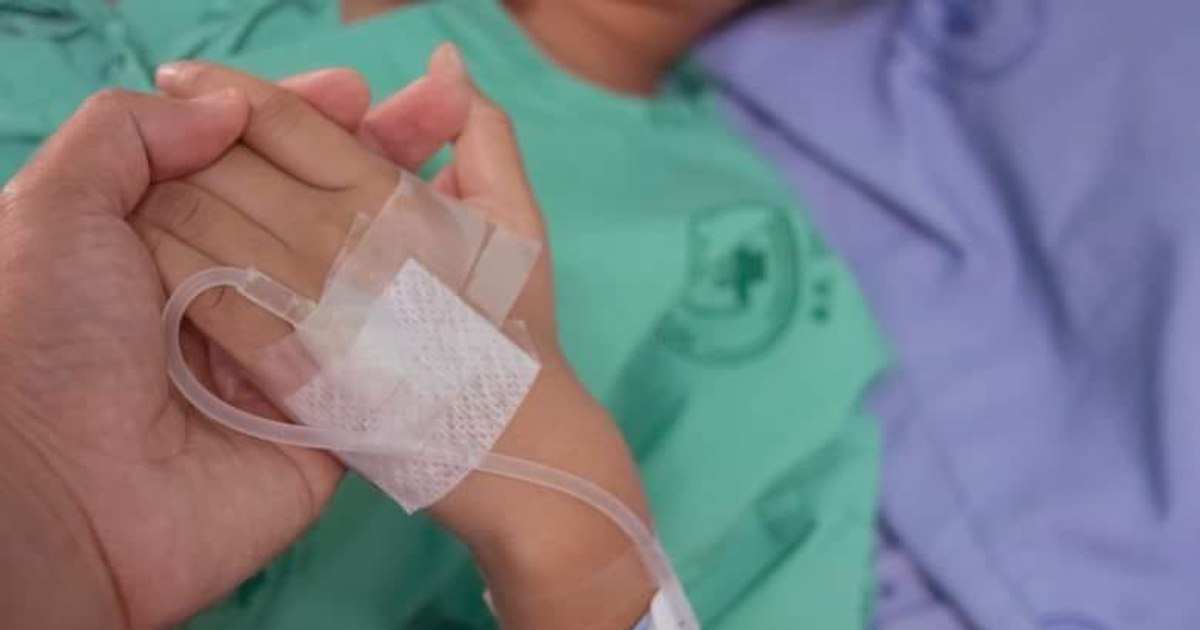
The child with TB is 5 years old. Photo source: archive
“When we talk about the outbreak, we must have three cases of the disease. We have, at the moment, only two cases: an adult, an employee of the kindergarten, and a 5-year-old child who attends the classes of the respective kindergarten“, Dr. Adriana Sorete Arbore, coordinator of the TB Dispensary at the Iași Clinical Hospital of Pneumophthiziology, told “Adevărul”.
The first case of TB, discovered in an educator
On April 17, one of the teachers from the private kindergarten in Rediu town, Iași county, presented herself to the hospital with a cough and a general malaise. “The person had respiratory symptoms. He came to check himself at the TB dispensary in Iasi because he was coughing and losing weight. The radiological image – highly suggestive of tuberculosis – was seen and the biological product collections were made. We are talking about an additional investigation that is usually done in such cases”, explained Dr. Adriana Sorete Arbore. However, the result of this analysis came after 21 days. Practically, only around May 8 was the definite diagnosis made. “That’s how long it takes in the case of TB for the results of the biological cultures to come. We, however, did not wait that long. I notified the situation before this date to the kindergarten, the Public Health Directorate and the School Inspectorate”, continues the doctor.
The parents of the children in the educator’s group were notified before Easter. “There was no hiding something like that because the lady was missing from the program. It was normal for parents to notice this and ask questions. I called each parent individually, talked to them and told them to go with their children to the check-up“.
The second case of TB, confirmed in a 5-year-old child
It is about the parents of 14 children, how many were in that group. “Of these, seven preferred to consult their children with doctors in the city, and seven came to us, at the TBC Dispensary. The usual tests were done, then the little ones were taken for further evaluation in the pediatric pulmonology department of our hospital. But, as I said, the results of the analyzes come after 21 days at the earliest. Therefore, the second case of TB was confirmed three and a half weeks ago. It is about a five-year-old child who was not totally asymptomatic, but also did not present specific symptoms“.
In children, the disease often manifests itself in the form of a respiratory virus, a common cold, the doctor explains the current situation. “In children, in general, the symptoms are not suggestive of TB. The child has no symptoms of tuberculosis“.
Given the existence of the second case, the epidemiological investigation was extended. “It should be mentioned that the kindergarten has five buildings. If until now the children from the respective lady’s group were investigated, now all the children studying in the building where the teacher’s class is located are being investigated. They received prophylactic treatment“, says Dr. Adriana Sorete Arbore.
At the same time, the doctors tried to organize some meetings with the parents to inform them, to explain to them what this disease entails and how the epidemiological investigation is going. “Two attempts failed because no one could volunteer from work. “So we are waiting for each of them at the dispensary if they want to be better informed”.
The doctors are now waiting for the results of the analyzes of the children who studied in the building frequented by the educators. “If at the beginning we investigated 14 children, now we investigate 30 children and 17 adults. That’s the procedure. The epidemiological investigation expands in concentric circles.. First to the group, then to the building, then to the entire kindergarten. Depending on what we discover in the first circle, we move on or stop. But, if you ask me, I’m going to propose a general investigation, in the whole kindergarten. To be sure“.
The doctor hopes that there will be no more cases, but he does not exclude this possibility at all. “We await the results that will emerge in this new wave of epidemiological investigation. I cannot say whether we will discover new cases. I don’t know what to expect. But I’m not calm about it. I have no certainty. I can’t say with my hand on my heart that there won’t be other cases of the disease“.
Regarding the evolution of the infected child, doctor Adriana Sorete Arbore does not know what will happen next. “We cannot say, for now, what will be the evolution of his state of health. We will see. But in general, tuberculosis in children is curable. Now, we don’t know exactly whether or not the little one will be left with sequelae. In general, it is a disease that is overcome well. However, we are talking about a condition with a long-term treatment”.
Why did we end up in such a situation and what is to be done
“The situation in Iași arose because of a gap in the Romanian legislation. Namely: staff working in educational institutions are not medically investigated. There is no obligation to have a check upon employment and one carried out periodically.
In such situations, the transparency of information and the speed with which it is communicated must be much greater. There is also a need for intensive health education, an education of teachers, parents and the general population”said Dr. Adriana Sorete Arbore.
What is tuberculosis
Tuberculosis (TB) is an infectious, potentially fatal disease that can affect almost any part of the body, but is most often found in the lungs. Tuberculosis is caused by the Koch bacillus, and a person becomes a carrier once they have come into contact with this bacillus. Depending on how it manifests itself, tuberculosis is of two types: latent and active. In latent tuberculosis, the bacteria remain in the body in an inactive state. They do not produce symptoms and are not contagious, but they can become active. In active TB, the bacteria cause symptoms and can be passed on to others.
How TB is transmitted
Tuberculosis is transmitted through the air and can be contracted by anyone who has reduced immunity. “Children do not transmit the germ to each other. They only get sick if they have come into contact with a sick adult,” explains Dr. Beatrice Mahler. “Contact means that the little ones stay in direct contact with the sick adult for more than a month and at the distance of a conversation”, continues the doctor. “Children are protected until the age of 6 by the BCG vaccine they receive at birth. Fortunately, in Romania the vaccination coverage is high, somewhere around 96%. But the vaccine does not protect them 100%. There are also children who have diseases, certain nutritional disorders, who become infected and remain at this stage or develop the disease. Being infected does not mean you are sick. It means you’re just a carrier of the germ“.
What symptoms do children have?
However, once sick, children do not show specific symptoms. But there are some warning signs: “If a parent notices that the little one does not gain weight or even loses weight by at least 15%, is no longer as active, is apathetic, tired, they should contact a doctor”, says Dr. Adriana Sorete Arbore . . The disease in children is therefore more difficult to diagnose. “The child has manifestations similar to a respiratory virus, if the location is respiratory. However, if the microbe spreads in the body, several organs will be affected and the patient may end up with severe forms of the disease. That’s why tuberculosis is very risky in children and that’s why BCG vaccination is done. It should be known that a large part of vaccinated children, even if they become carriers of the bacillus, they will not get sick”.
Tuberculosis is treated with specific antibiotics, and the treatment is long-term.
