
Rujeola returns in force in Europe, and the increase in the number of cases goes hand in hand with the decrease in vaccine coverage. A qualitative study conducted by Inspi and WHO Country Office in Romania has identified the barriers to vaccination in vulnerable communities, as well as efficient intervention modalities.
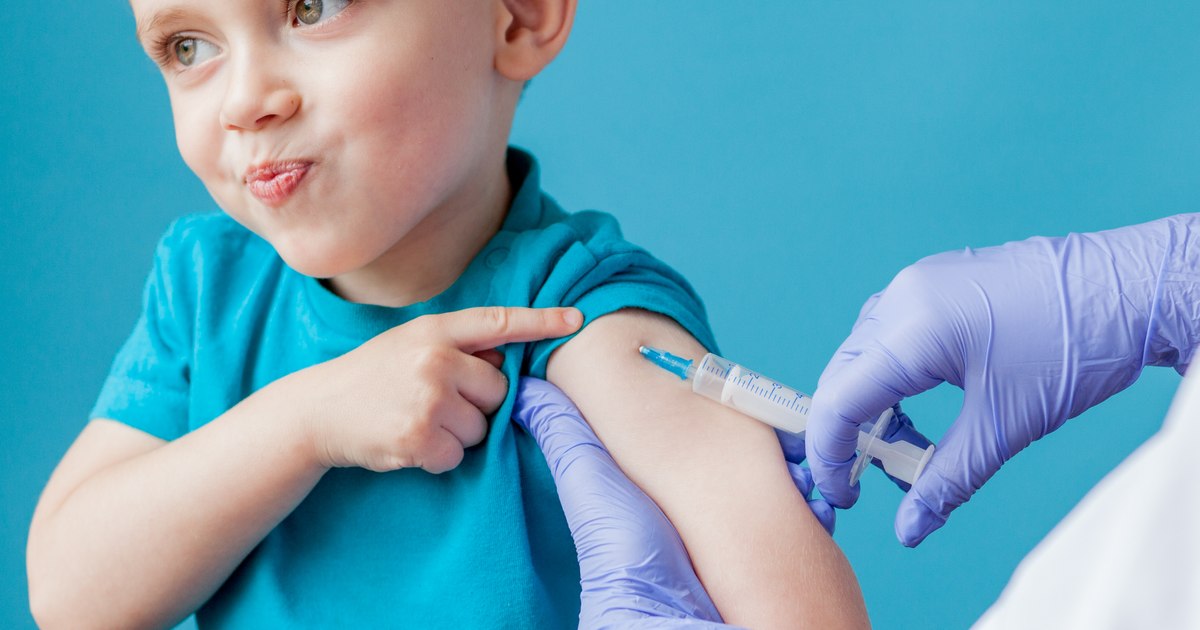
Just a little over 60% of children are antirrujele vaccinated with a second -dose photo: Shutterstock
During the last year, in the European region of the World Health Organization (WHO), there was a return of measles, a serious, extremely contagious, but preventable disease. The sanitary authorities reported 127,350 cases, more than double compared to the total of 2023 and the highest level since 1997 and so far, the National Institute of Public Health (Insp) shows.
In Romania, between 01.01.2023-31.12.2024, 27,234 cases confirmed with measles were notified, of which 22 deaths (5 in Bucharest, 4 in Brașov county, 3 in Giurgiu county, 2 in Argeș county, 2 in Iași county, 1 in the county, 1 in the county, 1 in the county of Sibiu county. in Alba county and 1 in Ialomița county).
The explanation is the decrease in coverage for the first dose of measles vaccine throughout the EU/EEA, Romania documenting a steep decrease from 83% in 2022 to 78% in 2024.
“In addition, only 62% of Romanian children received the second dose of ROR vaccine, a percentage well below the 95% recommended by WHO”, Inspit, in a statement posted on its own site.
Vulnerable communities have the lowest vaccine coverage rates
Because the statistical figures have reasons for the disaccination, Insp, together with the World Health Organization in Romania (WHO), with the support of the EU4Health program carried out by DG Sante (the Health Department) of the European Commission, a qualitative study to highlight the causes of these small vaccination rates vaccine.
Three counties in Romania, respectively rural and semi-urban areas of these counties, were established for the study. Brașov and Timiș were chosen because they are among the counties with the smallest figures regarding the vaccine coverage for measles, while Covasna is the county where things are best and where practices could be detached that could be successfully replicated at national level.
“Although the statistical data illustrate the extent of the problem, this study offers a perspective on human experiences behind these figures.”shows insp.
In the first two counties, Brașov, respectively Timiș, the vaccine coverage among the children is below 80%, while in Covasna it exceeds 90%. Within each county, communities with low coverage were identified, some of them belonging to ethnic minorities (Roma).
68 parents (mothers/ grandparents) of children between the ages of 24 and 30 months and 48 people working in the field of health participated in the study. “A convenience sample was used to recruit a combination of parents/belongings (depending on the vaccination status of their child) and the medical staff (depending on the professional role) to facilitate the comparison of the barriers and the determining factors. Most parents/belongings (94%) come from the two counties with low ROR coverage, reflecting the objective of this study. There was a good diversification of the status of ROR vaccination for children: 24% parents/unvaccinated, 41% partially vaccinated, 35% completely vaccinated. Most (74%) did not attend high school, which represents a confirmation of the low socio-economic situation ”explains the authors of the study.
The medical staff included in the study was distributed equally between the three counties (27% Brașov, 33% Timișoara, 40% Covasna) and professional roles (21% health mediators, 23% community nurses, 31% family doctors, 25% family nurses). Most of the participants were women (88%), with an average age between 41 and 55 and with a high level of experience (average 9 -22 years).
What does parents remove from the vaccine doctor’s office
The cause of the small vaccination rate is not, as you might think, the parents’ refusal to accept the vaccine, even though the vaccinator doctors have drawn countless alarm signals in recent years on the negative effect of the anti-vaccine current that has been exacerbated by the Covid-19 post-pandemia. In the vulnerable communities, in which there are the biggest problems regarding the vaccination, these being the most importantly represented in the number of patients affected by measles, to reach the doctor’s office seems to be the largest obstacle to families. Because we are talking about poor communities, families who frequently leave abroad and come back, parents without education, there are few situations in which the children who need to be vaccinated do not even have identity documents, or the medical staff fails to contact the family.
The research has also revealed among the reasons for the discrimination and discrimination and lack of confidence in the medical staff, mentioned by some parents/belongings, especially by those in the Roma communities.
“Another important obstacle was the perception of stigmatization and discrimination, perceived in particular by families in the Roma communities. Some parents reported that they did not feel welcome in the medical units or that they were judged for their social situation, which caused them to avoid addressing medical services. Others have also mentioned practical challenges, such as the lack of identity documents or difficulties in registering children to a family doctor, obstacles that prevent both vaccination and access to other essential medical services ”, mentions the representatives of the public health institution.
Illness, the main reason for missing vaccination
Relatively few are parents who know the vaccination calendar and who know when to present for the administration of the vaccine. Instead, it is very based on reminder and direct contact for children vaccination. Many of them do not receive tracking messages after missed schedules, given that the programming failure, for various reasons, is not so rarely encountered.
“Parents interviewed from the three counties frequently mentioned that the main obstacle in vaccination presentation was illness. Most said they are based exclusively on notifications from clinics and family doctors to know when to bring their children for vaccination. Although there are automatic SMS messages transmission systems, they do not send additional notifications for missed programming, and direct pursuit calls, from medical staff, is not always done. This represents a barrier especially in communities with a low level of health literacy, where human trust and interaction plays an essential role. ” attracts the insp.
An interesting aspect detached from the qualitative research is the one regarding the influence of friends and family. “Contrary to the perceptions of the nurses, they (n. Red.-parents/belongings) did not talk about the fact that they are influenced by misinformation from the media and social media ”, shows the authors of the study, on the other hand they expressed their fear of vaccinating children “Based on stories about children who had serious side effects.”
Better communication and flexibility in offering vaccines, among solutions
In the county with good results in vaccination it has been found that there is better communication with families. The medical staff calls them directly, in addition to the automatic notifications by SMS, for the first appointments, and thus increases the presence rate.
Among the proposals that could increase the vaccination rate are mentioned, in fact, the use of reminder before vaccination and active tracking of missed vaccination programming.
It was also found that information materials are needed adapted level of understanding in the community, the leaflets made available through the DSPs proving ineffective in the communities in which parents do not know how to read or read hard. There is a need for visual resources adapted culturally for parents/belongings with a low level of literacy, distributed through the offices of family doctors and maternity units, the authors of the study have concluded. It is also necessary to increase the rank of awareness of family doctors regarding the importance of vaccination communication. It is also recommended to launch communication campaigns oriented towards changing behavior, including short educational videos, to reach different socio-economic groups.
Another important aspect that could improve figures is the flexibility in providing vaccines. Specifically, it is desirable to succeed in administering vaccines outside the programming, when the parents/belongings bring their child to the medical office for other reasons. In order to achieve this goal, it is necessary to accommodate families belonging to the ethnic minorities that have no programming, the non -refusion of anyone and the development of vaccination campaigns in the proximity of the community.
Another challenge is to reach the children in the unobstructed areas, because they are still children in these unaccompanied communities on the list of a family doctor. It is also desirable to facilitate the collaboration between the leaders of the local communities, the religious personalities and the reliable mediators in the field of health to promote acceptance in hesitant communities.
On the other hand, the Ministry of Health and Inspress should expand the initiatives (such as community centers) to reach children from distant or poorly served areas.
The door campaigns in the door and home vaccinations, or the use of community centers/ places of worship as vaccination centers should also be considered, as well as the development of information campaigns for family doctors, encouraging them to vaccinate children who do not have the CNP, in particular given that the platform is now generating CNPs. It would also need the recruitment of additional nurses to allow the extension of services and reduce waiting times in clinics, is mentioned in the study.
The role of community assistants and sanitary mediators, shows the experience in Covasna county, is special. “In Covasna County, the information activities carried out by the community sanitary mediators were effective in generating confidence and contributed to increasing vaccination rates. Also, many clinics and family doctors have provided flexibility by allowing access without programming and vaccinating outside the schedules. transport difficulties ”, It is shown in the Insp.
“Vaccination saves lives, but to work, it needs confidence, correct information and fair access. Only through a common effort-WHO, Insp, local authorities, professionals from the medical system, civil society organizations, economic entities, media and citizens-we can ensure the protection of each child, adult and elderly from Romanians ” said Dr. Simona Pârvu, the general director of the National Institute of Public Health. The representative of WHO in Romania, Dr. Caroline Clarinval, drew his attention that “the rebuilding of trust begins with listening”. “Behind each unvaccinated child is a distance story, doubt or disconnection. This study brings these voices to the fore and reminds us that the rebuilding of trust begins with listening ”, said Dr. Caroline Clarinval.
According to the National Vaccination Calendar, the measles-Russian-oureion vaccine (ROR) is given to children in the family doctor’s office, at the age of 12 months and at 5 years.
