
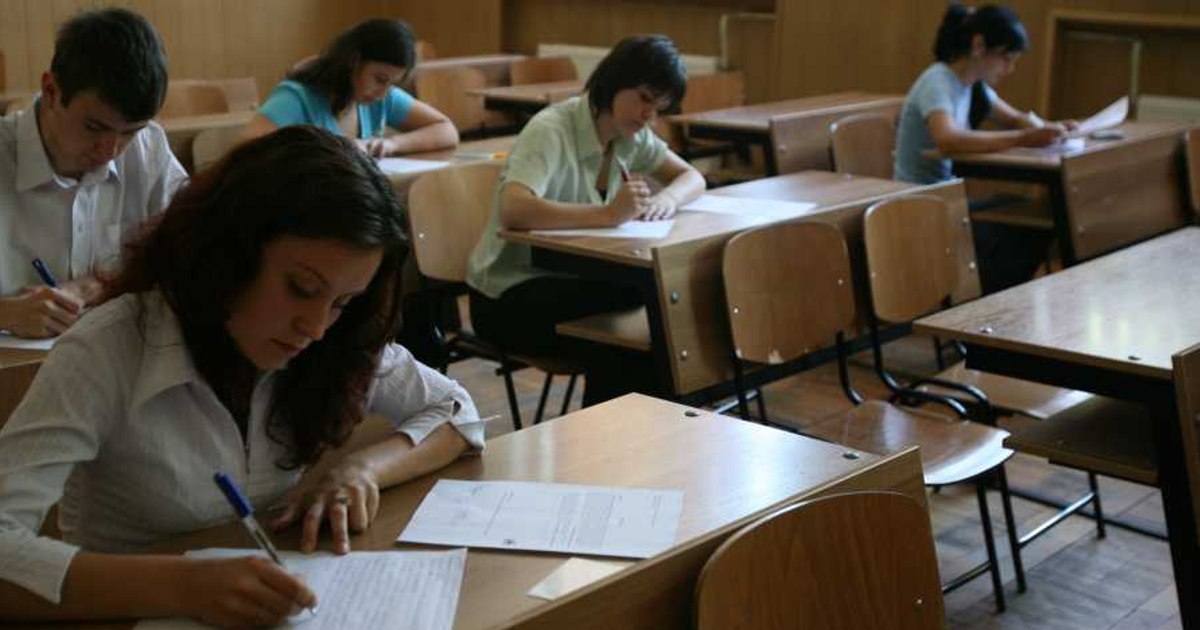
National exams, be it the National Assessment or the Baccalaureate, mark the end of a cycle of secondary or high school education and are a major source of psychological stress for students and parents.
How to overcome the stress of national exams – Photo Archive
Professor Claudia Sava, with 33 years of experience in teaching Romanian language and literature at a college in Iași, explained that national exams involve two distinct aspects: one academic and one emotional, which requires careful management, according to Agerpres.
“The academic component is the one that requires an intellectual effort, concentration, careful reading of the requirements, regardless of the level, that we are at the National Evaluation or at the Baccalaureate exam, understanding the requirements, supporting texts and focusing on what is expected. A careful reading of the statements means, we teachers say, that half the requirement is solved. There is another component to this evidence. It’s about the emotional component. And this is where the difference is made between children who are good competitors and children who are more hesitant. Good competitive children manage their emotions. There are no exams without emotion, but they manage to build. These experiences help them focus on what they have to deal with”said Claudia Sava, who currently teaches Romanian language and literature at the “Mihai Eminescu” National College in Iasi.
According to teacher Claudia Sava, proper time management before tests is essential.
“It’s about rest, relaxation. It is known that scientific and academic information is fixed through rest, through sleep. Also, the family climate is very important, that is, it is about the way the parents know how to empathize, show solidarity, support the child. Adolescence, par excellence, is an age with emotional storms and there is certainly no valid recommendation for all children. Perhaps it would not be bad for parents to tell their children that the pressure is not so great and that most people who are now 15 – 16 years old, if we refer to the National Assessment, or 18 – 20 years old, if we refer to the Baccalaureate , they went through this experience and survived. So it is a necessary experience, it is a threshold and approaching it with a natural, calm will certainly bring better results than an unusual stress“, says Claudia Sava.
Student stress and parent anxiety
Before and during national exams, it’s not just students who feel stressed, but parents often experience anxiety as well.
“Perhaps it would not be bad for parents to try, as it is about adults, to control their emotions, because they have different life experience. Perhaps it would not be bad for them to refer to what they themselves experienced during the exams and to remember that it was not very easy for them and precisely because of this to try to create a balanced and empathic affective climate for the children . And if they feel they can’t do that, sure, there are ways. I left the child for the exam, I go, I identify a spiritual way to help him in some way“, explains Prof. Dr. Claudia Sava.
But the strongest emotion seems to be felt by the students when they are presented with the exam subjects in the examination hall.
“There is a moment when the students receive the subjects, regardless of the subject and their age. And with a quick scan, the child can identify a number of topics that appear to be a blank slate in their mind. It seems to them that there are some subjects that they do not know. “It’s clear that I won’t be able to handle it.” In such situations it is good to identify the subjects that they feel they can handle, to start working on those elements of the test and they will notice that in the background the brain identifies solutions for the other requirements as well, so that, with a lot of patience and a lot of calm and with a lot of concentration, they will manage to solve everything they have to solve. Therefore, they should not be afraid if they find very demanding subjects in the tests or about which they seem to know nothing. In fact, they know, but the brain is so bombarded with what is happening to it that it cannot make all the connections at the same time. They are done gradually during the test. Maybe they can write on their draft with an exclamation mark the topic X that needs to be solved from now on, so as not to leave anything unresolved behind“, mentions the teacher.
Advice before national exams
Besides, before the exam it is not good for students to repeat everything with automatic fire. Specifically, it is not recommended “fattening the pig in the eve”, but rather relaxation.
“It is absolutely wrong. It is recommended even the day before the exam to have relaxing activities, walks, a happy movie, a pleasant reading. This is before the exam. Also, let’s take care to rest very well the night before,” the teacher recommends.
Regarding the most frequent mistakes of the students during the written exams, it warns: “Children do not read the statement carefully. There are situations in which they have to identify two or three situations and quickly identify only one or two, saying; I haven’t found anything else, because they don’t have the patience to approach the subject calmly, politely, without pressure. Therefore, it is in this area that the frequent mistakes that we as teachers identify are made“.
When the national exams take place
The National Assessment begins on June 25 with the Romanian Language and Literature test. On June 27, the Mathematics exam takes place, and students from national minorities take the exam in their native language and literature on June 28. The results of the National Assessment will be posted on July 3, before the appeals period.
The baccalaureate exam 2024 brings a series of challenges for students, starting with the assessment of language skills in an internationally spoken language that takes place from 25 to 27 June. On July 1st, students will take the written test in Romanian Language and Literature, followed by the mandatory profile test on July 2nd and the optional profile test on July 4th. The last written test, in Mother Language and Literature, will take place on July 5. The results of the written tests will be displayed on July 8th by 12:00 PM, and students will be able to submit appeals between 12:00 PM and 6:00 PM on the same day. The appeals resolution process will take place between July 9 and 11, and the final results of the Baccalaureate 2024 will be displayed on July 12.
