
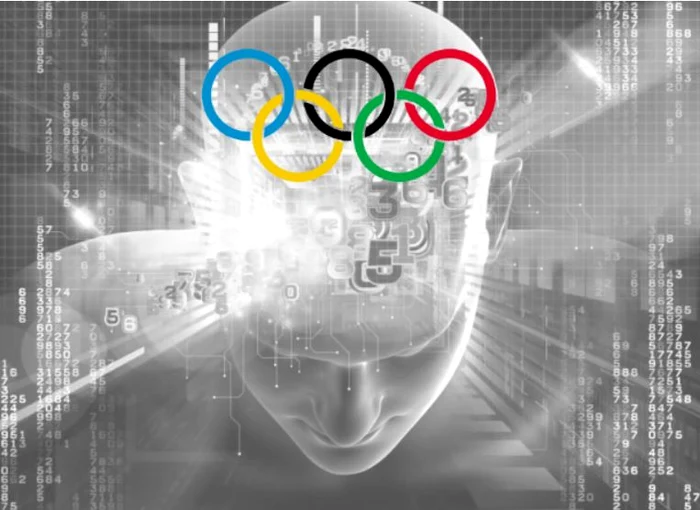
Artificial Intelligence makes its presence felt in all aspects and fields of contemporary life. For example, a new monitoring service based on artificial intelligence (AI) will protect athletes and officials from online abuse, both at Olympic Gamesas well as at the Paralympic Games, which take place in Paris, between July 26-August 11, 2024.
Artificial intelligence will change rapidly Olympic Games, both in 2024 and beyond: from identifying and training promising athletes with the help of machine learning, to minimizing biased judging. In addition, host cities will even use AI to host the Games in a more sustainable way and with better outcomes for local residents.
In the Olympic Games in Paris in 2024 will be the first time AI will be used to provide safe online spaces at such a large event. In this regard, since the beginning of the year, the Olympic Agenda for Artificial Intelligence has been launched, which emphasizes the expected impact of AI on the entire Olympic “movement”. International Olympic Committee (IOC) shows how Artificial Intelligence can improve security in sport.
The AI-powered system will monitor thousands of accounts in real time across all major social media platforms and in over 35 languages. Any threats to athletes that are identified will be flagged so that abusive messages are effectively ‘dealt with’ by the relevant social media platforms (in many cases even before the athlete has a chance to see potential abuse).
AI will not only prioritize the safety and well-being of athletes during the Games, it will help the IOC and the Medical and Scientific Commission to better understand the challenges athletes face in dealing with online followers and allow them to further improve protection of athletes to future events.
“Sports and social media are inextricably linked. We expect around half a billion posts about the Paris Olympics. There are so many fantastic opportunities for athlete involvement, but unfortunately online violence is inevitable. This is a challenge for us because a safe sports environment must also mean a safe digital environment“, the officials said Olympic Games.
The online monitoring system will be available to 15,000 athletes and more than 2,000 officials at Olympic and Paralympic Games and will be an integral part of a “security suite” to ensure a secure online and offline environment during Olympic Games with the aim of supporting and promoting the physical and mental health and well-being of athletes so that they can focus on their performance in the biggest event of their sporting career.
“This is the first time this solution will be used to protect so many people in so many sports. Using AI, we will be able to better understand online violence in sports and develop data-driven strategies and interventions to create physically and psychologically safe environments for athletes“, the officials say.

If you want to understand the impact of Artificial Intelligence on the present, but especially on the future, you can participate between October 6-7 in Bucharest (Radisson Blu) at AI Expo Europe, the largest interactive conference in Eastern and Central Europe. It will involve professionals, leaders and followers of innovation, “dreamers, thinkers&doers”, mentors and business people in a unique event of this industry that is already changing the world!
For more information, to buy tickets or promotional packages, click here: www.aiexpoeurope.com
Behind the “camaraderie” and sporting fairplay, Olympic Games they also reveal a fierce battle between nations that take pride in the medals won by the players. There are countries investing millions in identifying and training the best talent in the hope of winning more medals than their main rival, and more and more of them have realized the benefits of finding top candidates at an age tender to better hone their skills over the years.
Now, AI is bringing some of the technology that was only found in professional locker rooms to the level of young participants, where training begins at Olympic Games.
“With the rise of wearable technology, more and more young athletes have access to information, and a previous problem of not having enough data is being solved“, he says Garrett BeattyPh.D., professor of applied physiology and exercise in the College of Health and Human Performance.
But what is AI? “This new field of computer science focuses on technologies that mimic human intelligence – AI systems have become more widespread in recent years, although scientists have been trying to build Artificial Intelligence since the early days of computers. The main approach involved creating large databases of facts and rules, and then getting logic-based computer programs for the “machines” to make decisions. This decade, however, saw a change with new approaches that make computers learn their own facts and rules by analyzing data, bringing major advances in the field“, say say Ruxandra Tataruco-founder and CEO of the event AI Expo Europe.

The reasoning and judgment processes of sports officials they can depend heavily on their emotions. Travels, fatigue, the problems of life itself, make reasoning and correct judgment difficult. Thus, the organizers Olympic Games they want to turn to machines to control costs, reduce bias and avoid corruption. For example, when launching the AI agenda, the IOC demonstrated that an AI-based analysis of tandem divers can correctly quantify body rotations and angles and alignment between team members, so it’s all pure math.
The host cities of the Olympic Games they typically have seven years to prepare to welcome more than 10,000 athletes and millions of visitors, and time is a valuable resource. Kyriaki Kaplanidou, Ph.D., professor of sports management in the College of Health and Human Performance worked in the international media department for the Athens 2004 Olympic Games. Her research documented what she calls the “emotional cycle” of local people’s response to Games: First comes excitement, followed by skepticism and confusion as the build-up to the event begins to affect their hometown. Then, as the Games approach, the excitement and pride return. “You can use AI to map that emotional cycle and provide residents with insights that help them make the most of these unusual circumstancesKaplanidou said.
AI Expo Europe is as much about Artificial Intelligence right now as it is about where we’re headed!
Under the slogan “Transforming tomorrow, today”, the event brings you together under the same dome:
* industry leaders who will discuss cutting-edge applications and the future of artificial intelligence;
* interactive exhibitions that will present the latest services and practical innovations that AI brings;
* networking events in the VIP lounge with industry leaders and partners, as well as a gala ceremony.
The event will be both a dynamic and comprehensive platform in the field of education, as well as an excellent opportunity for networking and developing new business opportunities.
