
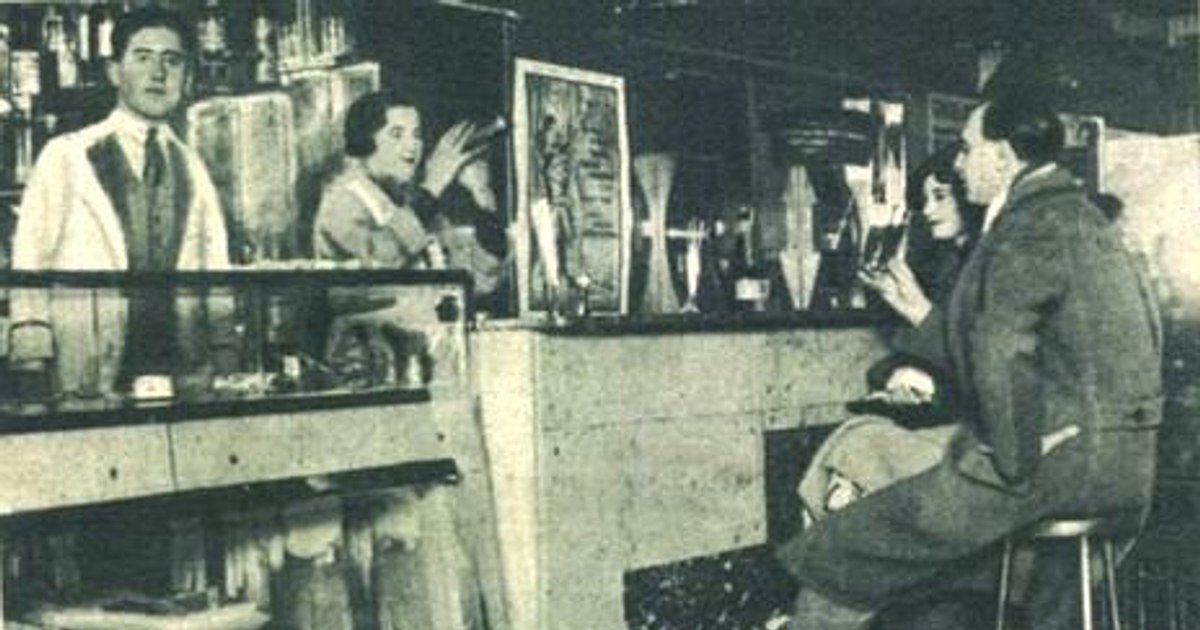
On a sunny summer day, on the streets of the country's great fairs, you could quickly cool off with a lemonade or a braga and grab a snack on the go in the form of pretzels or pies. Merchants with tanks on their backs walked the length and breadth of the fairs to sell the drinks that earned them their daily living. It was a form of street trade that today falls under the umbrella of street food or street delivery.
From the pretzels sold on the street, to the Herdan brothers' vending machines, only a few decades have passed
“Weekend Adevărul” spoke with Cosmin Dragomir, culinary journalist and founder of gastroart.ro – the first magazine specialized in researching the history of Romanian gastronomy and hospitality – and the publishing house of the same name, to learn more about the history of fast food phenomena, street food, take away and food delivery on the territory of our country.
“Weekend Adevărul”: First, please explain to us what street or fast food actually means in terms of how the food is prepared.
Cosmin Dragomir: Street food and fast food can be fast cooking or slow cooking. For example, in India, foods categorized as fast food are also cooked for 10 hours and then served. A burger or a small one made on the spot represents fast food or street food in the classic sense of the word.
Even though these names are recent, the underlying concepts are quite old…
As far as we're concerned, we don't have very old information. However, both the Greeks and the Romans had such “restaurants” at the corners of the alleys where they served food cooked at the horse's muzzle, as they say, as evidenced by those discovered in Pompeii. It seems that they didn't really cook at home, especially since there were many such places for how many inhabitants there were. Cooking at home remained the preserve of the rich, who had servants, serfs or slaves, and the working class, in general, ate on the street. This phenomenon still happens today in the very crowded metropolises of Asia, where living spaces are small and everyone eats on the street. Here, in the 15th-16th centuries, in Constantinople, there were three large types of street restaurants, each specializing in one type of food: sarmale, pilaf and that leg soup – the precursor to belly soup. This model was somehow imported to us, and during the plague of Caragea (no – the bubonic plague epidemic that took place in Wallachia in the period 1813-1814) the first take away from Romania appeared.
How?
A royal order is given by the Caragea which forbids the peacemakers – inns specialized in peace or pacea ciorba (nr – leg soup) – to serve the product inside because of the plague. The same phenomenon happened during the COVID-19 pandemic. So whoever bought soup from the hawkers was not allowed to consume it in the restaurant, but had to take it home. The existence of this order shows us that it was probably possible even before to buy and not eat on the cobblestones or at the tables, but to take away. This is somehow also a form of street delivery.
Caragiale's pies
But in the history of our country do we encounter the concept of street food in other forms?
Yes, there were different merchants – bragagi, limonagi – who went to the big fairs and carried big tanks on their backs from which they served you. They also walked the streets of the big fairs: Bucharest, Iași, Craiova. Also, 200 years ago, there was also a form of food delivery: the people of Olten came with the milk cow, but also with vegetables, and they walked through the streets shouting, and people went out and bought. In general, the people of Olten did this in Bucharest. At the same time, there were also the itinerant simigii (no – bagel sellers). Mainly in Constanța, Tulcea, they also sold chuberecus (no – traditional Turkish pies), but also in other areas, including Bucharest. The trade in pies was going so well that the Fanariots wished “May God grant that you become a great pie maker in Wallachia!”. This is how Caragiale's grandfather came to us. When Mateiu Caragiale was looking for his blue blood in genealogy, his father, the playwright IL Caragiale, told him: “You see that your forehead is beveled from the trays of pies carried on your head from your grandparents.”
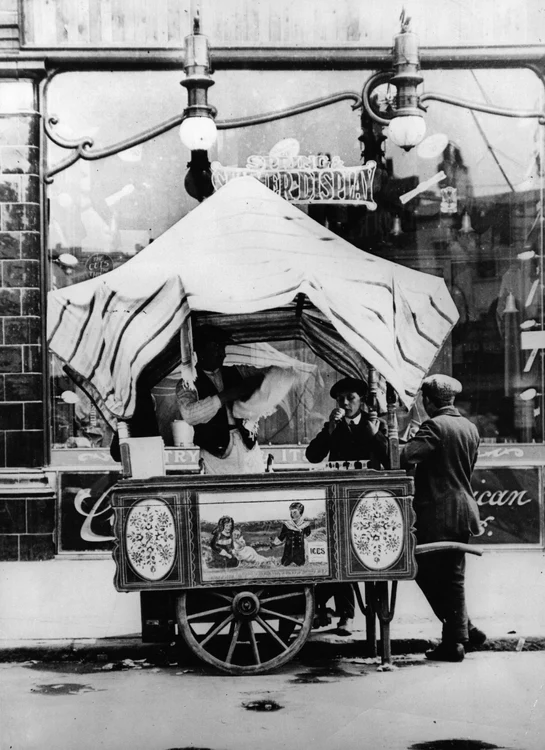
Birt on wheels. Photo: Getty Images
How did the street food phenomenon evolve?
Later, street food and fast food appear in the form of zahanales, the most famous being the one in Colentina, where Piața Obor is located today. Initially it was the cattle fair – Târgul Moșilor, and then the slaughterhouse. At the gate of the slaughterhouse, there were grills and you would roast offal and offal and eat on the spot. The beef was butchered in the morning, and within a few hours you could eat whatever you wanted from it, grilled. In the interwar period there was even a forerunner of today's food trucks. From an article in “Illustrated Reality” (August 26, 1936) we learn about the birt on wheels, made by an “enterprising Romanian, imitating the Americans”, who was traveling through Abrud and other localities in the Apuseni Mountains. It was also then that the famous vending machines appeared, including those of the Herdan brothers, who franchised many such vending machines, ending up holding the monopoly. Later, during communism, these vending machines turned into lacto-bars: they had high tables and you could eat pies with yogurt or sana. On the other side, there were grills at the talcioks. Later, the tradition continued at car shows. For example, at the car fair in Pitesti, Nea Ilie continued the tradition started at the time of her great-grandfather, who used to grill at the town's talciok. Today, Nea Ilie continues this, specializing in organs and also making roasted mats, a food that seems specific to Argeș. He still barbecues at the car show on Sundays, but he also opened his own restaurant that operates throughout the week.
Street delivery: sweets in a carriage
Initially, Romanian street food was quite simple: a pretzel, a piece of meat, but later, throughout history, did it move to more complicated dishes?
In general, no. Instead, since the 19th century, there has been street delivery. In 1860, Fialkowski, Capșa's competitor, had a confectionery where the Music Store is located today. He served the people, especially the ladies, with cakes and other confections right on the carriage. And the Italian confectioner Giovanni, his and Capşa's competitor, had brought the ice cream known today as a sandwich, so between two biscuits.
Junk food found its place in the food sold on the street in Romania until the years '90?
Not. Under communism, trade was very well regulated, and since then we are left with only beers, popcorn, roasted seeds and, at most, apples dipped in sugar. Otherwise, there was not much junk food. After '90, we stuck to everything we saw in the West. For me, at that time, street food meant Turkish bread. I didn't know that bread could be warm because I didn't have grandparents in the country (laugh). In the city, I would stand in line and, after buying bread, I would eat at least one all the way home. This was street food for me as a child.
