
Given that Tarom has accumulated losses of 800 million euros and narrowly avoided a protest by the pilots, the Minister of Transport, Sorin Grindeanu, is talking about the privatization of the company and about the recovery plan that provides for the replacement of the entire fleet in 5-6 years.
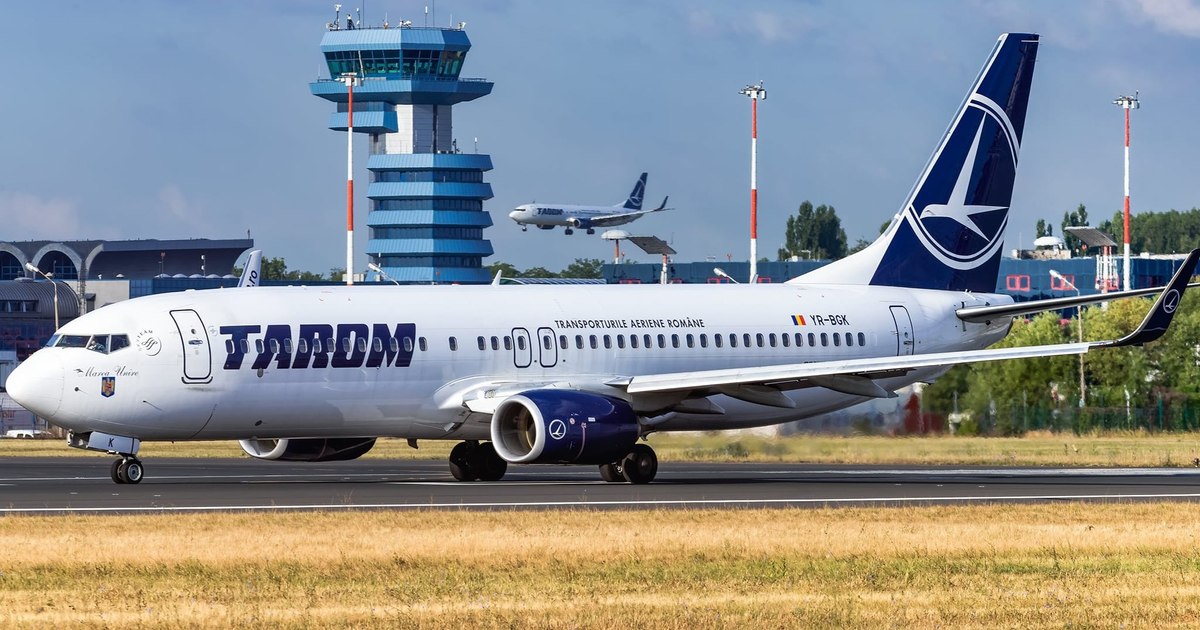
In the spring, the state “saved” Tarom with 100 million euros. PHOTO: Loredana Cioclei
The Tarom crisis, which turned Romania’s air traffic upside down at the beginning of the week, ended after the pilots were proposed salary increases of 1,500 euros, which should be received in three installments.
In May, Tarom was again in the spotlight: the Government validated state aid of almost 100 million euros, in the hope that the operator would take steps to become efficient again.
In the last 16 years, Tarom has accumulated losses of 4 billion lei (800 million euros), according to the statement of the Minister of Transport, Sorin Grindeanu, for “Adevărul”. The company became a black hole of losses – periodically needing substantial sums from the Government.
The social democrat claims that there is a recovery plan that is working. He admits that there are discussions regarding the privatization of the company, but emphasizes that the Romanian state will retain control over the Tarom company.
The biggest challenge: saving the company
The truth: Tarom survived the crisis triggered by the pilots’ grievances. You believe that the human resource issue remains a challenge for companiesis it?
Sorin Grindeanu: Human resource is a challenge for any company! Because both the company’s performance and the quality of the services it offers depend on the human resource and its management. When we talk about TAROM, I can say that the biggest challenge is saving this company, with a history of 70 years! And when I say saving, I mean, first of all, the performing human resource, the professional employees who deserve to stay, who are the real engine of the company. It is important to preserve the human resource that brings added value to TAROM, not those who make it vulnerable!
What other important challenges does Tarom face from your perspective?
One of the main challenges and an important objective at the same time is the replacement of the fleet, a necessary action for the recovery plan of the Company. This process involves the identification and acquisition of new aircraft.
For the modernizations that will take place in the next 2 years, contracts have already been signed for the first two Boeing 737 Max 8 planes. After them, two more Boeing 737 Max 8s will follow, and in the long term, possibly in the next 5-6 years, Tarom has in the plan to replace the rest of the aircraft.
Flight safety is also a major priority, and the new aircraft that will enter the Company’s fleet will obviously contribute to this.
In addition, creating an efficient route program is on Tarom’s action list. The aim is to ensure good connectivity for local airports in the region, thereby optimizing the route network to better meet passenger needs and maximize operational efficiency.
The black hole of Tarom losses – almost 1 billion euros
Please, let’s do a small balance sheet of Tarom up to date – what debts does the company have today; what losses has it accumulated since you have been minister (or since data is available)?
In practice, between 2007 and 2023, the accumulated losses at Tarom reached 4 billion lei (800 million euros).
In 2022, the reported losses were 274 million lei, but in 2023 the loss was reduced by 174 million lei, to around 100 million lei.
This reduction in losses is a consequence of the recovery plan authorized by the European Commission, and the improving trend indicates that Tarom is on the right track and has a chance to return to profitability.
Aid of 100 million euros from the state
How many pilots/how many planes/how many races does Tarom have?
At the moment Tarom has a fleet of 15 operational aircraft and a workforce of 156 pilots. The company averages around 1,000 regular flights each month, and in 2023, 40% of these flights were to domestic destinations, with the rest to foreign destinations.
In Romania, Tarom operates at the airports of Baia Mare, Cluj-Napoca, Iași, Oradea, Satu Mare, Suceava, Timișoara and outside the country the company has flights to destinations in Europe, Turkey and the Middle East.
How much does it cost the Romanian taxpayers, per year, to have a functional state airline?
According to Romanian and European legislation, Tarom is a company that operates on a competitive market, must support itself from its own revenues and can receive government funding only in exceptional cases.
Recently, the state had to intervene by granting this aid of almost 100 million euros to save the company, authorized by the European Commission to support the recovery plan of activities.
It is the only state aid received by Tarom, apart from the one provided during the pandemic, when many aviation companies in Europe, in a much better financial position, needed financial support. I am referring here to SAS, Lufthansa or KLM, which received financial aid worth billions of euros. Therefore, Romanian taxpayers do not bear an annual cost for the operation of Tarom, since the Company is self-financing.
What allocations does Tarom benefit from annually to be able to operate (we are talking about expenses that exceed the income obtained by the company)?
The Tarom company does not benefit from allocation from the state budget, but operates and supports itself from its own revenues.
Why it is important to have Tarom
What are the main advantages of the Romanian state owning Tarom?
We believe it is essential to have a national company with its main operating base in Romania to support air connectivity at national and regional level.
One of the main advantages is Tarom’s ability to intervene in critical situations, ensuring special flights for the repatriation of Romanians in various situations.
Remember the cases during the pandemic or the situations created by the bankruptcy of Blue Air, or, more recently, the conflict situation in Israel, when Romanian passengers were stuck in the Tel Aviv airport.
If we draw a line and analyze – the costs paid for the operation of the company compared to the benefits that Romania has because it owns a state airline – from your perspective, do we get a positive result?
Obvious. States that have national aviation companies have an additional advantage, including in global economic competition. But such a Company must be operational and able to secure the necessary income. Otherwise, the situation becomes more difficult, and the respective Company is difficult to take into account when establishing national economic strategies in the medium and long term. It remains to see the Tarom developments and depending on them we can figure out if when we draw the line, Romania’s economy is advantaged or not.
How do you see the short, medium and long term future of the company?
The future of the company depends on the degree of performance of the current Board of Directors to implement the restructuring plan! The Ministry of Transport will monitor, through the legal levers it possesses, the entire process.
I want TAROM to once again become a benchmark for aviation in this area of Europe and to offer high-quality services to passengers. It is a Romanian brand that we are fighting to save!
Talks about the privatization of Tarom
Is there growing talk of a potential privatization of Tarom? What do you think about this scenario? Are there discussions? In what context would such a scenario be positive?
I do not hide from you that we have discussed this possibility, but in the terms provided by European legislation. The Romanian state cannot lose control over this company. It is certain that the investors who are interested in the company place a great emphasis on the airport infrastructure here in the country. From the construction / expansion / modernization of terminals, to the rehabilitation-modernization or expansion of movement surfaces (runways, taxiways, platforms).
Do you think it would be possible for the parliamentarians and other officials who use Tarom to find private transport options, just like the President of Romania?
I don’t comment on the decisions of President Iohannis, because the President assumes in front of the Romanians the decisions he made! About the parliamentarians and other officials, as I am also a deputy, that they have no pretension to call on private companies. I go with the scheduled flights made available by the TAROM company on the Bucharest-Timișoara route.
Do you think this would mean cost efficiency or rather would it involve higher expenses?
I do not consider it a cheaper option for the state budget. If they want to turn to private companies, they can do it at their own expense!
