
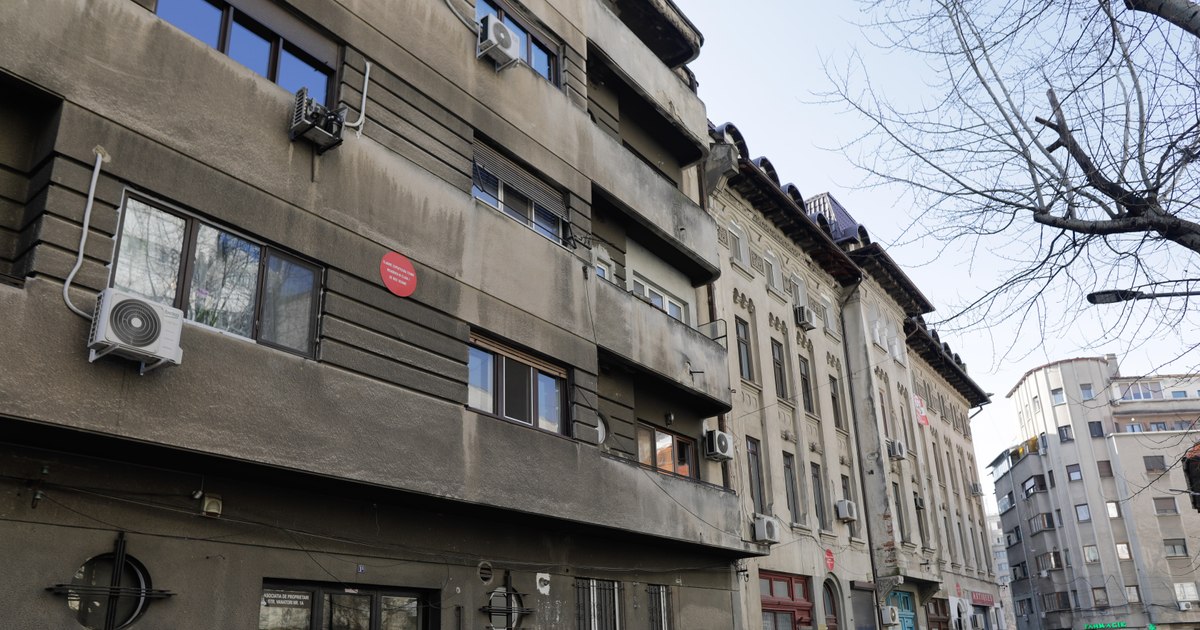
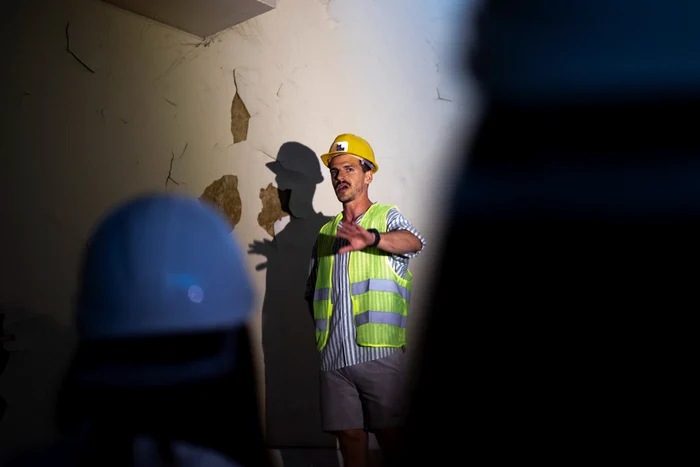
49 years after the 1977 earthquake, Romania is less prepared in terms of infrastructure for a large-magnitude earthquake. So says Matei Sumbasacu, a construction engineer with a master’s degree in the analysis and structure of buildings with seismic risk and founder of Re:Rise, a dedicated organization dedicated to reducing earthquake risk. In an interview for “Adevărul”, he made an x-ray of the situation, talked about the obstacles that stand in the way of consolidation, but also about the measures we can each take, on an individual level. Because although the scenario of an earthquake is scary, a few easy things to do can help keep us and our loved ones safe. Setting a meeting point is just one example.
“The next big earthquake will catch us with 2000-3000 buildings seriously damaged in previous earthquakes”
The truth: How prepared do you think Romania is, at the moment, for the reaction to a big earthquake?
Matei Sumbasacu: Preparedness – the opposite of vulnerability – is multifaceted: infrastructure, response/intervention services, community preparedness, etc.
It is obvious that in terms of infrastructure – that is, how prepared our buildings and engineering structures are to cope with a big earthquake – things are considerably worse than in 1977. We have several hundred buildings in Bucharest that were initially damaged in the 1940 earthquake – they did not fall. Then they also went through the 1977 earthquake and, almost magically, they didn’t fall even then but were badly damaged. Then, we have the buildings built between 1941 and 1977 and damaged in the 1977 earthquake – several thousand in Bucharest alone. If, in 1977, we had, in Bucharest, approximately 300 buildings affected by previous earthquakes (1940) and of which 30 fell, the next big earthquake will catch us with 2000-3000 buildings seriously affected by previous earthquakes.
However, the consolidation process is difficult. How could things be speeded up?
Some steps have been taken in recent years, but the pace must be increased. There are several legal measures that, once implemented, would greatly accelerate the appetite for consolidation (or, rather, reduce resistance to consolidation).
First of all, we have a huge problem with hotel rentals in the center of Bucharest. For some years now, renting in a Rs I (dotted) class building has been prohibited. However, we see hundreds of listings in such buildings on specialist platforms. Unfortunately, they refuse to automatically delist problem properties, placing the onus on the landlords who rent out their apartments.
These owners have – sometimes – 5, 10, 20 apartments in the same block, and basically they decide the fate of that building in the general assembly of the owners’ association. It is they who oppose consolidation and who use their full influence to delay consolidation.
The truth: What is the easiest, let’s say, measure that the authorities could implement?
There are many levels on which different authorities can and must act. I would say that increasing community cohesion – helping neighboring communities to become functional groups – is the action that has the best benefit/cost ratio and brings the most gains in addition to increasing resilience itself.
How can we prepare for an earthquake?
The Truth: Beyond what the authorities can do, what can we do as individuals to keep ourselves and our families safe?
We can increase our chances of getting through the next big earthquake well if we prepare, if we talk with our family about what to do post-earthquake and where we will meet (the earthquake plan), and if we prepare a minimum level of supplies in the house, which will ensure us 72 hours of autonomy in the event of a disaster (the emergency backpack).
The truth: What should the emergency backpack contain?
The emergency backpack (or emergency supplies) must contain absolutely everything we might need for 72 hours in a situation where pharmacies, stores, utilities, etc. will not work. There are several lists that we can start from when making a backpack, but I would encourage all people who want to prepare one, make it themselves and mentally go through this exercise in imagining the post-earthquake situation as realistically as possible.
Don’t buy off-the-shelf backpacks or kits because you’re missing out on the real value of this exercise.
Truth: How is it most useful to set the meeting point?
The meeting point should be chosen as far as possible from tall buildings and other things that can fall and hurt us. It should be as open a space as possible and located so that each of those we have determined to meet after the earthquake can get there. Ideally, we establish a primary point and a backup point (in case the primary point is not accessible). Also – very important – we also need to establish a procedure: how long do we wait for that point and what sign do we leave if we fail to see the people we were supposed to see. It is very important to have such a procedure, bearing in mind that communication networks will most likely be down for some time after the earthquake.
The truth: What should we never do in an earthquake?
We don’t have to run up the stairs trying to get out of the building – the stairs are the most fragile element when it comes to lateral movement and will most likely break first. Also, we must not panic.
I know it sounds ridiculous to say “don’t panic” when we are so seismically vulnerable and the next big earthquake could mean disaster for us as a society, but the reality is that we have the power – if not to avoid disaster altogether, at least to mitigate its impact. And the truth is that preparation helps us react more rationally and turn these panic impulses into constructive reactions.
The Truth: What are the main earthquake myths that you think need to be debunked?
There are many myths and I would not like to put the lens on one in particular. From the myth of the block on rollers or balls, to the myth of the security guard who lived in the block around the 1977 earthquake and – because of that – the block would have been better treated after the earthquake. As a general rule, any story we are told (or told) to help us sleep better at night in such a building should be treated with a healthy dose of critical thinking.
Where you can find out in which degree of seismic risk the building you live in is classified
If you live in Bucharest, you can check whether the building you live in is subject to seismic risk on the website of the Municipal Administration for the Consolidation of Buildings with Seismic Risk. The list was updated in February 2026.
The four risk classes are as follows:
- Seismic risk I (Rs I) – Buildings classified here have a high risk of total or partial collapse; requires urgent consideration; I get the red dot.
- Seismic risk II (Rs II) – Buildings classified here may suffer major structural degradation; collapse is not very likely, but significant damage may occur; consolidation work is recommended.
- Seismic risk III (Rs III) – Moderate structural degradation may occur, without significantly affecting safety.; requires monitoring.
- Seismic Risk IV (Rs IV) – Buildings classified here are considered structurally safe in a severe earthquake.
At the same time, Re:Rise produced a map that indicates what Bucharest could look like after a major earthquake and illustrates both the footprint of vulnerable buildings (RS I, U1, U2, U3, RS II), the approximate area in case of collapse of these buildings, but also the road segments at risk of blockage due to rubble. The map can be found here
