
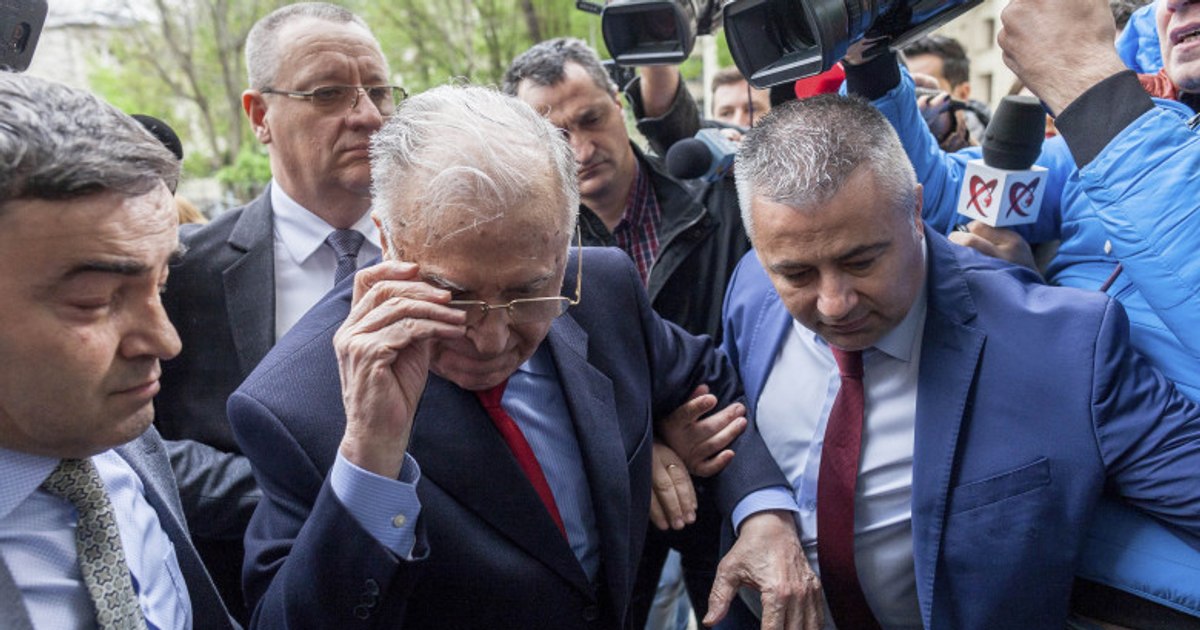
Ion Iliescu, the former president of Romania and the central figure of the post-communist transition, has been targeted over the years by several criminal investigations, the best known being related to the 1989 Revolution and the Mining of the 1990s.
Although he was charged for crimes against humanity and other serious facts, none of these causes ended with a definitive conviction. The files were either classified or blocked in long judicial procedures, and in some cases, time worked in favor of the former leader. His death reopens the discussion about how the Romanian justice worked or failed in the face of key moments of recent history.
It has been targeted over the years by several criminal investigations / photo source: Inquam Photos
35 years after the incriminated events, the files were either delayed or procedurally blocked, before they arrive, leaving unanswered questions in public memory.
Revolution file (1989)
Iliescu was accused by military prosecutors of that, in the period December 22-30, 1989would have orchestrated a systematic issuance of false information through its official appearances and communications, contributing to the generation of a collective psychosis about acts of terrorism. Prosecutors claim that this climate has facilitated deadly violence and reprisals, causing over 850 deaths and thousands of wounded, according to Europalibera.ro.
According to the indictment, “As head of state and government, president of the CFSN and the Higher Military Council, with intent, aiming to obtain the popular legitimacy, maintaining and strengthening the political power held from December 22, 1989, at 16.00, misled the public opinion constantly, repeatedly, systematically, through its television and its issuance and its issuance He assumed, between December 22 and 30, 1989, the systematic operation of misleading the public opinion exercised by the military cadres with management positions of the MApN ”.
These actions generated and amplified a generalized psychosis related to terrorism, which led to multiple situations of internal violence, including fratricidal fire. Thus, between December 22 and 30, 1989, 857 deaths were registered, 2,382 injured, 585 cases of serious deprivation of liberty under conditions that violated the norms of international law, as well as 409 cases of severe suffering.
Walked between prosecutors and courts. Judges had divided opinions
The case was sent to court in April 2019but the judges from the High Court of Cassation and Justice found irregularities in the indictment and demanded the file, seriously affecting the investigation course.
Even after reconfirming the trial of the court in 2023 by the Court of Appeal, the file was again returned to the Prosecutor’s Office to correct the procedural issues.
In September 2024 The judges Lia Savonea and Mihail Udroiu ordered the refund of the Revolution file to the Prosecutor’s Office, invoking the same reasons: the indictment contained the irregularities that the prosecutor did not correction. Magistrate Elena Barbu expressed a separate opinion from this decision.
The mining that changed the history of Romania. The key role that former President Ion Iliescu played played
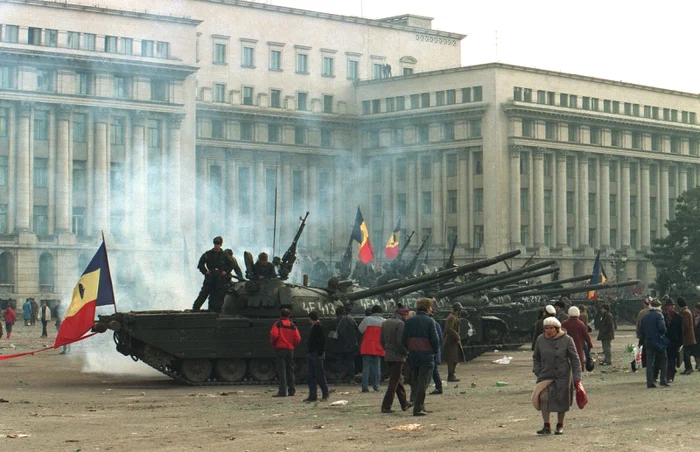
Walked between prosecutors and courts. Judges had divided opinions / photo source: Profimedia
Mining file (1990)
The military prosecutors of the Military Prosecutor’s Office of the Prosecutor’s Office of the High Court of Cassation and Justice completed in 2017 The investigations in the file “Mining of June 13-15, 1990” and ordered the case to be sent to court. The investigation reveals that, in the days before the violence, the state authorities decided to violently suppress the peaceful manifestations in the University Square, in which the protesters demanded the adoption of the 8th of the Proclamation in Timisoara. In this attack were illegally involved forces of the Ministry of Interior, Army, SRI, but also over 10,000 miners and workers from various regions of the country. According to the indictment, four people died in the three days of confrontations, and more than 1,300 were injured.
Rested twice to the parquet
In May 2019The High Court of Cassation and Justice has ordered restoration of the investigationfinding that the initial indictment was drawn up with the vices of legality and returned the prosecutor’s file.
After several years of delays, in April 2025 The General Prosecutor’s Office again sent the former president Ion Iliescu and the former prime minister Petre Roman, along with other important officials such as Gelu Voican Voiculescu, Virgil Măgureanu and Miron Cozma, for crimes against humanity.
“Ion Iliescu is also the main beneficiary of the facts, in which he competed a system eager to serve the one who had been newly elected president of the country. By the major influence he had at the level of public opinion, the defendant was able to manipulate it, regarding the existence of a state of a legionary source, which created the violent reaction,” the prosecutors in the indictment held.
The file is in June 2025 On the table of judges of the High Court of Cassation and Justice, being in preliminary chamber procedure, without establishing another term for the first trial.
It is 35 years since the first mining. The event file of June 13-15, 1990 is judged to the supreme court
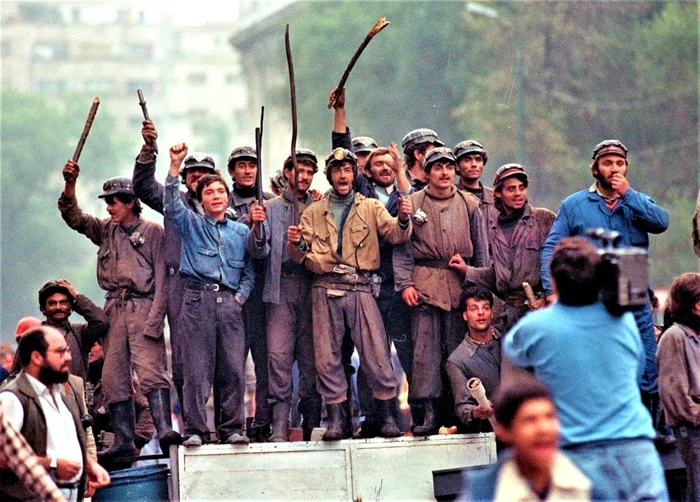
The investigation reveals a violent repression of demonstrations / photo source: bulletin.de
The files in which the former president was investigated, especially those related to the 1989 Revolution and the Miners of the 1990s, bring to light the difficulties of a judicial system confronted with political pressures, complex procedures and legal unclear that made the truth. For decades, these causes have been suspended, delayed or blocked for procedural reasons, and the fact that no definitive conviction has been pronounced reflects the weaknesses and limits of the institutions that should have done justice to the victims.
