
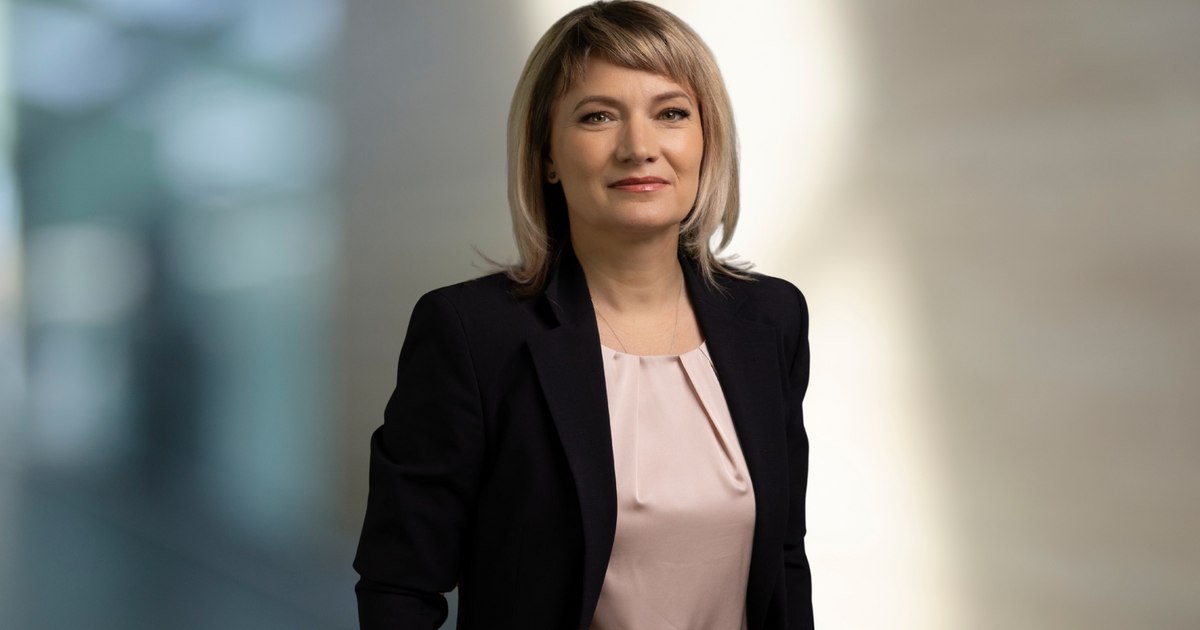
How Artificial Intelligence will change the businesses and societies in which we live, Romania’s advantages, globally, in the field of technology, what will follow in 2025 in terms of cyber security, the lessons learned after the pandemic period are some of the topics analyzed by Ligia Ardelean, country manager of Atos Romania, at the end of a challenging year for the IT industry.
What were the biggest business challenges for Atos in 2024?
Ligia Ardelean, Atos Romania country manager: The year 2024 was marked by significant challenges that shaped our strategy globally and locally. Technologicallythe accelerating pace of innovation, particularly in areas such as AI and cybersecurity, has necessitated continuous adaptation. To remain competitive, we have invested heavily in developing new skills and expanding our capabilities. In the area of cyber security, we have faced an industry-wide increase in the number and complexity of cyber-attacks. This has forced us to take additional measures to protect sensitive data and critical infrastructures, both our own and those of our customers. At the economic and geopolitical levelinternational instability and tensions have disrupted supply chains, affecting certain industries in which some of our customers operate. This year’s challenges have led us to adopt innovative solutions, to strengthen our position as a trusted strategic partner for our clients.
How do you see the evolution of the IT market globally in 2024 and, specifically, for Romania, given the increase in demand for digital solutions and emerging technologies, such as AI and sustainable IT platforms?
The global IT market experienced an accelerated transformation stage in 2024, fueled by high demand for digital solutions and emerging technologies. We are talking about a natural transformation, which must keep pace with the needs of the market. Artificial intelligence and sustainable IT solutions are top priorities for companies of all sizes. We observe a clear transition towards the implementation of these technologies not only as a trend, but as a concrete need to remain competitive and relevant in the current economic context. I strongly believe that as we move towards 2025, we will see increased adoption of AI-based solutions integrated with automation technologies. They will become essential for improving operational efficiency, both in direct customer-facing activities and in internal support processes. In Romania, the IT market follows a similar path, with a growing appetite for innovation. Companies demonstrate a great openness to integrate cutting-edge technologies, and this represents a huge opportunity for us, as a strategic partner, to support them in this process. We are convinced that this growth trend will intensify, as Romania has the potential to become a regional hub for sustainable IT solutions.
How will AI integration transform Atos products and services in 2025?
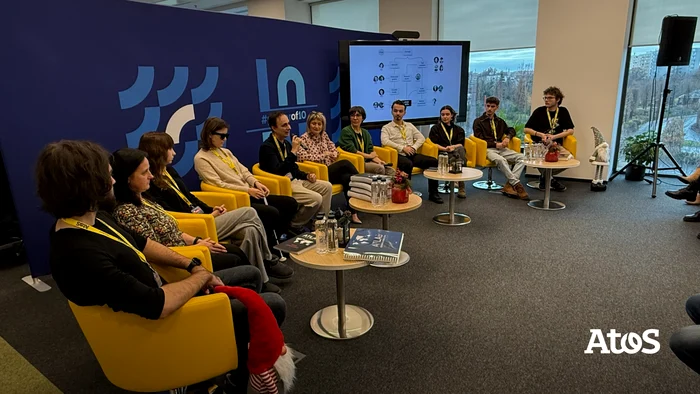
The integration of AI will also bring a profound transformation to our products and services, as well as to the entire IT sector next year. We expect a significant increase in process automation, improved data analytics capability and the development of much more customized solutions for customers. A key challenge, but also an opportunity, will be the creation of solutions that are adaptable to the diverse needs of clients, but which do not require building these solutions from scratch, for each individual project. Through a balanced approach, involving a limited level of customization, we will be able to benefit from the scalability of these solutions, ensuring that they can be implemented quickly and efficiently in multiple contexts.
In terms of new opportunities, we see significant potential in the development of AI-based platforms for cybersecurity to help organizations detect and prevent attacks faster. AI will also play an even greater role in optimizing supply chains, improving logistics processes and reducing risk. Another major direction is the use of AI for solutions related to energy management and sustainability, where we see increasing demand from customers who want to achieve their carbon footprint reduction goals.
The French government recently approved Atos’ financial restructuring plan. What does it consist of?
This plan has as its main objectives financial consolidation, debt reduction and increased operational efficiency. It is an important moment for Atos, and an essential aspect is that this plan brings clear guarantees for our customers: stability, continuity and development in the services we offer. Through these measures, we will be able to redirect important resources to invest in emerging technologies and improving our technical solutions. This will allow us to maintain our position as an innovative and reliable partner for our customers.
In Romania, Atos has implemented a program to equip schools with refurbished IT equipment. What were his results?
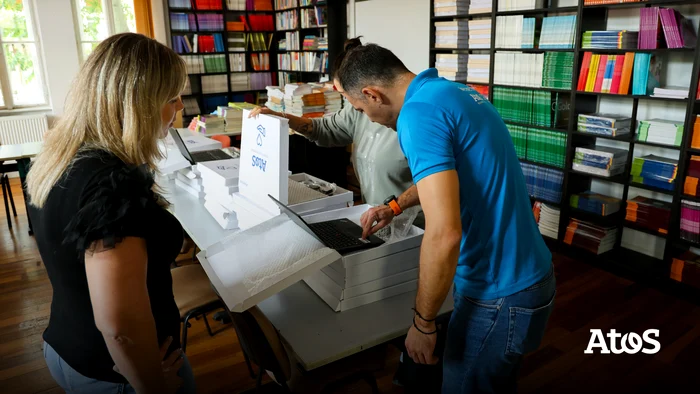
In 2024, we managed to equip several schools, high schools and faculties in Timișoara with 344 laptops, computers and monitors refurbished and updated with modern technology. In addition to this program, we have had the opportunity to join other social responsibility initiatives. An example is the Tactile General Geographic Atlas, a unique project in Romania, funded with 25,000 euros by Atos, which offers blind people access to complex geographic information through tactile technology, Braille text and audio explanations. The project was developed by the Western University of Timișoara and was launched in December. The atlas will be distributed free of charge in schools, libraries and specialized faculties in Romania, contributing to inclusive education.
You have an older collaboration with the university environment. What does it consist of?
The collaboration includes a series of initiatives through which we support the training of future IT professionals. We collaborate with the Politehnica University of Timișoara and the University of the West to provide access to advanced technological resources, internships and mentoring programs. We support research projects, contributing to the development of innovative solutions and the training of young talents.
What are the company’s priorities for 2025 in terms of employee well-being and the long-term stability of Atos? In December, you also started negotiating the new collective labor agreement.
I do not believe, as a manager, in the development of companies without the balanced development of its employees. Human resource is what keeps companies and the economy as a whole alive. Atos’ priorities continue to focus on three essential directions. The first is the health and well-being of employees. We want to maintain and develop a safe and healthy work environment, promoting a work-life balance. The second direction concerns professional development, which means that we will continue to invest in the training of our colleagues. Financial stability, the third direction, means that we remain focused on maintaining financial stability, through streamlining operations and careful management of resources, ensuring that Atos remains a trusted employer in the long term.
How has the COVID-19 pandemic affected the IT industry?
The pandemic has had a significant impact on the IT industry on several dimensions. One of them was the service marketso that in the first six months of the pandemic, the entire industry went into a state of stagnation. Projects stopped, investments were suspended, and companies focused on current activities to maintain operations. As things began to settle down, the Digital Workplace sector saw significant growth and the IT industry quickly evolved to support the need to work remotely. Then we talk about the dimension related to the labor market, which was similar. In the first part of the pandemic, most companies focused on preserving jobs. A period of massive recruitment followed, to support project expansion and replace staff departures. If before the pandemic the attrition rate was around 10.5-11%, during the pandemic it doubled. Recently, however, we managed to stabilize this rate, and now it is below the pre-pandemic level.
What have been your experiences managing remote teams?
Before the pandemic, office work was generally the natural norm. I remember that when the school closures were announced, many people went into a general panic. As for us, we took advantage of a Friday, when maintenance activities were scheduled in the premises, to do a test of the internal network, asking the teams to work from home. The test went smoothly, and so over the weekend, when the government announced school closures, we were able to move the entire organization online. The pandemic wasn’t easy, especially since the teams were used to collaborating face-to-face on projects. Activities such as virtual coffees, online team meetings, digital Christmas celebrations have been introduced. At first, these activities seemed forced, but as time went on, I realized their benefits, and the adaptation was quick.
To support the transition, we quickly digitized HR processes that had not yet been fully digitized, such as interviews, hiring, training or administrative documents. The lessons learned are still valuable. Especially for those who already had experience and strong relationships in the organization, the transition was easier and beneficial. But for younger colleagues, who may have been at their first completely remote job, integration was more difficult.
It was complicated to work on projects without meeting face-to-face with colleagues, managers or HR. Therefore, we have learned how important it is to provide constant support where it is needed. For example, we implemented “daily huddle” sessions to discuss operational issues, which became an essential point for maintaining connection between teams. Under these conditions, I realized how important the feeling of belonging to the team is. As I said, companies are first and foremost about people. They are not just structures or processes, but living communities where employees grow and develop together. And this, in the normal times we were lucky enough to return to after the COVID-19 pandemic, means genuine connection between colleagues. It is a type of human connection that even artificial intelligence, however advanced it becomes, will not be able to replace.
***
About Atos
Atos is a global leader in digital transformation, with approximately 82,000 employees and annual revenues of approximately €10 billion. Europe’s largest cyber, cloud and high-performance computing company, Atos offers customized solutions for all industries in 69 countries. A pioneer in decarbonization services and products, the company is committed to creating a secure and decarbonized digital future for its customers. Atos is an SE (Societas Europaea) and is listed on Euronext Paris.
Atos’ goal is to contribute to the design of the future of the information space. Its expertise and services support the development of knowledge, education and research in a multicultural approach and contribute to the development of scientific and technological excellence. Internationally, Atos enables customers, employees and the entire community to live, work and develop sustainably in a secure and protected information space.
