
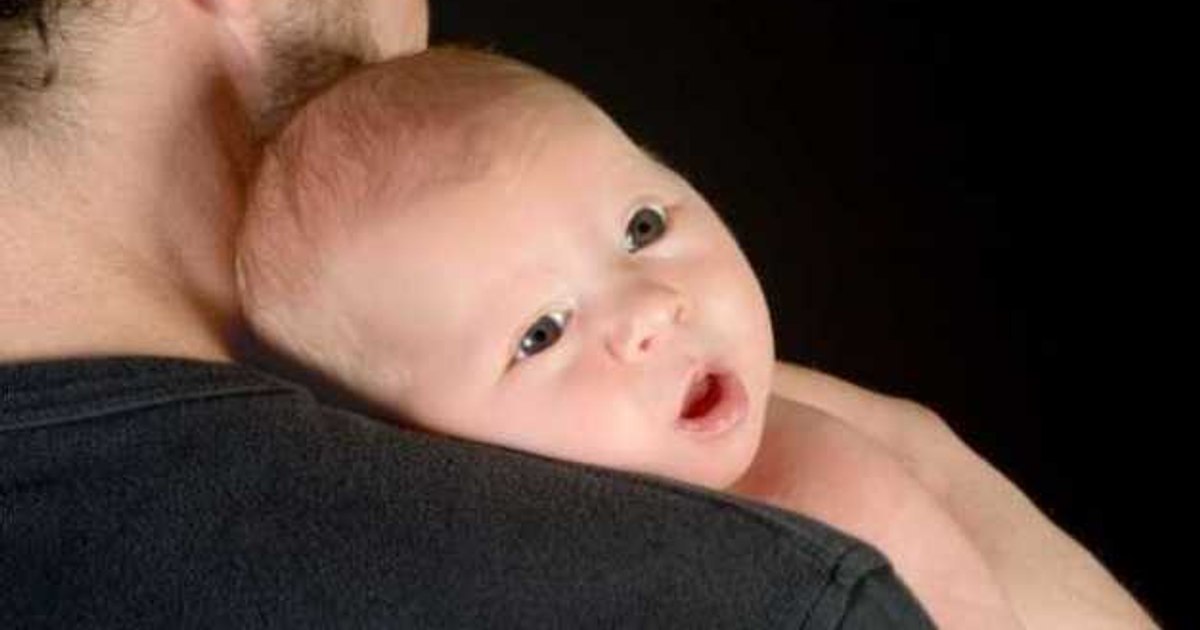
About 1 in 7 women develop postpartum depression (PPD) after giving birth. The condition has also been reported among adoptive parents and other non-birth parents, including fathers.
Men also suffer from postpartum depression PHOTO The truth
In a press release announcing the approval of Zurzuvae, the first oral drug designed to treat PPD in women, Dr. Tiffany Farchione, director of the division of psychiatry at the Food and Drug Administration's Center for Drug Evaluation and Research, described -o as being a “potentially life-threatening condition in which women experience sadness, guilt, worthlessness – even, in severe cases, thoughts of harming themselves or their baby“, reports Yahoo Life.
Here's what new research says about how PPD can affect men and what it's like to deal with it as a father.
Absent or merciless father
In September, the journal BMC Pregnancy and Childbirth published a pilot study conducted at the University of Illinois-Chicago focusing on postpartum depression in men, which previous studies estimated affects between 8% and 13% of new fathers. Of the 24 fathers screened for postpartum depression in this new study, 30% were found to have suffered from the condition. The results suggest not only the need to invest in more research, but also the importance of asking fathers how they feel after having a baby.
He feels like a parent of nothing
While awareness of postpartum depression in women has increased, little attention has been paid to men. Unique social forces shape PPD in fathers. “As a society, we are generally taught that women are natural mothers, but the stereotypes of fathers in the media are the absent father or the unforgiving father”, says psychologist Daniel Singley, founder of the Center for Men's Excellence. “In this sense, it is different for the father than for the mother. If dad feels like a do-nothing parent who doesn't know what he's doing, it's compounded by this socialization that says men aren't good at parenting a child.“
Due to a lack of screening and a general lack of awareness, postpartum depression in men often goes unnoticed. “For fathers, depressive symptoms tend to peak around four to five months postpartum.”, Singley says. “And for this reason, many men will not make the connection between what they experience and childbirth and a postpartum disorder.”
How can dads struggling with postpartum depression get support? And what does postpartum depression look like in men? Here's how these dads experienced it:
“hit me hard”
Jim S., a father from Orrville, Ohio, celebrated his son's arrival by cutting the umbilical cord, crying and hugging his family. It was one of the most beautiful moments of his life. But”after a while everyone left and mother and child were both sleeping and it hit me hard”, he says. “The fact that we were no longer the same couple made me terribly sad. I started crying and went to the bathroom, closed the door and started crying. Not happy tears – this time they were sad tears“.
The 32-year-old's sadness began that night in the bathroom but lasted for months. “It was supposed to be the happiest time of my life, but I started withdrawing from everyone, including my wife and son. I was going to get things for my wife, but I didn't really hold my son or feed him.”
It took about three months before she sought help. “I finally had enough and went to the doctor” says Jim, who asked not to give his last name. “I couldn't take it anymore. My wife couldn't eitherHe credits her with supporting him and encouraging him to take action after noticing changes in his behavior.
“I don't know how she figured it out, but she mentioned that men suffer from postnatal depression, and I didn't believe her at first.” he says. His family doctor put him on medication, but he regrets not going to a therapist. “More people need to understand that men can have it too and (that) mental health in general is of great importance“.
Overwhelmed and helpless
Joel Gratcyk, a father in the suburbs of Chicago, noticed the symptoms a few months after the birth of his first child. He had a loss of appetite, irritability and difficulty concentrating. “There was pressure at my workplace since then and they weren't very understanding about me having a baby.” he tells Yahoo Life. “I remember one day I was crying in the car after work. My wife was on a trip and I had the baby with me and I was overwhelmed and helpless. I managed to pull myself together, get home and pass overnight. That's when I knew I needed help.”
The 42-year-old father visited a doctor and was given medication, which he says helped him “with emotional regulation, sleep and diet.” Later, he saw a therapist “to learn cognitive reframing techniques“.
How to get help
Treating postpartum depression in men can be beneficial not only for fathers, but also for their wives and children. But many men don't get treatment from mental health professionals because of the stigma attached. “Left untreated, we know that postpartum mood disorders it often gets worse” says Will Courtenay, a practicing psychologist in Oakland, California, and author of Dying to Be Men. “And they can have long-term, damaging consequences for a man, his marriage, and his entire family.“
Helping men with postpartum depression also involves expanding understanding of the man's role in family life and a broader consideration of his emotional life. “Men are socialized to protect, provide and sacrifice, and this is noble” says Singley. “The problem is when men decide that's all they'll do. A man will be much healthier if he protects, provides, and sacrifices himself in some situations and allows others to protect him in other situations.“
