
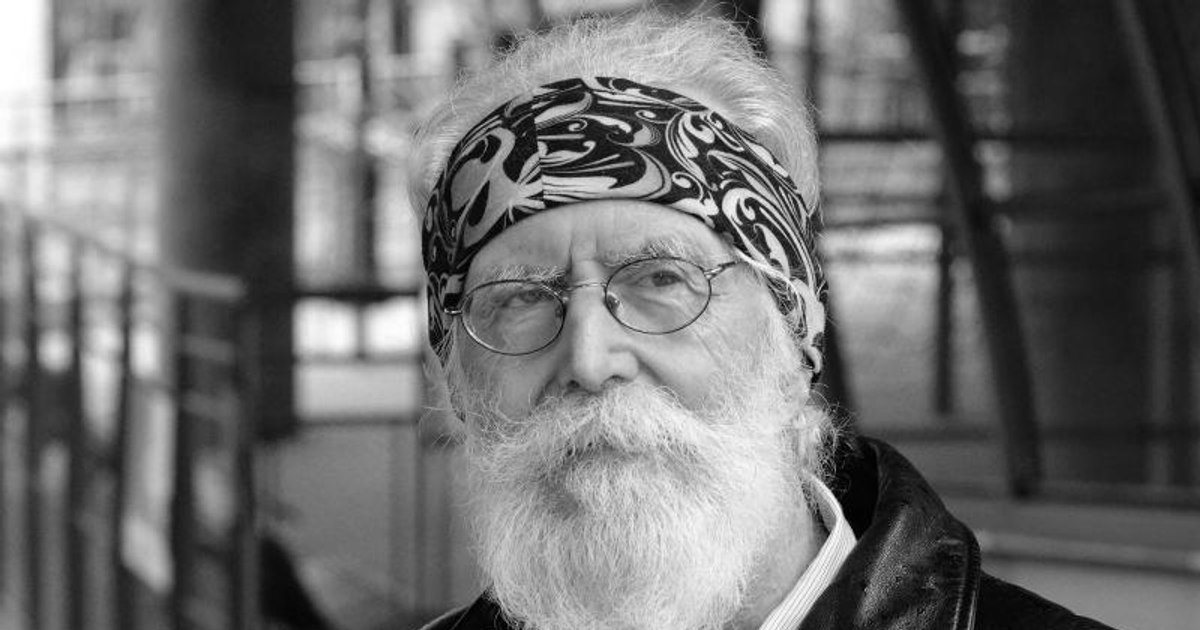
“Mathematics, the more you work, the easier it becomes”: Michel Talagrand, 72, awarded the Abel Prize for Mathematics on Wednesday, reports for AFP about “the experience” which he lived working, without ceasing, in a universe freed from “any coercion”writes AGERPRES.
Michel Talagrand – AbelPrize2024 abelprize.no
The researcher, the fifth French winner of the prize for mathematics, dedicated his life to functional analysis and probabilities which he explored with his style, that of “he studied very simple things, understanding them completely”.
This mathematician had never thought that he could win, not even in his dreams, to see his career crowned in this way. When the Norwegian Academy of Sciences contacted him, he was speechless.
“I didn't react, I literally didn't think about anything for at least five seconds”the mathematician confesses, “very happy”
for himself, his wife and children.
Michel Talagrand chose mathematics “of need“. “At the age of 15 I had multiple retinal detachments and for ten years I lived in fear that I would go blind”he confessed.
To bear the health problem and because he could not “run with friends”, the student from the Parc high school in Lyon immersed himself in work. His father being a mathematics graduate, he is also heading towards this subject “of course”.
Being “mediocre” in other fields and especially “bad at spelling”. A discipline with rules “arbitration”unlike mathematicians who, according to him, have “an order in which it goes well if we are careful”.
The researcher was recruited to the CNRS in 1974, before becoming a doctor in mathematical sciences at the University of Paris VI. It took him almost ten years to find it “meaning”exploring functional analysis, before arriving at probabilities.
Then he developed the theorem regarding “Gaussian processes”which allows the study of random phenomena.
The probabilist tries to summarize: “in a sense, things are as simple as could be – whereas mathematical objects can be monstrously complicated”.
The results of his research contribute to deepening the understanding of random phenomena, “become essential in today's world”CNRS explains, citing random algorithms “underlying our weather forecasts and our major language models”.
Rather than a “brutal transformation”the mathematician considers his discoveries as a collective work “which can be compared to the construction of a cathedral where everyone puts a stone”.
Member of the Academy of Sciences, Michel Talagrand has already received about ten awards, including the Shaw Prize in 2019.
“France, proud of him, is in a good position in the rankings of the Abel prizes and the Fields medals”the other big prize for mathematics.
