
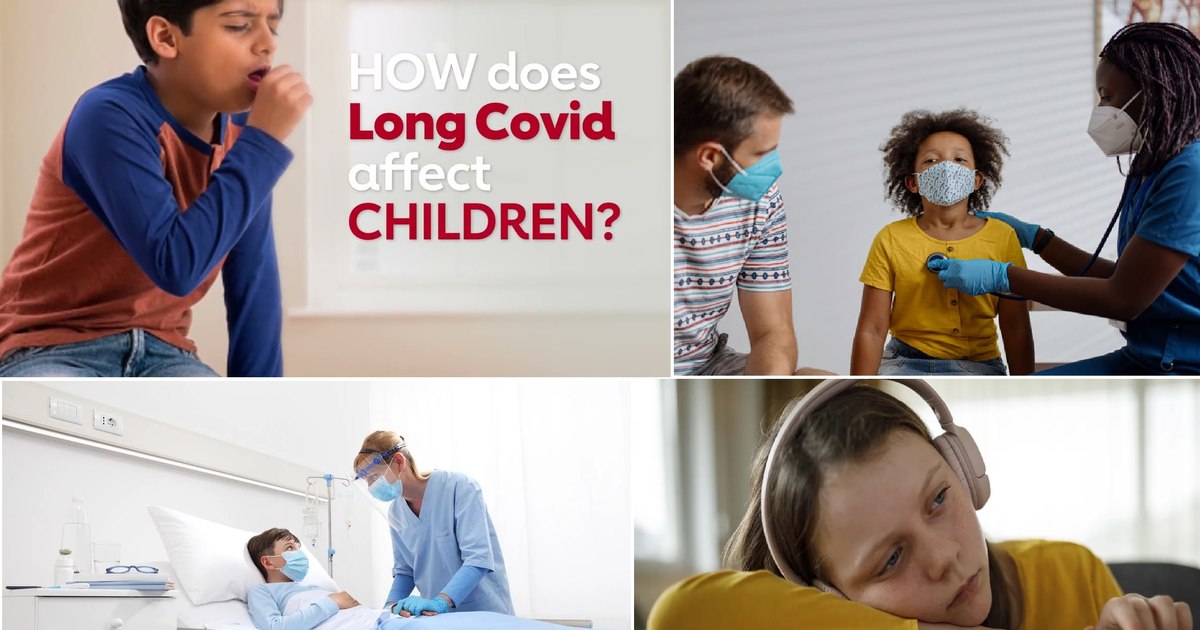
According to the largest study of its kind, most teenagers who have had prolonged Covid make a full recovery within two years. However, the researchers stressed the need for further investigation to understand why some children continue to have health problems after this interval after infection.
The children who suffered from prolonged Covid recovered two years after infection Collage
The study was coordinated by experts from University College London (UCL) and analyzed the data of thousands of children and adolescents. Young people between the ages of 11 and 17 were asked about their health three, six, 12 and 24 months after taking a PCR test for the SARS-CoV-2 virus between September 2020 and March 2021.
Of the 12,632 children and adolescents who participated in the study, 943 tested positive and provided responses at the established intervals. Of these, 233 were found to be suffering from Long Covid three months after the initial positive test. At six months, 135 of them continued to meet the research criteria for prolonged Covid, according to the study published in the journal Nature Communications.
The research was funded by the National Institute for Health and Care Research and UK Research and Innovation, in the United Kingdom.
Common symptoms reported by patients: fatigue, wheezing, headache
Children and adolescents who had more than one symptom – at least three months – such as fatigue, difficulty sleeping, wheezing or headaches, accompanied by problems with mobility, personal care, carrying out usual activities, were considered to have prolonged Covid , pain or discomfort, or feelings of intense worry or sadness.
After one year, it was found that 94 of them continued to be diagnosed with prolonged Covid.
That number dropped to 68 cases two years after the initial positive test, according to the research, which is the largest “longitudinal cohort study” worldwide about prolonged Covid in children.
30% of sick children have not recovered even after two years
Experts pointed out that this meant that 70% of those who had prolonged Covid three months after infection recovered within two years, but 30% did not. These children reported an average of five to six symptoms each time they updated their health status.
“Our results show that most teenagers who had prolonged Covid symptoms three months after testing positive for the virus that causes Covid they fully recovered after two years,” said prof. Sir Terence Stephenson, principal investigator and study author, from UCL Great Ormond Street Institute of Child Health.
He also added that: “This is good news, but we plan to continue research to better understand why 68 teenagers did not recover.”
Girls, more vulnerable than boys
Older teenagers and those from disadvantaged backgrounds were more likely to suffer from prolonged Covid, experts found. Girls were more likely than boys to experience prolonged Covid, although the study did not take into account menstruation and PMS.
The authors also noted that testing of the children included in the study occurred before the Delta and Omicron variants of the virus became dominant, meaning the results may not fully reflect the long-term effects of these variants.
“It’s amazing that after five years the real impact of the damage has yet to be established”
Dr. Nathan Cheetham, from King’s College London, said of the research: “This study shows again that diseases like prolonged Covid tend to affect the most disadvantaged people in society, both youngas well as the elderly. The results highlight the need to address the root causes of health problems, such as poor housing conditions, financial stress and unequal access to health services, if we are to focus on disease prevention before inequalities such as those identified in this study, to appear”.
Sammie McFarland, representative of the charity Long Covid Kids, said: “Two years is a significant period in a child’s life. Although the study assures us that the majority of participants have recovered within this time frame, the 30% of children and young people who are still experiencing symptoms highlights that however Covidprolonged – remains a serious condition and an urgent problem. This situation underscores the urgent need to develop effective treatments to reduce the ongoing impact of the disease. The persistence of symptoms associated with hormonal factors requires further research. Although the results bring a dose of hope, they also emphasize the importance of maintaining support services, continuing research and collaboration, with the direct involvement of those affected, to ensure that no child is neglected.”
Dr. Margaret O’Hara, founder member of the charity Long Covid Support, said: “The limitations of this study highlight the need for new, high-quality prospective research on prolonged Covid in children and young. It is amazing that in the fifth year of the pandemicthe real impact of the harm caused and which continues to affect children and young people in the UK has not yet been clearly established.’
