
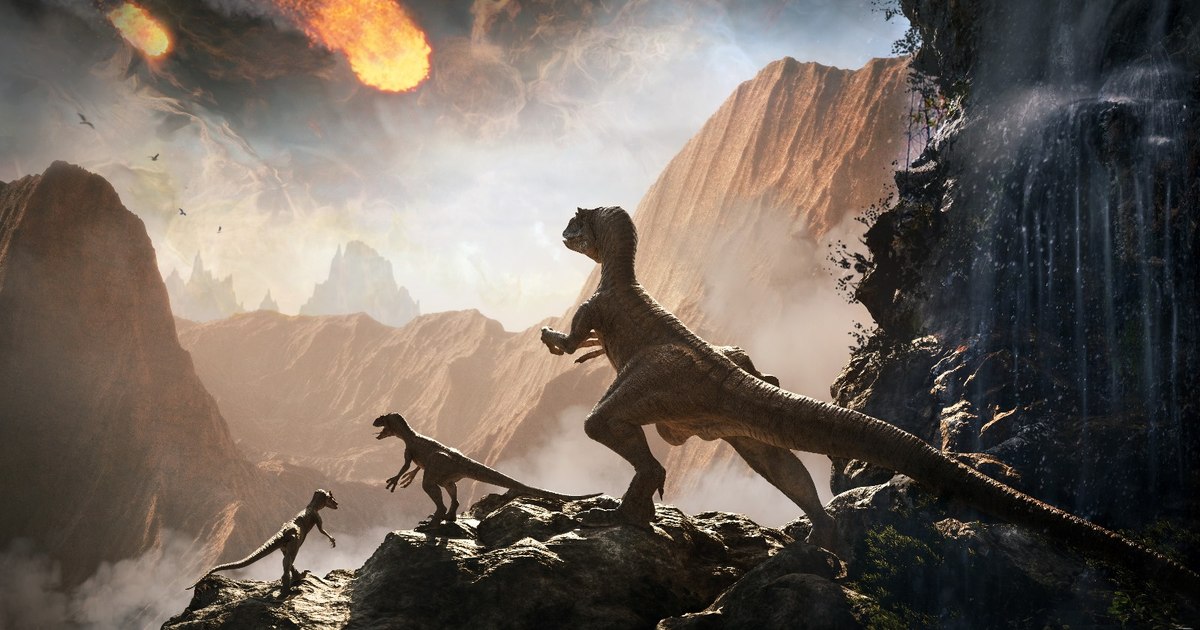
It is well known that the reign of the dinosaurs ended when a giant asteroid hit the Earth 66 million years ago. But a new study suggests this giant asteroid wasn’t alone.
Mystery of Nadir Crater Solved PHOTO Shutterstock
Scientists at Heriot Watt University have discovered evidence that a second devastating space rock crashed into Earth around the same time, according to the Daily Mail.
This second asteroid measured about 500 meters wide and hit Earth near the coast of the Republic of Guinea in West Africa.
“The closest we came to seeing such a thing was the Tunguska event in 1908, when a 50-meter asteroid entered the Earth’s atmosphere and exploded in the sky over Siberia“, said Dr. Uisdean Nicholson, who led the study.
The first evidence of this second asteroid was discovered in 2022, while Dr. Nicholson and his team were studying seismic reflection data of the Atlantic ocean floor.
The data revealed an indentation nearly five miles (9 km) deep, which the team suspected might be an asteroid impact crater.
Now, researchers have taken new high-resolution 3D seismic images of the depression that have confirmed their suspicions.
The crater was named Nadir Crater and was carved when an asteroid hit Earth about 66 million years ago – the same age as the asteroid that killed the dinosaurs.
“There are about 20 confirmed sea craters worldwide, and none of them have been captured at this level of detail. It is refined,” said Dr. Nicholson.
“Craters on the surface are usually heavily eroded and we can only see what is exposed, while craters on other planetary bodies usually only show the surface expression. This data allows us to obtain complete three-dimensional images and remove layers of sedimentary rock to see the crater at all levels“, Dr. Nicholson explained.
In 2022, researchers suggested that the asteroid would have been about 400 meters wide.
However, new images confirm that it was even bigger than that.
Dr Nicholson stated: “We now believe it was 450-500 m wide, due to the larger size of the the crateras shown by the 3D data. We can tell it came from about 20-40 degrees to the northeast because of the thrust-generated spiral ridges surrounding the crater’s central peak—they only form from a low-angle, oblique impact. We think it would have hit Earth at about 20 km per second or 72,000 km per hour, although we need to confirm this with a new set of impact models.”
