
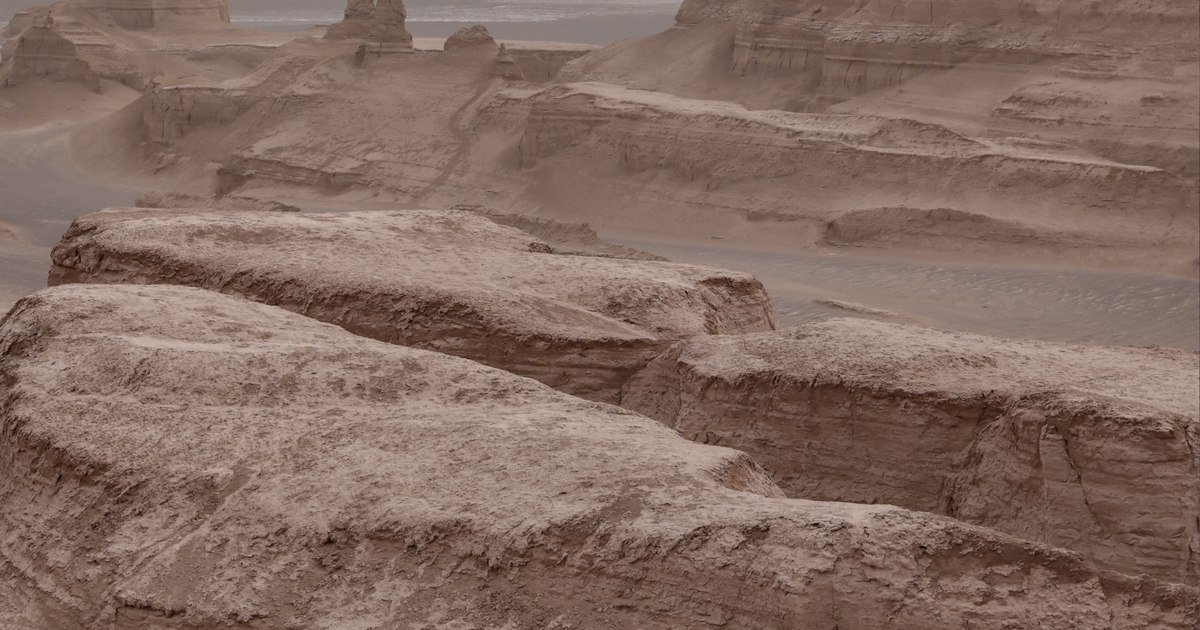
The researchers discovered the hottest areas on Earth, dethroning the California Valley, considered the place with the highest temperatures so far.
Dasht-e clay/photo: Flickr
With the help of satellites, NASA researchers found that the hottest places on the planet are in Iran and Mexico.
However, Death Valley (Valea Death) remains one of the hottest places on Earth. The emblematic weather station in Furnace Creek recorded a legendary air temperature of 56.7 ° C in July 1913.
However, this measurement only captures the air temperature about a meter and a half above the ground, under very controlled conditions. It is a symbolic record, but does not tell the whole story.
The soil warms up faster and retains more heat than air. The measurements from the beginning of the 20th century in the Tuscan Desert documented a difference of up to 16.7 ° C between soil and air temperatures. A Bulletin of the American Meteorological Society (BAMS) report showed that soil temperatures can exceed 70 ° C, even when air temperatures are significantly lower.
Iran and Mexico have set a new record
With the help of Modis technology, scientists have managed to better map the extreme thermal points on the globe.
Analyzing 18 years of data, with a resolution of a square kilometer, the researchers identified two areas where the soil temperatures regularly exceed 80 ° C: the Dasht-E clay desert and the sound desert in Mexico.
The geographical characteristics of these regions intensify solar radiation. In Dasht-e clay, the surrounding mountains captivate hot air, volcanic rock surfaces absorb heat, and lack of evaporation prevents cooling.
This combination turns the area into a true thermal trap. According to a study published in 2021 in Bams, Lut currently holds the world record with a soil temperature of 81.9 ° C.
These deserts are often overlooked in popular discussions, because they are far from traditional measurement centers. However, they represent some of the most extreme conditions on the planet. The extreme heat in the sound desert is favored by low humidity, low altitude and pelvic topography.
The new measurements thus change the understanding of the climatic limits and what is sustainable for life.
According to a report by BAMS in 2011, surface temperatures, especially in low vegetation areas, exerts a direct pressure on ecosystems.
In some desert basins, such as Qaidam from China, daily temperature fluctuations, known as daytime temperature intervals, can exceed 60 degrees Celsius. This variability obliges the species of animals and plants to withstand rapid and extreme environmental changes.
Beyond the ecological impact, these temperature variations are technical challenges for human infrastructure. Roads, sensors and materials deform and degrade faster, accelerating wear in already vulnerable regions.
