
NASA has collected possible evidence of extraterrestrial life on Mars, and now it’s charging to bring it to earth. The agency is considering two strategies for sample recovery.
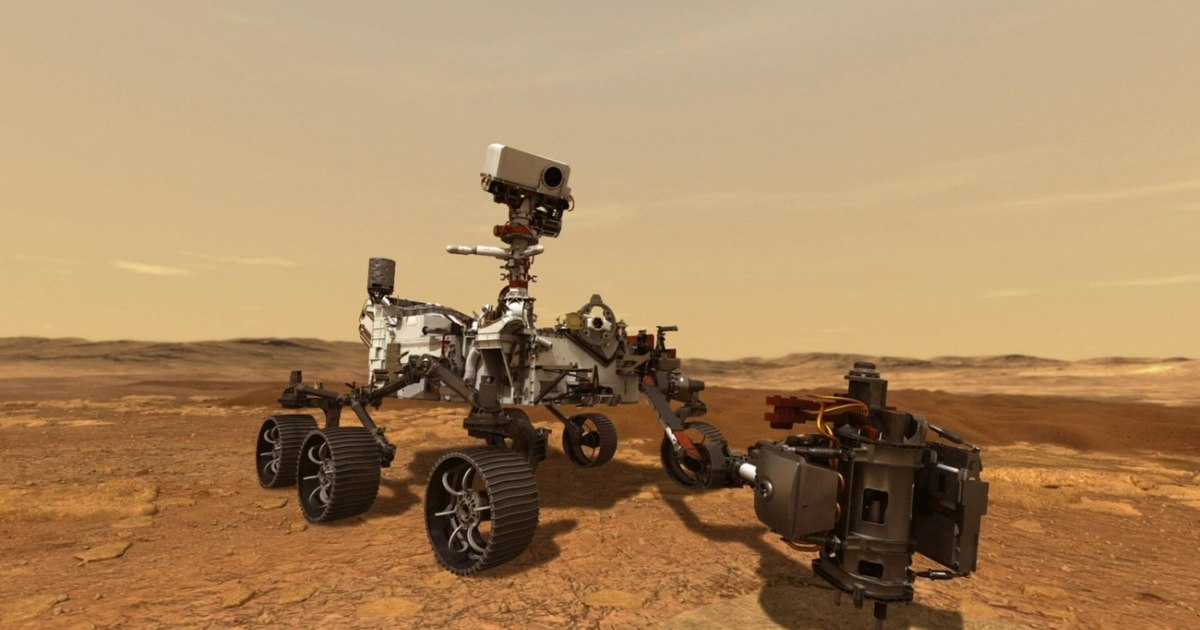
The Perseverance rover has been collecting samples since February 2021 PHOTO Archive
These proposals represent alternatives to the original Mars Sample Return program, designed by NASA and the European Space Agency (ESA). NASA will choose between proposed new strategies aimed at reducing mission complexity, cost and duration by the second half of 2026, NASA Administrator Bill Nelson said at a news conference, according to CNN.
Samples collected by the Perseverance rover
NASA’s Perseverance rover has been collecting rocks and dust from Mars since it landed in February 2021. Scientists believe these samples, collected from Jezero Crater — the site of a former lake and an ancient delta — may be one of the few ways to determine if life ever existed on the red planet.
But bringing evidence back to Earth, an achievement that could answer one of humanity’s biggest questions about the existence of life outside Earth, is a complex process. Both the original and new architectures include the use of multiple spacecraft to land on Mars and transport samples back to Earth.
In April, NASA asked its centers and industry partners to propose new plans for returning samples in a more streamlined and cost-effective way. The Strategic Review Team reviewed 11 studies and made recommendations, which were later refined by NASA leadership.
“We are exploring two new landing options”said dr. Nicky Fox, associate administrator for NASA’s Science Mission Directorate. “One involves using technology previously used to land the Perseverance and Curiosity rovers. The other is based on industry options.”
Two proposed landing options
The first option involves using the method “sky crane”used to land the two rovers currently exploring Mars. The second option involves using commercial capabilities and partners to deliver a lander to Mars “high capacity”such as those developed by companies such as SpaceX and Blue Origin.
Mars has always been a challenge for landers because of its thin atmosphere. This is dense enough to burn a spaceship without a heat shield, but too thin to slow down a landing with parachutes alone.
The journey of the evidence from Mars
“Mars Sample Return is humanity’s first mission to bring scientific samples from a habitable planet back to Earth”Fox said.
“We want to get them back as soon as possible to study them in state-of-the-art laboratories”she added. “The evidence will allow scientists to understand the geological history of the planet, the evolution of the climate on this arid celestial body and the early solar system.”
NASA will test the viability of both options and address the engineering challenges of each plan over the next year at the Jet Propulsion Laboratory in Pasadena, California.
The new strategies could allow samples to be returned to Earth as early as 2035, at the latest in 2039, at an estimated cost of $5.5 billion to $7.7 billion — far less than the original $11 billion, Nelson said.
