
The new studies show that it is very likely that the aliens really exist. And that’s when, a study shows, half of the stars of our galaxy could have planets like the Earth, capable of supporting life.
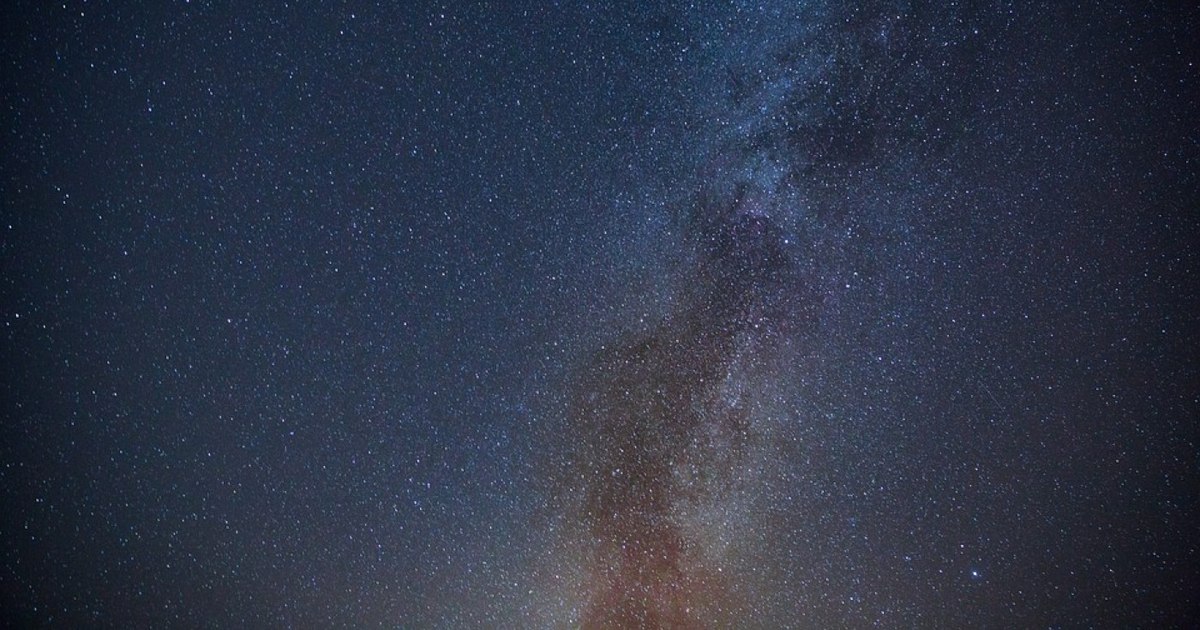
In the Milky Way there are numerous stars with planets that can support life photo pixabay
The idea of the existence of an extraterrestrial life has always aroused fascination in society, especially starting with the famous “space race” triggered by the Cold War. However, many scientists have rejected this possibility, cataloging the existence of life on other planets in the universe as unlikely or quite science fiction. However, the new research shows that the existence of extraterrestrial life is very likely, being a natural consequence of biological development when the environment allows it.
“Difficult steps” a theory that no longer reflects reality?
In 1983, Brandon Carter, one of the most famous physicists, elaborated the “Difficult Steps” model. According to this theory the appearance of life on Earth and its amazing evolution are just a game of chance, a luck, a chain of unlikely events that were not characteristic of the planet and should not have happened. In this context, the possibility that another planet in the universe may have life -long forms. A group of researchers from the famous University of Penn States in the United States, made up of astrophysicians and geobiologists, has conducted a thorough study that comes to contradict the theory “difficult steps”.
American researchers say that, in fact, the appearance of life on earth was neither luck nor an unlikely hazard, which could not be repeated. It was simply a natural conjunction between life and the environment. Specifically, when the environment becomes favorable, life also appears naturally. It is a natural process throughout the universe, say the specialists, not lucky.
For example, complex forms of life, such as animals, need a certain level of oxygen in the atmosphere. So the oxygenation of the Earth’s atmosphere by photosynthesization of microbes and bacteria was a natural evolutionary step for this planet, which, in turn, created a window of opportunity for the more recent forms of life. At least this explains Dan Mills, a researcher at the University of Munich and project coordinator, for the publication “Ancient Origns”. “It is a profound change in the way of interpreting the history of life on Earth.”adds for the same publication and Jennifer Macalady, a geystery teacher at Penn State.
Numerous stars with land -like planets
Under these conditions, this new theory brings with it a simple finding: on any planet that meets the necessary evolutionary conditions can occur. “We are trying to show that for the existence of intelligent forms of life there is no need for luck”Add Mills for Ancient Origns. And this, say the specialists, because people did not evolve “earlier” or “later”, but simply in time, that is, when all the conditions for that type of evolution were met.
“Maybe it’s just a matter of time for the other planets to meet these evolutionary conditions. Maybe some have already fulfilled them, much faster than the earth ”say the specialists. Experts from Penn State together with all the collaborators in this project want to do a series of scientific experiments to check every aspect of the “difficult steps” theory, being convinced that luck has nothing to do with the appearance of life on Earth. In addition, they want to check if the appearance of the human species was a singular event in the history of the Earth or there were other new beings, but they have disappeared as a result of extinction phenomena.
Specialists want to see if this model can be applied in all areas with similar conditions, which would lead to the conclusion that the universe is populated with intelligent beings and even advanced civilizations.
“Instead of a series of unlikely events, evolving would rather involve a series of predictable processes. Our model is not only applied to the other planets, increasing the possibility of which similar forms of new life exists anywhere in the universe ”shows one of the researchers involved in the project. Over 5800 planets have been identified that meet the conditions of “habitability”, that is, the right distance from a star to maintain life. Half of the Milky Way Stars can provide life with planets at the right distance.
