
Hematopoietic stem cells are cells capable of turning into any type of adult (functional) cell and immune system. Anyone between 18 and 45 years old and a good general health can help save a life. See where and how to donate stem cells.
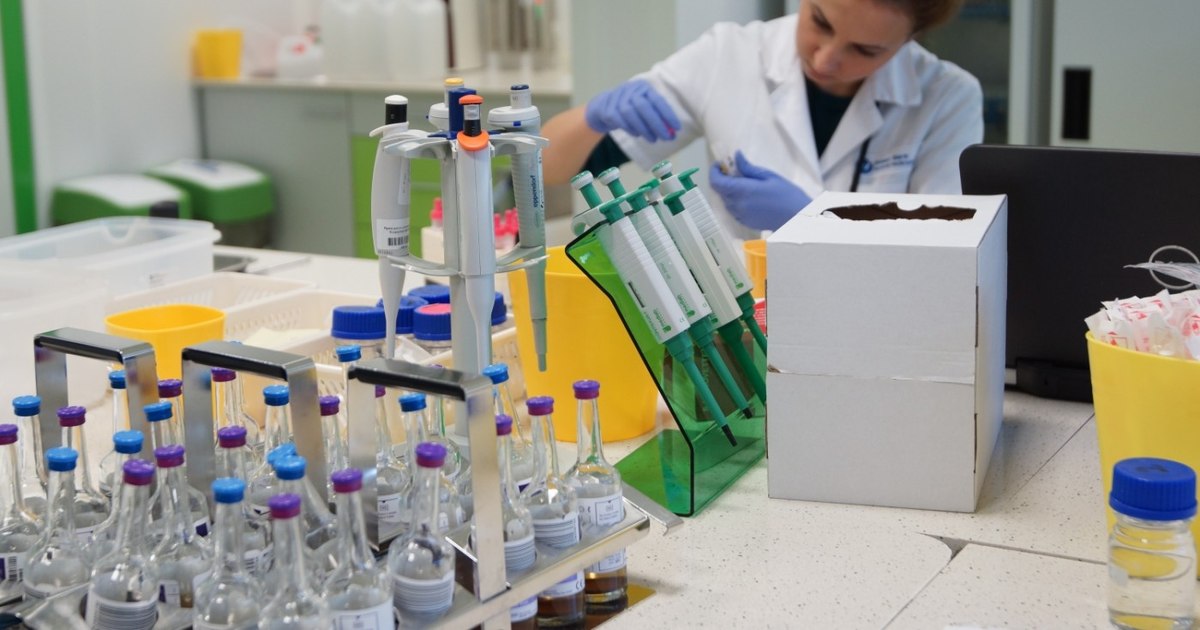
Stem cells are saving treatment in many conditions. Photo: Shutterstock
In Romania, about 3 people per 100,000 inhabitants are diagnosed annually with blood cancer, according to data available until 2021. At the level of the whole population, we have over 600 new cases annually.
People who donate stem cells and have no source of income can acquire the quality of insured to health, without the payment of the contribution, for a period of 10 years, announced on Friday, the president of the National Health Insurance House (CNAS), Horaţiu-Remus Moldovan.
Moldovan sent a message on the occasion of the World Day of Hematopoietic Stem Cell donors.
“Today we thank those who choose to give a chance to life in the struggle with serious blood or immune system – stem cell donors. They are living proof that gestures of generosity and responsibility can bring hope in the case of severe diagnoses and can differentiate between disease and healing.”Moldovan said.
According to him, in Romania, 497 patients have so far received hematopoietic stem cell transplant, and another 47 are waiting for a donor. At the beginning of the year, five new stem cell donors have been registered in the national register. Last year, 10 Romanians became stem cell donors, and in 2023 11 donors were registered.
“Thousands of children and adults are diagnosed with blood cancers”
“Every day, somewhere, someone receives a diagnosis that changes everything: leukemia, lymphoma, or another form of blood cancer. In the face of such a fight, the chance of life often comes from an unexpected place-from a hematopoietic stem cell donor.”is shown on the website of the National Register of volunteer donors of hematopoietic stem cells (RNDVCSH).
The National Register of volunteer donors of hematopoietic stem cells (RNDVCSH) is the institution responsible for the coordination and supervision of recruitment, testing and donation of hematopoietic stem cells from unruited donors, according to the standards of the World Măduvă donors.
If you are between 18 and 45, a good general health and you want to help save a life, you can register in the national register of volunteer hematopoietic stem cells volunteer.
Who needs stem cells? “In general, we are talking about patients suffering from malignant hematological diseases, certain metabolic diseases, but also non-magical hematological diseases. As, for example, major beta-talasemia or severe aplastic anemia. By this transplant of hematopoietic stem cells, the process of forming blood cell elements is restored.”explained to the “truth” the doctor Alexandra Ionete.
For many of them, the transplant of hematopoietic stem cells from a related or non -dried person is their only chance.
It is more likely to find a person compatible in the population group or in the geographical region where the patient/A is originated. That is why most countries in the world have created registers of volunteer donors of hematopoietic stem cells. Currently, millions of hematopoietic stem cell volunteer donors are registered worldwide. Donors are first sought among the brothers and/ or sisters of the patient/ her. In general, only in 25% of cases there is compatibility between them. In the other cases, patients need a compatible non-dried person to donate hematopoietic stem cells, the RNDVCSH website shows.
How does stem cells help
According to RNDVCSH, hematopoietic stem cells are cells capable of turning into any type of adult (functional) cell and immune system. These cells are found in the bone marrow.
Hematopoietic stem cells are harvested from adults in peripheral blood or bone marrow of large and wide bones. They can also be collected at birth from the blood of the umbilical cord.
Hematopoietic stem cells are used in the treatment and healing of conditions such as leukemia or other blood cancers, autoimmune diseases or hereditary metabolic diseases.
How to donate stem cells in peripheral blood
It is, in fact, a transfusion through which healthy hematopoietic stem cells, regardless of the method by which they were donated, are administered to the patient. Before transplantation, patients do a chemotherapy treatment and, possibly, radiotherapy, which destroys the sick bone marrow and leaves a free hematopoietic stem cells.
The donation of hematopoietic stem cells is done either from the peripheral blood or directly from the bone marrow. Before you donate, the donor/she will be able to talk to a specialist doctor about each donation method, and finally the donor/she will decide what method he prefers.
Donation of peripheral blood stem cells (affect): Donation of hematopoietic stem cells in blood circulation is done in two steps:
Step 1: Usually, the concentration of hematopoietic stem cells in peripheral blood is low. In order to increase their concentration, a synthesized protein, called growth factor, is injected under the skin, whose action resembles that of a natural protein produced by our body.
Step 2: In the fifth day, by a simple blood test, it is established if sufficient hematopoietic stem cells have been mobilized and the hematopoietic stem cells are made through the procedure called “affect”. A catheter is mounted on the femoral vein (on the foot), with which you will be coupled to a device that will collect the necessary stem cells for transplantation. The filtered blood returns to the body intravenously. The affection procedure is not painful, does not require anesthesia and lasts on average 3-5 hours, during which time a medical team will be available. After the success of the procedure, the catheter will be removed and the donor/she will be able to leave home.
Associated risks:
The treatment with growth factor is generally well tolerated. Like any medicine, it can cause unpleasant reactions such as: bone or muscle pain, headaches (which is treated with paracetamol) or a passenger decrease in blood pressure. So far no long-term adverse effects have been observed as a result of growth factor treatment.
During the affection it is possible to decrease the level of calcium, which can be prevented by a venous addition of calcium, during the procedure.
Currently, over 70% of the transplants made in the world are made using hematopoietic stem cells harvested from peripheral blood.
How to donate stem cells in bone marrow
This procedure does not require any special treatment before. It is mandatory under general anesthesia, in an operative room. The marrow is harvested from the basin bone with the help of a needle and a syringe. Throughout the procedure the donor/she will be in the care of a specialized medical team. He will be able to leave home 24 hours after donation. The restoration takes place within a week after donation.
Associated risks:
As with any operation under general anesthesia, the only risk of harvesting the stem cells in the marrow is the risk of anesthesia. In order to avoid this risk, the donor/she will be consulted by an anesthetist doctor before the procedure, who will give her opinion for carrying out the procedure.
In rare cases, headaches may occur after anesthesia, postoperative fever or fatigue.
Currently, about 20% of the transplants performed in the world are done with stem cells collected directly from the bone marrow.
Conditions to be able to donate stem cells
The donor must be between 18 and 45 years old.
The donor must be healthy and does not suffer from any of the following diseases:
– severe cardiovascular diseases
– severe lung disease
– Severe kidney disease
– severe neurosurgical diseases
– severe infectious diseases
– Severe allergies
– Severe autoimmune diseases
– Cancer
How I sign up for the donation of stem cells. Where I can donate
The first step for those who want to donate is to join the stem cell register, by completing a form on the institution’s website.
The registration in the register involves information in advance on the donation of hematopoietic stem cells. Specialists within the register are available to people who want to register in the register and answer any questions regarding the activity of the register, donation or transplantation procedures of hematopoietic stem or data security. After this information and counseling stage, the person who wants to register in the register will complete a medical questionnaire and will agree to to be registered in the database and to register the personal data and the results of the analyzes, together with the HLA profile.
After that, 15 ml of blood for analyzes will be collected, including on the wearing of transmissible diseases, according to the legislation in force, and for the HLA printing.
There are several eligibility criteria that are taken into account when registering a person and who are made to the person before registration. A blood sample will be kept for additional tests.
The registration in the register is not equal to donation. Monday or years can be passed until a person inscribed in the database may be called to donate hematopoietic stem cells. There are situations in which a person enrolled as a volunteer donor will never be donated.
Centers for stem cell donors can be found in Bucharest, Galați, Constanța, Cluj, Iași, Oradea, Ploiești, Râmnicu Vâlcea, Slatina, Târgu Mureș, Timișoara, Sălaj, Bacău, Arad. See here the addresses of these centers.
