
The holiday season comes with new taxes that tourists have to pay in addition to accommodation, food and plane tickets. Recently, Greece introduced the climate tax, but most popular destinations among Romanians impose taxes aimed at combating excessive tourism.
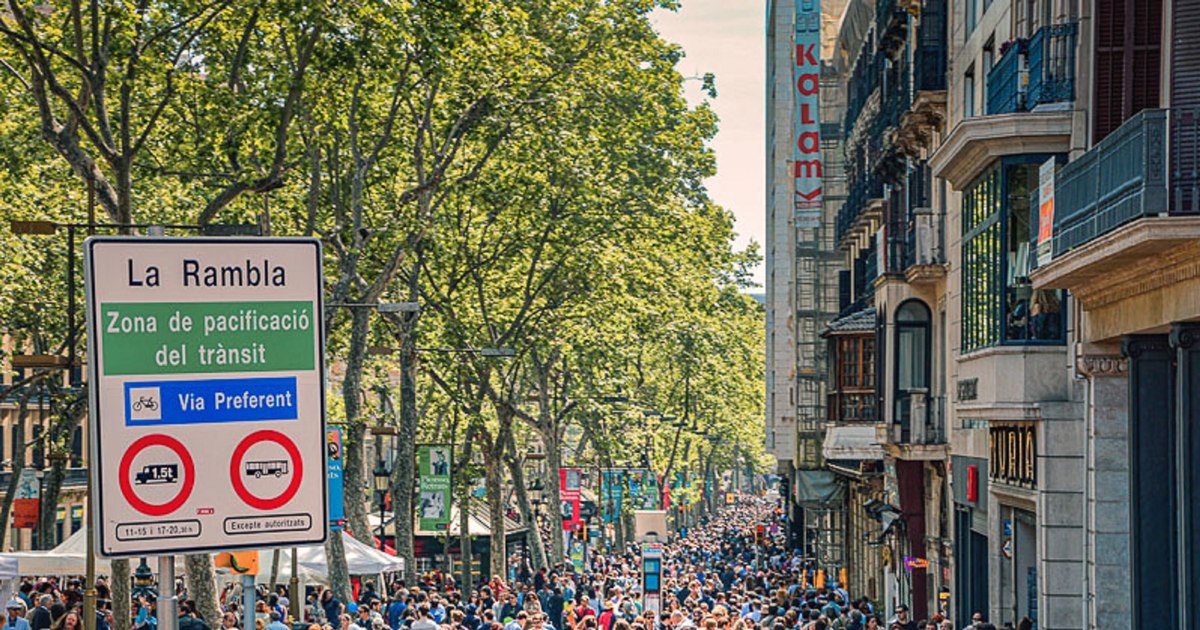
Congested street in Spain – Source ourplanetinmylens.com
From the Algarve (Portugal) to Barcelona (Spain), local authorities are introducing fees to keep visitor numbers under control. Under pressure from locals in cities suffocated by tourists, the authorities no longer know what strategies to adopt to drive away visitors. What's the problem with over-tourism? Local residents suffer as properties become unaffordable due to those buying spaces to rent out to tourists. In addition, authorities are struggling to manage the trash left behind by tourists, and pollution is contributing to the climate crisis. Overtourism also causes crowded beaches, lots of noise, queues at tourist attractions and damage to historical sites or natural landscapes, all attributed to overtourism.
In the European Union, for example, the number of nights spent in tourist accommodation units in 2023 reached almost 3 billion, exceeding by 1.6% the level of 2019 and by 6.3% the level of 2022. 2023 was a year- record for the accommodation sector in the EU, according to Eurostat. More and more travelers from outside the continent are coming to discover Europe, with foreigners representing 46% of all tourists.
Tourist tax
Thus, from April 2024, visitors to Barcelona will pay 3.25 euros tax at accommodation units, this after the municipal tax had increased in 2023 to 2.75 euros. Authorities say they will use the tax for infrastructure development. And Valencia introduces a tax for travelers, regardless of the type of accommodation chosen: hotels, hostels, campsites or apartments. The fee is between 50 cents and 2 euros per night, depending on the accommodation chosen. Passengers on cruise ships will pay 1.5 euros per day. The tax will be used for the sustainable development of the tourism sector, authorities say.
Venice will become the first city “Accomodation“. Officials will introduce a visitor cap and a daily entrance fee to manage the flow of tourists during holidays, but also during some summer weekends when visitor numbers are very high. The measures will initially be in place for 29 days, covering most weekends from April 25 until mid-July. Restrictions will apply between 8:30am and 4:00pm. Tourists will have to book a visit online for which they will pay 5 euros. In this way, they will obtain a QR code that will be verified at certain entry points and that will allow them access to the historic districts of the city. Loudspeakers and large groups of tourists will be banned in the Italian city from June 2024. According to the World Economic Forum, the city has a resident population of around 55,000 (in the historic center of the island), but has to deal with over 20 millions of visitors a year, especially during the “high season”.
And authorities in Portugal's Algarve region have started charging tourists €2 a night during the busiest months from April to October.
Greece, the favorite destination of Romanians, introduced a climate tax in 2024, and the money will help rebuild the country after fires and floods. Between March and October, visitors will pay between 1.5 and 10 euros per night, both for hotels and guesthouses, but also for holiday homes or apartments rented on Airbnb or Booking. Many countries in Europe already have taxes included in the price of accommodation, which vary from a few cents and can reach 15 euros per night, in Paris for example.
There is a land and water tourist tax in Amsterdam and it currently amounts to 7% of the cost of a hotel room. This year, the tax will increase to 12.5%, making it the highest tourist tax in Europe. It will apply to both cruise passengers and overnight visitors.
Limiting the number of visitors
Conversely, the flow of visitors is limited for other important tourist attractions. For example, the Vatican has a limit of 20,000 tourists per day, and in Athens, that many visitors will be allowed to see the Acropolis. Moreover, in popular places in Rome, such as the Trevi Fountain or the Spanish Steps, tourists are no longer allowed to park.
Residents of Instagrammable destinations have shown their displeasure with the high number of visitors. For example, 100 of the 800 inhabitants of the state of Hallstatt, in Austria, protested last year against the number of daily tourists and demanded that they be limited.
Venetians have long complained that the Queen of the Adriatic no longer belongs to them, given that there are more tourists than residents every day, and have been calling for a limit on the number of visitors. For three years, large cruise ships have not been allowed on the main canal, the Giudecca. Marseille also has a cruise ship passenger management system to reduce the number of visitors.
And Scots in Orkney, outraged by the large number of cruise ships, protested until the authorities proposed a plan to limit the number of ships. In Amsterdam, a campaign addressed to tourists from several European countries was launched last year, called “Stay away“. The message is aimed at men between the ages of 18 and 35 in EU countries as well as the Netherlands. The campaign is accompanied by a series of measures to reduce disruptive behavior in the city center, including a ban on weed smoking and the early closing of restaurants and food vendors in the Red Light District.
Solutions
Including visitors wanting less crowded places, a survey conducted by Booking in 2022 suggested that 64% of people shy away from cities overwhelmed by visitors. There are ways in which this sector can be better managed, for example promoting off-season holidays, limiting travel and more rigorous regulation of the industry.
If we choose to travel outside the peak season, which in Europe is between May and October, we can visit even the most popular places in peace.
Another solution is to promote alternative places that offer some benefits.
“When you go on a city break, the destination matters less, it matters to visit, and then those who have traveled a lot and have already seen a large part of Europe also accept lesser-known alternatives. Those who want to visit on a budget combine two nearby destinations, if they have a good connection with a means of transport”, says tourism consultant Ana Maria Călin. She says that Italy and Spain remain the favorites of Romanian tourists for vacations of a few days.
Romania, antidote to overtourism
Last year, the organizers of a music festival in our country initiated a campaign that invites those outraged by the large number of tourists in Barcelona, Rome or Paris to discover the destinations in Romania. This after the locals of Barcelona protested against the large number of tourists. Electric Castle developed the site “TouristGo.Ro“, inspired by the protesters' placards that read “Tourist Go Home“, offering them our country as an alternative, at a distance of only three hours by flight. Moreover, on social networks or other international tourism blogs, Romania is given as a backup destination. “Romania excels for its oral and intangible cultural heritage – 25th place in the world“, say the people from Justraveling.
“For foreign tourists, Romania is not in the top of preferences, although we have a beautiful country, which offers a lot, but it is poorly represented in foreign tourism. There are very few agencies specializing in incoming. We are doing poorly when it comes to promoting Romania, including at Tourism Fairs abroad“, says Ana Maria Călin.
“Many destinations are crowded and because of TikTok, Instagram, as is Dubai or exotic destinations, Zanzibar, Thailand. And low prices attract many tourists. Instagrammable places are highly sought after.“, adds the travel consultant.
The most popular tourist destinations are in Europe
European countries dominate the global rankings in terms of tourist destinations. France, Spain, Turkey, Greece, Italy, Germany and Austria are in the top 10 most visited destinations in the world. Only the United States of America, Japan and Thailand are still present in this top.
Turkey has the largest increase in visitor numbers compared to 2019, with 73% more tourists choosing this country as their holiday destination in 2023. France and Spain remain the top two destinations for leisure travel, with over 70 of million visits, Turkey is in third place, with over 45 million visits in the last year.
