
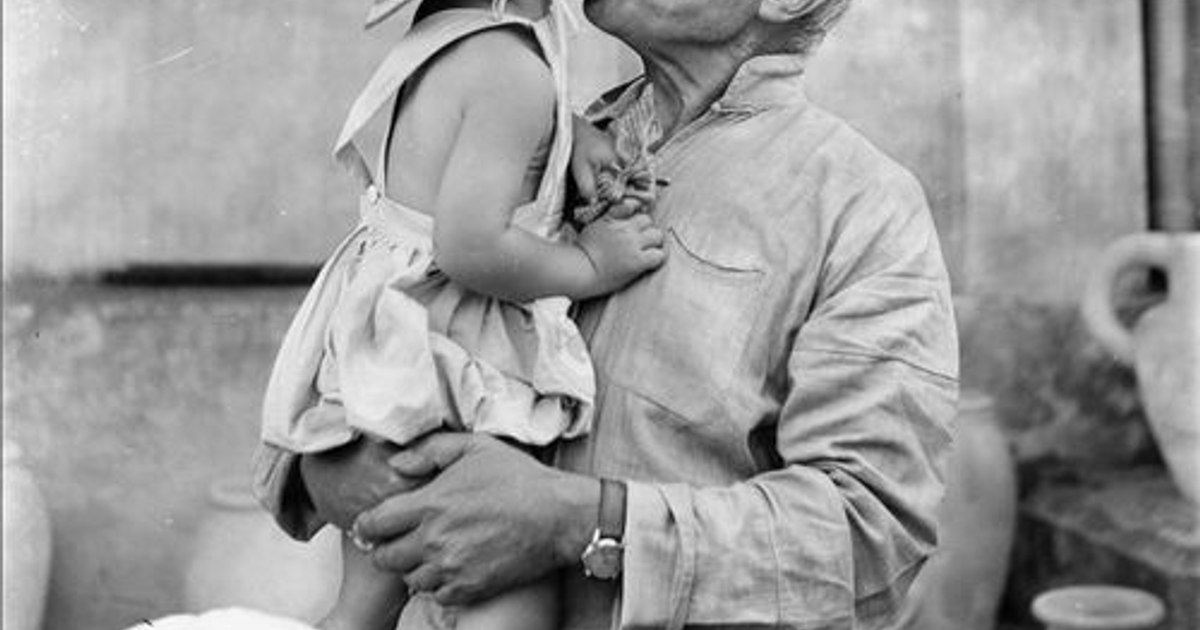
Paloma Picasso has been appointed administrator of her father’s estate since the death of her older brother Claude last year.
Paloma Picasso with her famous father PHOTO: x
When Paloma Picasso was nine years old, she witnessed an extraordinary scene. “A man had come to see my father in Cannes.”
says Paloma, jewelry designer, businesswoman and the new administrator of the Picasso estate, ”and when he left the room, the man went out with his back.” After all these years, he still shuddered at the memory. “My father was very laid back, so there was no way he would have provoked such behavior, but it was obvious that this man felt he could not turn his back on Picasso. And I thought: Wow. This is how people behave with kings and queens.”
The incident may have given her a new understanding of what her father meant to the outside world, but it wasn’t the first time that Paloma – the last surviving of Pablo Picasso’s four children, Paulo Picasso, Maya Widmaier-Picasso and Claude Picasso – realized her father was famous. “Because, of course, I’ve always known that,” says the 75-year-old woman.
On the day he was born in 1949, his mother – the French artist Françoise Gilot – describes in her autobiography how the hordes of journalists in the hospital corridor “they were trying to force their way in”; as the nurses offered “a hundred thousand francs to get Paloma out“. Throughout his childhood in Paris and the south of France, “every time I went out on the town,” remembers Paloma, “there were crowds of people in front of us asking for his autograph.”
He pauses and frowns. “What’s funny is that it could have seemed very threatening to a child: these crowds of people jumping on my father. But somehow it was never like that. Maybe because he was so generous, so relaxed about it all.” says Paloma, according to telegraph.co.uk.
Paloma does not accept many interviews and divides her time between Lausanne, Paris, Marrakesh and New York. Recently, much of this time has been taken up with his new duties as property manager. Paloma took on the role following the death of her older brother Claude last year, and describes one of the first exhibitions she co-curated since – “The joy of life” at the Museum of Ancient Eleutherna in Crete – as being “a tribute to Claude”.
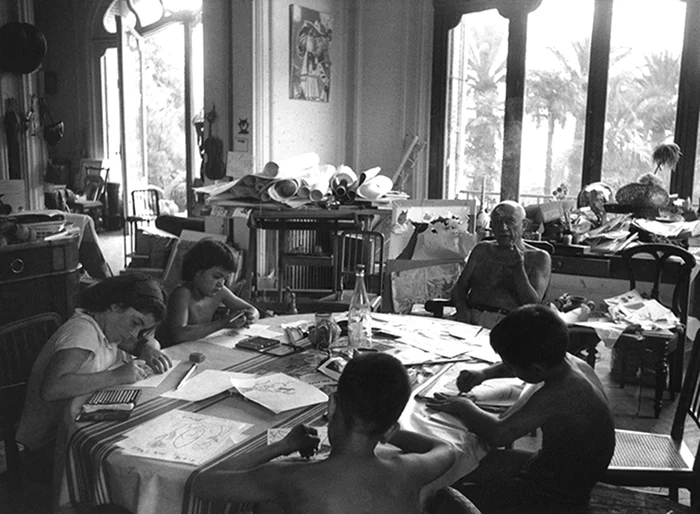
Pablo Picasso’s children PHOTO: X
Feminists have been trying to tarnish the legacy of the brilliant genius for more than a decade, even though Picasso’s personal failings with women are nothing new. Fernande Olivier, his model and lover since the early 1900s, claimed that “morbid jealousy” of Picasso forced her to live in seclusion.
Dora Maar, the weeping woman in many of his late 1930s paintings, is said to have been crushed by his cruelty. And in his memoir, Life with Picasso, Paloma’s mother explained how, when she left him, he launched a campaign against her in France, persuading galleries to boycott his works.
However, in the past five years, there has been a more concerted attempt to brand this collective behavior as righteous “toxic“. Add “cultural appropriation” and “thief of African tribal masks”,
and the most influential artist of the 20th century becomes imminently voidable. Indeed, last year, on the 50th anniversary of Picasso’s death, The Guardian asked: “Is it time to mothball the master?”
“To blame him for all the bad things that people can do seems a bit . . .” Paloma tiredly tilted her head to one side: “Well, a bit harsh“. Those were different times, she points out – we’re talking about a man born in 1881 – and besides, her father adored women. “They were at the heart of his creation. Of course, I was his daughter, so it was a very different kind of relationship, but… But if we tried to write off all the artists who behaved badly in their private lives, would we be faced with a bleak cultural landscape? “Yes! Marie-Thérèse (Walter) was 17 years old, it’s true, but she was an exception,” she says of the French model who was Picasso’s lover from 1927 to 1935 and bore him his second eldest child, the late Maya Widmaier-Picasso. “It’s not that he was only with women who were underage. And the age of 17 is not that young”.
Paloma is not a fan of generalizations – “these tend to be negative” – and there’s a lot of information circulating about men and misogyny these days.
She talks about an article about Virginia Woolf that she read just this morning. “Apparently, even though she was married to a Jew, she also made some negative comments about Jews. But what are you going to do?”,
she asks, holding out hands clad in gold cuffs with matching fabrics from her Tiffany & Co collection. “Maybe if I was her friend I would have said, ‘Don’t say that,’ but at this point, what can we say?”
He smiles as he says that last part because, on a superficial level, it’s obviously absurd to try to write people off posthumously. However, on a deeper level (which she will be more aware of than most), people’s legacies are fragile and need protection today more than ever.
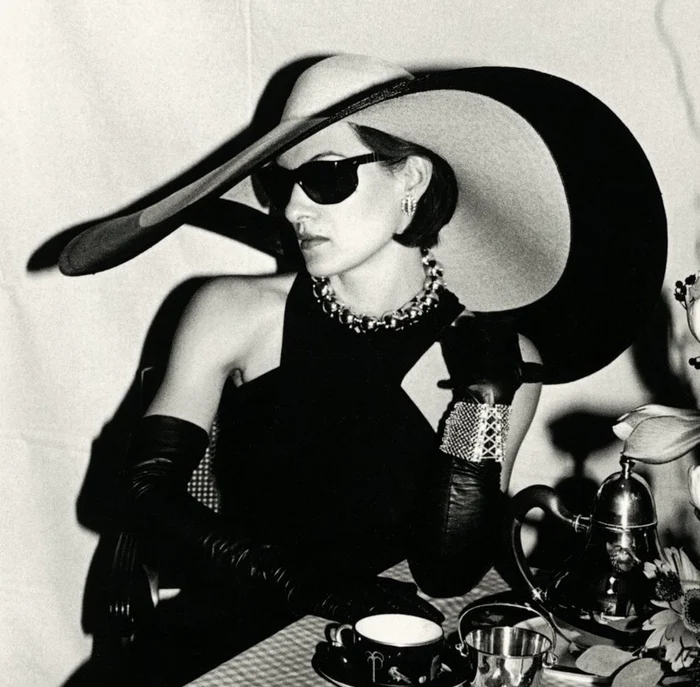
Paloma Picasso was a jewelry designer PHOTO: X
Every day, Paloma now faces copyright, reproduction and authentication issues. Then there are the fakes. “A lot of the work we see is fake. More than 95 percent of them. And, of course, the digital world only makes them better.” She learned to recognize the most prolific forgers, she says with a laugh. “Because they have a kind of style of their own. At one point, I even decided that one of them was left-handed – it showed!”
Picasso is not only her father and an amazing artist, I remember as she calls him “father” and “Picasso” throughout our interview, but a global brand that she — and her extended family — must protect. And when we come to the accusations of “cultural appropriation”, her tone becomes even more determined.
“I’m sorry, but the idea that this is wrong – it’s wrong!” She talks about her father’s obsession with African tribal art. “The fact that it was inspired by African masks should be seen as a plus. The fact that he saw how fascinating all this was and absorbed it, then processed it in his own way and shared it with the rest of the world – that does not mean that he “stolen” from their culture. It was for him to show people how important this was.”
As a child, Paloma not only grew up surrounded by artists, writers and poets, but “spent hours, days”, watching his mother and father create. “Because I was a very quiet little girl, my father would let me sit on the floor and watch him paint“, she tells me – adding that he was always in the process of creating something, even if it was just from a pack of cigarettes. “Smoke Gitanes”, she says smiling “and then he cut the cardboard packaging and made some funny animals out of it”. When I ask her, she assures me that she has never felt that her art “steal my parents away from me“, “because I found the process so fascinating.”
Even after her mother left Picasso in 1953 – when Paloma was four and Claude six – the two continued “to have an extraordinary relationship” for years. “When we would come from Paris to visit him (in the south of France), for the first hour or two he would feel like he had to play dad and ask us how we were doing at school, even though he couldn’t have cared less. Then, maybe an hour later, he’d say, “Look, I never liked school, and look where I am today! We had to say, ‘Yeah, but we’re not Pablo Picasso, Dad, so we have to go to school.'”
It was only after Picasso married his second wife, Jacqueline Roque, in 1961 that they stopped seeing him, and after his death in 1973, Paloma and Claude had to fight a long legal battle for to be recognized as heirs. Finally, in 1989, Claude was entrusted with the approximately 45,000 works left behind by Picasso, as well as all authentications, rights and licensing agreements (although the estate was initially valued at $250 million, experts said the true value was in the billions, but it will have been a painful time for both of them.
One thing her father always hated, she tells me, was snobbery in art. “He objected to the idea that museums should be like churches, or that you had to read a book to understand the works on display – and let me tell you, he wouldn’t have minded ‘selfies’ at all.”
