
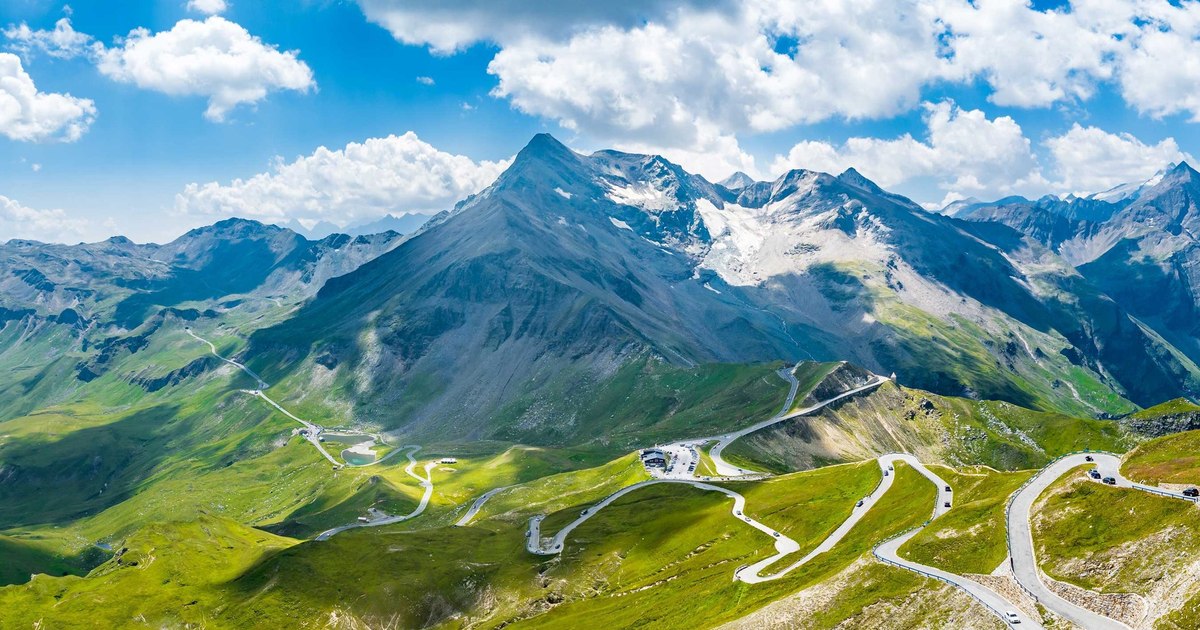
The highest road in Austria, built in the same period as Transalpina, brings important revenues to the Austrian state and the communities in the regions they transit. Grossglockner, is a fee road, well maintained and spectacular, which has become an Austria monument.
Alpine Road Facebook source Grossglockner Hochalpenstrasse.
Open in summer, usually from May to October, “Transalpina Austria” attracts almost one million tourists annually and brings important revenues to the Austrian state, resources that are then used to maintain infrastructure and improve the tourist services.
The Grossglockner alpine road climbs to over 2,500 meters in the Alps, offers stunning mountain landscapes and can be compared, regarding its coils and its appearance with Transalpina and Transfăgărașan, the highest roads in Romania.
But unlike the two Romanian alpine roads, it is better maintained, it has been declared a historical monument, and the drivers who transit pays tickets for its use: 35 euros for motorcycle access, 45 euros per day, for each car, or a subscription of 90 euros for three weeks.
The snowy ridges could mention the Romanian “transalpines”, on the other hand, the marmots dominate the fauna around it, while in Romania the flocks of sheep and the shepherd dogs are accustomed to the Transalpine in the Parang Mountains, and the bears are absent from Transfăgărășan.
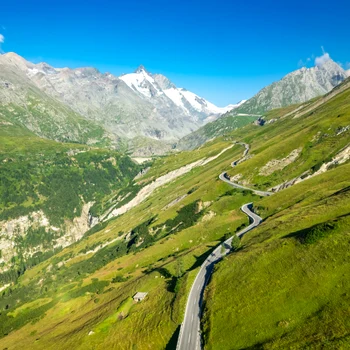
Image 1/18:
Alpine Road Source Facebook Grossglockner Hochalpenstrasse (14) JPG
Austria, magnet for foreign tourists
Austria is among the best performing countries in Europe and could be an example for Romanian tourism.
Admired for the modern road infrastructure, for the mountain resorts and lakes and for the attractiveness of the cities of Vienna, Salzburg, Graz, Linz and Innsbruck, the Western country with just over nine million inhabitants, located less than six hours of western Romania, obtains annually impressive revenues from the tourism, a branch of 500,000.
Alpine Road Source Facebook Grossglockner Hochalpenstrasse
In the first ten months of 2024, Austria received over 40 million tourists, most foreigners from Germany, the Netherlands, Switzerland, Czech, Italy and the US, show official statistics, and the annual revenues obtained from tourism have exceeded $ 50 billion.
Along with the classic destinations for summer holidays, its alpine roads represent some of the great tourist attractions of the season and an important source of income for the Austrian state.
The most spectacular four of them, the “Transalpines of Austria”, are managed by Grossglockner Hochalpenstrassen AG (abbreviated the Grohag Group), a founding and administrator company of several tourist destinations to Austria.
Alpine roads with Austria’s charge
These include four themed roads: Grossglockner Hochalpenstrassen (Alpine Grossglockner), Gerlos Alpenstrasse (Alpine Gerlos), Nockalmstra (Nockalm Road) and Villacher Alpenstrass (Alpina Villach) as well as Krimml Worlds of Water, A tourist complex developed around the Krimml Waterfall, the largest waterfall in Europe.
Alpine Road Source Facebook Grossglockner Hochalpenstrasse
Grossglockner Hochalpenstrasse is 48 kilometers and climbs up to 2,504 meters in the Alps (between Salzburg and Carintia). Nockalmstrasse is 34 kilometers and reaches 2,042 meters in the Nockberge (Carintia) mountains.
Gerlos Alpenstrasse is 12 kilometers and reaches 1,628 meters in the Alps (Salzburg -Tirol area), and Villacher Alpenstrasse is 16.5 kilometers, up to 1,732 meters in the Dobratsch Massif. The four Austrian mountain roads can be transited by travelers after paying taxes starting from 12 euros and can exceed 50 euros.
The road taxes bring estimated annual incomes to at least ten million euros to the state company and are used in the necessary maintenance and repairs for various tourist services. The resorts in the area also take full advantage of the attractiveness of the travel destination.
“Every year, about 2.5 million people visit these tourist destinations. Of these, 900,000 only reach the Grossglockner Alpine Road. The thematic roads and their attractions have always been at the intersection of different interests: nature, technology and tourism, and we fully respect all the special requirements of the natural areas around our goals UNESCO Nockberge Biosphere Reserve ”informs Grohag.
The story of “Transalpina Austria”
The Alpine Road Grossglockner, which starts from the town of Fusch, in the Salzburg Land, and arrives in the Carintia region was designed in the 1920s, in a difficult economic period for Austria, affected by the breakdown of the Austro-Hungarian Empire.
“In addition, unemployment was very high. A site of the extent of the Alpine Road would have created thousands of jobs. A third reason was the tourism in full development. The spectacular panoramic road was to bring income from access fees and tourists holidays”, Shows the historian Grossglockner, published on her website.
Initially, the project was considered too ambitious and expensive, but the economic crisis of 1929 accelerated the construction of the road.
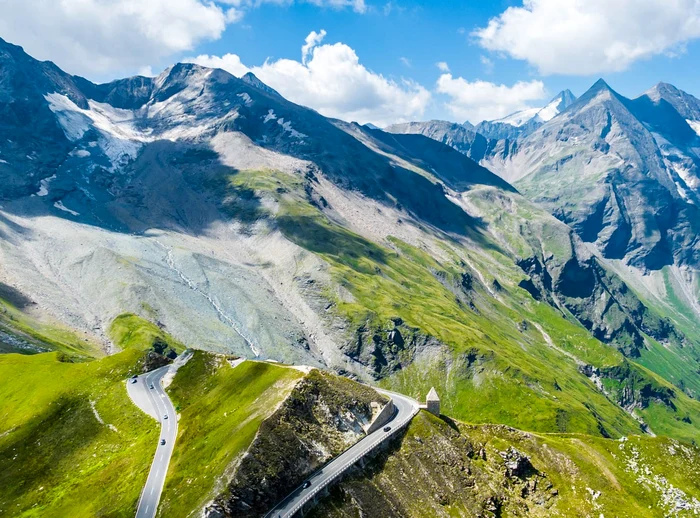
Alpine Road Source Facebook Grossglockner Hochalpenstrasse
“A new North-South connection, jobs for up to 4,000 people and the perspective of profitable businesses made that, on August 30, 1930, the first explosions to mark the beginning of the alpine road. After many obstacles were exceeded, only five years later, on August 3, 1935, the road was inaugurated by the first day, On the way, this being still covered with sand ”recalls the site.
Since the opening, the number of visitors has far exceeded the initial expectations, and the road has soon become a popular tourist attraction, needing constant modernizations to meet traffic.
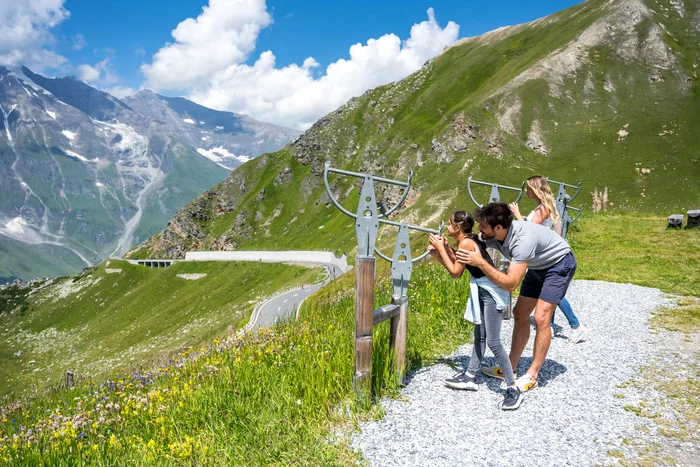
“On the 48 kilometers long, the Grossglockner Alpine Road has much more to offer than just the fun. Every few meters along this masterpiece of road construction, visitors can expect views of an amazing landscape, but especially to starting points for natural class experiences. Mountain.informs Austria’s tourism page.
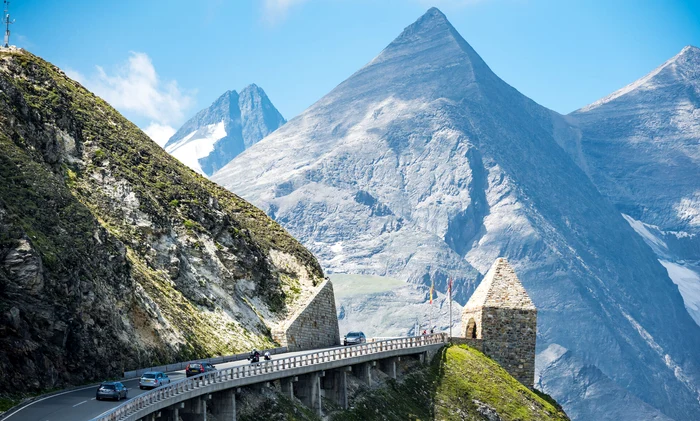
At the highest point of the mountain road, the Edelweiss peak, 2,571 meters high, which can be reached by a foundation, the vision opens to a panorama of over 30 peaks of three thousand meters and the northern flank of Grossglockner, 3,798 meters high.
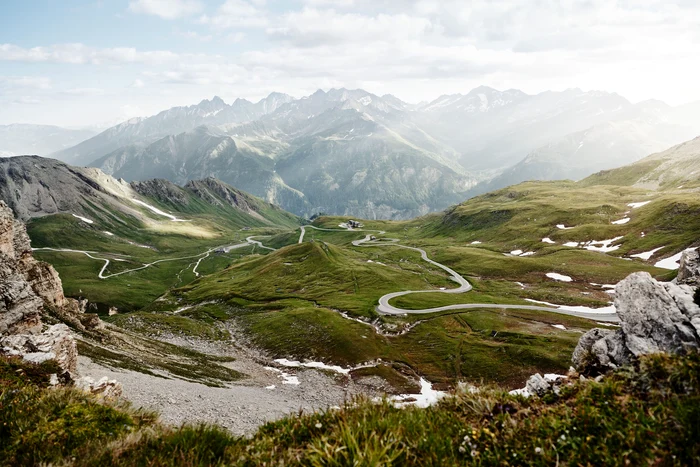
Alpine Road Source Facebook Grossglockner Hochalpenstrasse
“The Alpine Road Grossglockner crosses the border between Salzburg and Carintia in Hochtor. Here, the Kaiser-Franz-Josefs-Höhe panoramic terrace offers an impressive view of the highest mountain, Grossglockner and Pasterze. It is the only Alpine road from Austria, which traverses 4 areas of Vale. Higher point – from the mountain area, to the subalpine area, then to the alpine level (without trees), to the glaciers and the highest peaks in the subnival and level areas”, Informs Grossglockner.at.
The alpine road inaugurated 90 years ago is a protected monument since 2015.
Transalpina, the Romanian version of Grossglockner
Transalpina, the highest road in Romania, has a story similar to Grossglockner. The national road 67C, which crosses the Parang Mountains, from Novaci (Gorj) to Sebeș (Alba), on a length of almost 148 kilometers, reaches the altitude of 2,145 meters in the Urdele Pass, the highest point of the road that crosses the Southern Carpathians.
Its construction began in the 1930s, when the paths that connected the Sibiu region to the south to the Carpathians were transformed into a mountain road, with the establishment of the first cabins in Rânca. King Carol II inaugurated the beginning of the modernization works of the ridge route of Transalpine, which led to the new Rânca tourist complex, opened in 1938.
In the following decades, Transalpina has gained the name of the king, being most often used by the shepherds in the Sibiu region and hunters.
Transalpina was completely asphalted only in the late 2000s, but modernization works are not completed in some portions. Although it is only open a few months a year, it is increasingly sought after by travel lovers.
Unlike tourists on Transalpina Austria, the drivers climbing the Parang Mountains do not pay access fee on the “King Road”, but have fewer tourist services and less modern infrastructure.
