
Dr. Anca Tudorancea, lecturer at the Center for Hebrew Studies, Faculty of Letters, University of Bucharest, and scientific secretary of the Center for the History of Jews in Romania “Wilhelm Filderman” of the Federation of Jewish Communities in Romania is co-author of the “History of Jews. . The Holocaust “edited by” Corinth “. In a short interview for “Weekend Adevărul”, he spoke about the importance of the discipline “History of Jews. The Holocaust “, but also about the resources available to the teachers and the danger of propagating the discourse.
The Holocaust is studied in the Romanian school, in high school, from 2023-2024 Photo: Getty Images
“The history of the Jews. The Holocaust “became a compulsory study discipline of the 2023-2024 school year and is taught in the 11th grade/12th grade. The program was elaborated for one hour a week, during one school year. The teachers have five textbooks approved by the Ministry of Education and Research (which can also be consulted on the ministry’s website).
“Weekend Adevărul”: It has been 20 years since, officially, we commemorate the victims of the Holocaust. How much do Romanians know about this black episode in the history of mankind? What is your appreciation?
Anca Tudorancea: There was also commemoration during communism, from the Jewish community, but, of course, a public commemoration is quite recent. The general public knows a little about this episode and is still a challenge to introduce the subject in certain public discussions. But it is also the challenge of historians, researchers and not least teachers to explain and play this episode in the history of Romania.
The same program, different textbooks
From the school year 2023-2024, the students in the upper high school cycle study “The History of Jews. Holocaust “. You are the co-author of one of the textbooks. How would you respond to those who say that a self-employed matter about the Holocaust is too much?
I would tell them that it is an information opportunity about the context of this event and what happened in Romania, something about which it was quite passed. Informing teachers and students is quite limited, especially about local history. There is still room to inform you, to research, to teach, to rediscover a difficult part of local history which is also history.
What were the criteria that the Ministry of Education took into account in making the program? How did you choose the themes and the form of presentation for this manual?
The program is rigorously made and must contain chronologically and thematic important aspects about the Holocaust and in general context, and in the context of Romania. Alternative textbooks have the same thematic structure. It differs in the way each publisher and each author described and added images. And, of course, there is a different proportion: more images or more text, several exercises, which have done each manual to be chosen by certain teachers, certain schools.
History through images
How indicated is the use of other channels, such as movies, for teaching this subject?
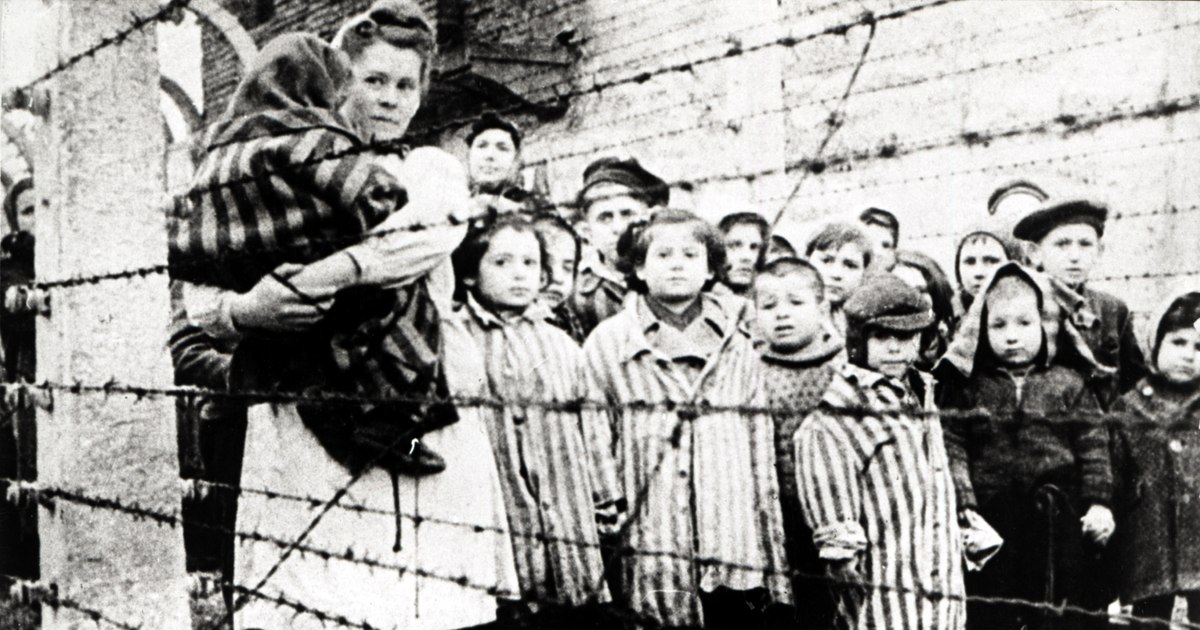
As a specialist in the image, a great importance to the chosen images, because we are talking about a different type of images. They are negative images, made largely by supervisors, criminals, and send a message to diminish the victim most of the time. The images should be chosen very carefully, in order not to convey a wrong message, so that the children understand that the victim is visible, the victim is not unimportant or seen as a number, like a lot. That is why it is very important how they are chosen and how the images are presented, especially related to difficult events, or if certain images can be put in a manual, they can present to children and will not negatively influence the teaching process.
Do you consider that the level of the 11th grade is suitable for studying this discipline or should it start earlier?
The chosen level, the 11th or 12th grade, is the right one. I think the introduction of such a subject earlier would be very difficult and believe in their ability to analyze and understand certain things at this age. It is the time to use movies or documentaries from which they can start discussions. Of course, meetings with survivors are less and less possible. There is even talking about the use of artificial intelligence or other technology opportunities. Of course, for a historian, the most important thing is the return to documents, which also exist and can be read, analyzed.
The inheritance of the past
What do we do with adults who know little about the Holocaust? Is the result of the elections at the end of last year a barometer? Do you have information on how parents report to the introduction of this discipline?
Parents’ attitude may be different from any topic. Of course, compared to playing a difficult chapter of history sometimes there are rejection reactions. It may be the case that, often, children will find out things to explain to parents at home, parents who did not know-they did not have access to these information during communism or even in post-communism.
Following the presidential and parliamentary elections of 2024, the voices of those who previously supported, without displaying, various leaders with non -elegious discourse (or even a legionary speech, as is the case of the candidate Călin Georgescu, who took over the speeches of “Captain” and Ion Antonescu) are becoming more and more often heard. How could the danger of propagating the discourse of hatred be countered?
The involvement in the political speeches of interwar political discourses is, of course, unhappy. People need to know more history to understand where they are copied, why they are copied, what are the dangers of patriotic speeches and what the true patriotism should be. It is quite difficult to counteract the discourse of hatred, which is increasingly dominant on several continents. What historians, teachers, general public can do, is to speak. We are not only facing the danger of forgetting very violent events during World War II, but recently there are discussions that have reappeared that young people do not know what happened during communism and have a different reaction to it. So there is a general danger of forgetfulness and should, beyond teachers and other specialists dealing with education, we should remember each family from recent history, things that have happened in distant history, so a role on who should have parents and grandparents to transmit real pieces of local history. Because today young people are very affected by new technologies and this can greatly distort the real history.
Many of them are young, maybe they just got the right to vote. In what way do you think the introduction of the Holocaust history time will contribute in decreasing the number of sympathizers of the extreme right?
I hope that the textbooks will reach their goal of informing and looking for answers, making young people ask more questions, to have a critical thinking. It is not only a lesson or a manual about the Holocaust, but it is a civic attitude lesson, which is why it is important to learn from the attitude of those who are today called “straight between peoples”, those who have often challenged hierarchical orders to save people. It is important to be people and understand that it is also a lesson about humanity. I hope that things are better in this sea of violent speeches or inciting violence, to understand that we can be even better.
