
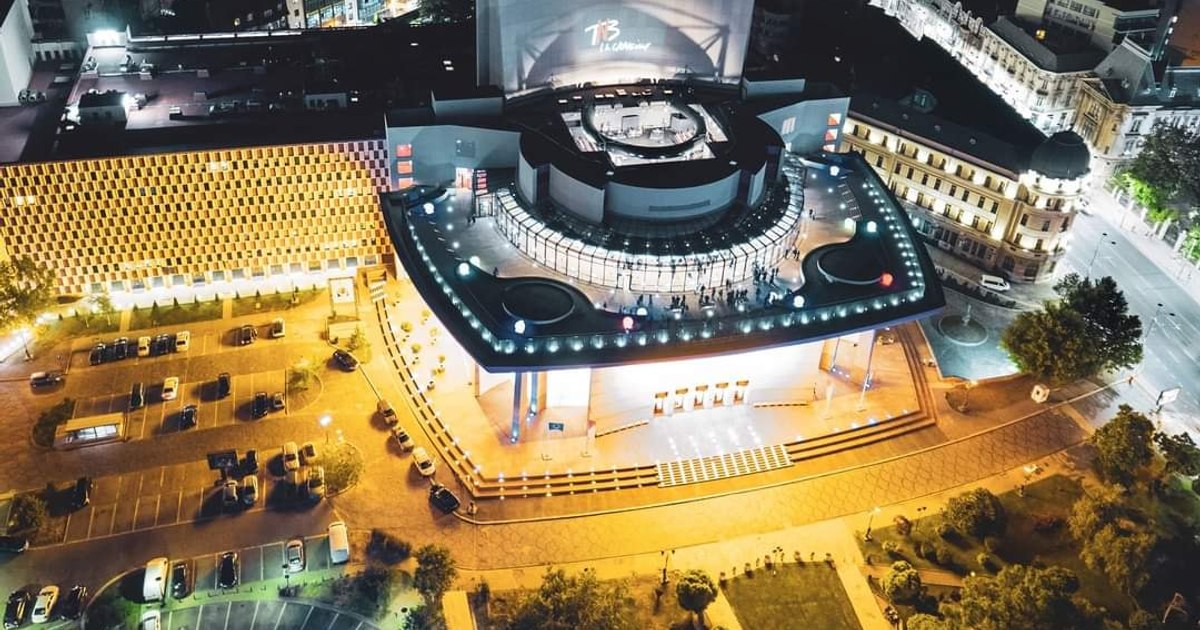
The actors of the “IL Caragiale” National Theater in Bucharest (TNB), together with the staff who serve the stage from all sectors of the theater, will organize a peaceful protest on Tuesday, at 2:30 p.m., in front of the TNB, against the application of a pilot program received from the Ministry of Culture, a directive of the Court of Accounts.
The pilot program was brought to their attention through Circular no. 766/03.02.2026 – Instructions regarding the unitary organization and recording of working time for the execution staff in public performance or concert institutions.
Both the actors and the other employees in the technical and production departments of TNB are protesting against the fact that this Circular transforms non-standard creative work in the artistic field into office work and contains annexes by which they are obliged to report daily, in writing, the detailed activity for working hours, writes News.
“We believe that this project kills creativity in culture and turns artists into “writers of daily reports”, and the artistic director or manager – into our “reporter”, everyone. The artist’s work cannot be standardized in 8 hours a day, his work is not only on the stage, it is also with himself – starting at dawn and ending at night – for 10 months a year, 6 days a week”, and an hour on stage involves emotional consumption hard to quantify”say the TNB actors.
“For these reasons, on Tuesday, February 10, at 2:30 p.m., we will peacefully protest in front of our theater, so that this pilot program is not applied. Colleagues from other theaters are also invited to support the non-application of this program”announce the actors of the Bucharest National.
The Ministry of Culture has published “Instructions regarding the unitary organization and record of working time for execution functions in public institutions of shows and concerts”, a recommendation formulated by the Court of Accounts of Romania.
Clarifications of the Ministry of Culture following the meeting with managers of institutions in the field, both under the Ministry of Culture and under the local public administrations.
These instructions are proposals and models and represent a guide for institutions, according to the MC:
The management is responsible for planning the artistic activities of each performance or concert institution. The instructions are mandatory for institutions subordinate to the Ministry of Culture and optional for other performance institutions. The set of tools that the Ministry of Culture sent for implementation is based on four complementary, clear, easy-to-use and verifiable benchmarks: Unitary structuring of activity components and their correlation with specific attributions and performance evaluation, through the orientation framework of Appendix no. 1, usable as a support for updating job descriptions and for the annual distribution of working time; Assumed baking – through the weekly work schedule Individual responsibility – through the individual activity report Unitary and verifiable evidence – through the collective standardized attendance sheet For application clarifications and methodological support in the implementation stage, the managers of the institutions can request, directly or through the Human Resources Service, the assistance of the members of the work group who contributed to the elaboration of the project.
The institutions in the country would develop options for planning the working time
“The Labor Code allows us that, if someone does not work the number of hours in a week, he can take days off paid in advance, and recover them the following month, when he has rehearsals. And vice versa: whoever works more hours, can take these days off the following month, or, if he can’t, because he has activities, and add them to his vacation. According to the law, there are neither penalties nor bonuses. It is implemented for 30 days at the level of institutions and comes into force (produces effects) after each employee has signed the modified job sheet, and in the following year the evaluation will be done on the basis of these 4 criteria, for each one separately and it will be seen how it works. When it does not work, it can be modified”explained the Ministry of Culture in a press release.
In addition, “The Labor Code obliges us to standardize by hours, not by activities, therefore, these instructions, which are MODELS and PROPOSALS, help us to adapt and adjust to the specifics of each institution, so that the time worked can be highlighted correctly”.
“A proposal for improvement would be, for example, that, during performances/concerts, the working time should be doubled. We can never compare the effort during an hour of individual study, with the effort made during an hour of the show. Or, as far as the technical staff is concerned: the assembly and disassembly times involve an effort that is different from that during the performance samd”the MC message shows.
