
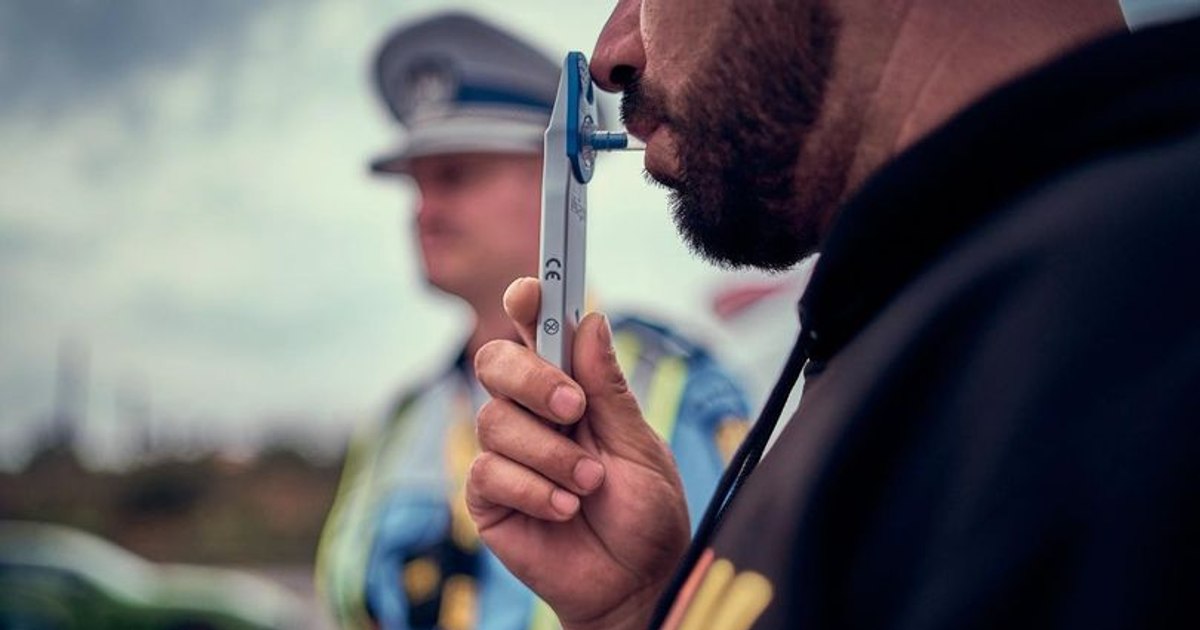
Cristian Paparău, the medical examiner and psychiatrist, told “Adevărul” that many of the patients he has under observation no longer take their treatment for fear of not being detected positive in drug tests and not being left without a driver’s license. Meanwhile, the Declic Community has sent a document to the High Court expressing its opinion on the importance of consulting forensic doctors when judges interpret the notion of “driving under the influence of prohibited substances”.
Forensic doctor and psychiatrist Cristian Paparău confessed to “Adevărul” that he is facing a real phenomenon: “My phone’s message box is full of messages from patients. They told me that they started to stop taking their prescribed treatments for fear of being pulled over and losing their license. And that’s because many drugs make you positive for drugs, even though you haven’t consumed anything like that. Many people have told me that if they lose their driver’s license, they lose their jobs. Many are commuters, they have nothing left to get to work, others are professional drivers. Many patients have written to me who do not know how to proceed, do not know what to do. Take their treatment and risk being unfairly penalized, or not take it and risk even worse health problems. And we’re talking about treatments that prolong life for many, keep them alive or give them a better life. What should I tell them?”
The term “caffeine” should also be reinvented
The doctor comes up with some concrete examples: “Metformin can give a false positive result. It is a medicine prescribed for patients with diabetes 2. Then there are the beta-blockers, i.e. the treatments used in cardiological therapy, which can also give false positive results. We also have anti-inflammatory and anti-allergic drugs that are administered especially during this period with ragweed. And there are many who need them and take them. Then there are patients who are on anxiolytics used for hypnoinducing purposes, that is, they help them fall asleep. They won’t take their treatment either, although insomnia is a serious, tormenting condition that reduces your productivity during the day and can even cause depression.”
The doctor also says that the term psychoactive substances will have to be reinvented. “Caffeine, for example. If I drank three coffees, I am under the influence of psychoactive substances. The caffeine in these coffees makes me more alert, maybe more agitated.” And certain foods eaten can generate a false positive: “Flax seeds, hemp seeds, tonic water… but we would have to ingest a quantity of 45-50 grams for something to come out in the test”the specialist also specifies.
And one more aspect, Dr. Paparău points out: the drugtest devices currently used by traffic policemen, if they are left in the sun, on board the car, in improper conditions, can give misses. “If you subject them to a high temperature, you may have a lot more errors. Think that the maximum temperature accepted for those devices is somewhere around 50 degrees. If they are kept in a car without air conditioning, forgotten there, say..while the policeman is in the intersection, directing the traffic, you can no longer trust these devices if you use them.” The forensic doctor also points out that in Romania we have extremely sensitive equipment that detects any trace of drugs in the blood. “These should also be calibrated. Traffic devices, used by traffic police, detect even the smallest residues”.
Coroner: “The law needs to be changed, but I find it hard to believe it will happen”
What should be done? What would be the solutions? The forensic doctors have the answer. They propose a consumption threshold to differentiate between people who have a certain amount in their blood, in their body, and those who are under the influence of drugs. The medical examiners conveyed in a press release that establishing the presence of the state of influence cannot and should not be rigidly correlated with the simple presence of a substance.
“From a medical point of view, a person is under the influence of a substance when, as a result of the consumption of a substance, his physical or mental capacities are impaired, with the reduction of his abilities to think and react normally, with due caution and diligence. That is why it is necessary to prove that the driver was less capable, physically or mentally, or both, of having a clear judgment, without neurological / mental disorders affecting his ability to operate a motor vehicle without risk to himself or others traffic participants. Therefore, it is mandatory, both in the letter of the law and in its spirit, but especially in objectivity from a medico-legal toxicological point of view, to demonstrate this impairment of a person’s behavior, ACTUAL OR POTENTIAL, by the substance identified in his body , but through exhaustive toxicological interpretation, and not through forced, simplistic congruences (such as the presence of the substance = influencing)”. it is shown in the document.
“There must be limits beyond which you can incriminate the driver, say yes, he is under the influence of drugs. But, be careful! Being under the influence means having a certain amount of the drug in your blood – which is currently not established and legislated – but also having a certain behavior,” also complete Dr. Cristian Paparău.
The problem could be solved by introducing these consumption thresholds. Let there be a limit, and whoever exceeds it should bear the consequences and submit to the rigors of the law. The others, who fall below that threshold, should be left to see their way, as they say. “The law must be amended in such a way that it no longer criminalizes the presence of the substance in the body. The decision of the High Court was applied verbatim by the legislature. Many, out of laziness, apply it just like that, as such. Without thinking. There is a serious confusion between presence and influence and this should go away.” Dr. Paparău points out.
The doctor is not, however, very optimistic about the change in legislation. “From the very beginning there has been a degree of obtuseness, so to speak, on the part of those who created this law, that I find it hard to believe that they will give in to the spirit of things that are happening out there and working.”
The High Court panel for solving some legal issues in criminal matters will decide, on September 16, what the state of influence means, after the request of the Brașov Court of Appeal to clarify this aspect. The decision will be final and binding for all Romanian courts.
