
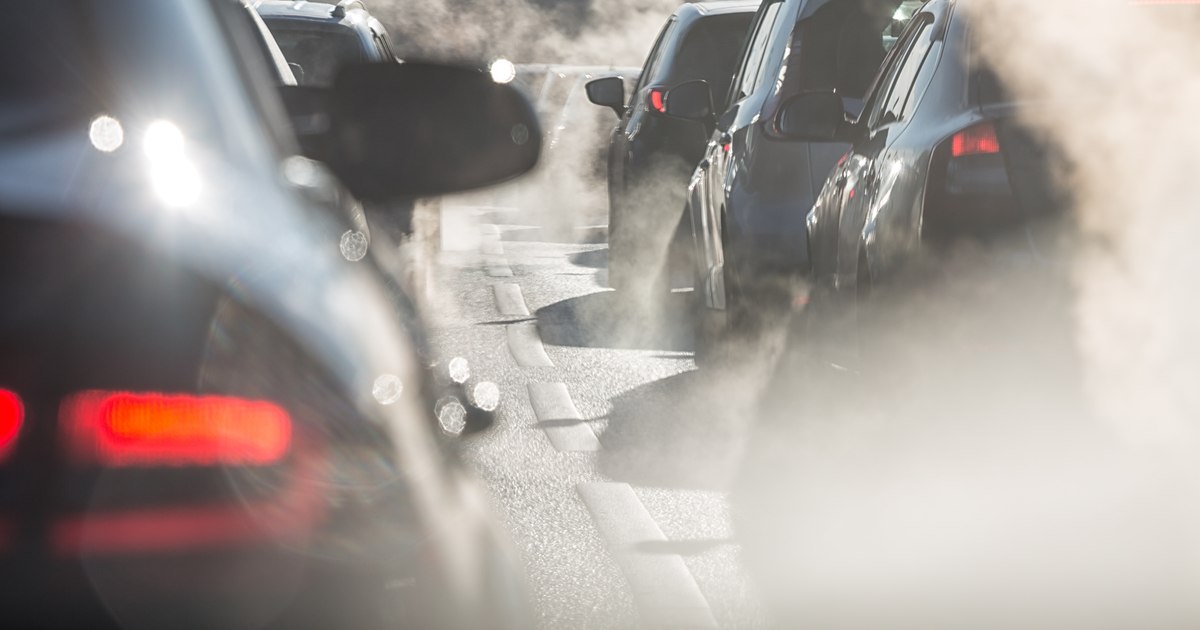
Prolonged exposure to polluted air increases the risk of dementia, shows the largest study published so far in The Lancet Planetary Health. The analysis, carried out by researchers at Cambridge University, evaluated the data of almost 30 million people out of 51 reports, most of them from high revenue countries.
Photo source: Shutterstock
The researchers identified a strong connection between exposure to pollutants such as fine particles (PM2.5), nitrogen dioxide (NO₂) and soot emitted by vehicles or wood burning, and increased risk of dementia. The pollutants seem to be more closely correlated with vascular dementia, which affect the circulation of blood in the brain than with Alzheimer (the most widespread form of dementia), transmits Euronews.com.
“Air pollution is not just an environmental problem, it is a serious and increasing threat to our brain health,” said Dr. Isolde Radford, politician manager at Alzheimer’s Research UK.
However, it is not clear whether the pollution directly causes dementia or what are the mechanisms involved. A hypothesis analyzed in the study indicates effects such as chronic inflammation and oxidative stress, processes that can damage cells and DNA.
Barbara Maher, a teacher of ambient magnetism at Lancaster University, emphasizes the lack of defense of the body in front of these invisible particles: “The body has no effective defense against ultrafine particle cocktails that we generate outdoors, especially from traffic, and inside, for example, when we warm up our homes using stoves.”
The study limitations are related to the difficulty of exactly estimating the individual long -term exposure. Most data are correlated with home addresses, without capturing real exposure over time, and the moment of life in which pollution has the greatest impact remains still unclear.
“A better research approach is urgently needed,” says Dr. Tom Russ, who is researching the psychiatry of the elderly at the University of Edinburgh. “We need better research to clarify how and why the harmful air pollution is.”
Mental health organizations and researchers call on governments for implementing stricter air quality regulations. “It takes a lot more to combat this invisible threat,” Radford said.
According to WHO, at present over 57 million people suffer from global dementia, a figure that could increase dramatically in the absence of preventive air quality measures.
Although the study is based on data from high revenue countries, the main sources of pollution identified: intense road traffic, the burning of fossil fuels, the thermal power plants and the urban dust, are also found in the big cities in Romania. The capital is often mentioned in European reports for worrying levels of nitrogen dioxide and fine particles in the air, factors that researchers now correlate with an increased risk of neurological disorders.
Air quality, cause for concern in Romania
The country report 2025 on the environment, recently published by the European Commission shows that Romania is making slow progress and continues to face difficulties in applying European environmental policies.
“The air quality in Romania continues to be a cause for concern in some parts of its territory, with serious consequences on the health of the population. The measures taken to combat the atmospheric pollutants are still insufficient. There is non-observance of the commitments to reduce the NOX emissions and PM2.5 for the 2020-2029 Monitoring of air quality ”, supports the European Commission.
Intense traffic, waste burning and the activity of large industrial power plants make the air in Bucharest increasingly difficult to breathe, according to the report “The state of the environment in Bucharest”, Made by the Bucharest Community Foundation through the Environmental Platform for Bucharest. The city is suffocated daily by a large number of cars, of which over half are older than 10 years, and more than a third are equipped with diesel engines, the road traffic being responsible for 60% of the air pollution. of sulfur and for a large part of toxic gases such as nitrogen oxides and carbon dioxide.
Also, in many neighborhoods in Bucharest there are frequently exceeding the legal limits for several pollutants. An increasingly accentuated problem is also the ozone from the ground level, which is formed on the hot days and favors the appearance of the photochemical smog, a type of dangerous pollution that especially affects children, the elderly and people with respiratory disorders.
“The capital urgently needs a healthier environment. The current state is an impetus to change in several key areas with the environment, for a better quality of life and a better city. concrete because a better future and a healthier environment in the capital ”says Alina Kasprovschi, executive director of the Bucharest Community Foundation.
Civic organizations constantly draw attention to environmental problems in Bucharest and are involved in identifying and analyzing relevant measures for environmental protection and improvement. A survey conducted among 26 NGOs and 9 civic initiative groups shows that the biggest challenges are the lack of green spaces, air pollution and deficient way in which waste is managed. Nearly 73% of the respondent organizations believe, however, that these problems can be solved and already involved, in partnership with public institutions, in the process of decision making and elaboration of public policies for a better environment in Bucharest.
