
Researchers at Oxford University have built a scalable quantum supercomputer capable of quantum teleportation.
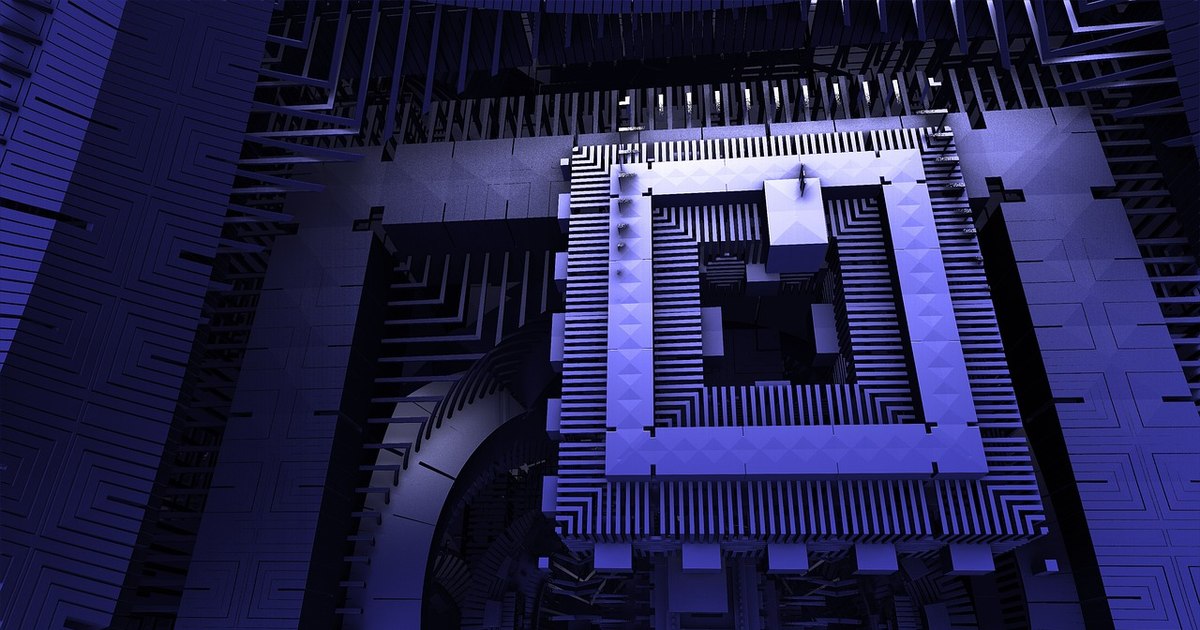
The new discovery could lead to the replacement of massive Supputer Supercomputer Photo: Pixabay
The study, published in Nature magazine, reveals the revolutionary discovery that brings the quantum calculation closer to the large -scale use. This could radically transform the technological industry and lead to the creation of an extremely safe “quantum internet”.
According to the independent publication, the field of quantum calculation has been around for decades, but only in recent years have been made significant progress in their practical scale. Using the properties of quantum physics, these state-of-the-art machines replace traditional bits-used to store and transfer digital information-with quantum bits (quubiti), which can act through a phenomenon known as overlap.
Quantum teleportation is not a new concept, but so far scientists have only managed to transfer data between separate systems, without physically moving quubiti. For the first time, Oxford researchers demonstrated the quantum teleportation of logical gates – the fundamental components of an algorithm – between two remote systems.
“Previous demonstrations of quantum teleportation have focused on the transfer of quantum states between physically separated systems. In our study, we use quantum teleportation to create interactions between these systems and to perform quantum logical gates between quubites hosted in different quantum computers ”, said the author of the study, Dougal Main, from the Physics Department at Oxford University.
More quantum processors interconnected instead of the massive supercomputer
This technology has the potential to fundamentally transform how quantum computers are built and used. Instead of a single massive supercomputer, future quantum systems could be made up of several interconnected quantum processors, functioning as a single unified computer.
The researchers also showed that the quantum system could be built and scaled using a technology that is already available.
“Our experiment shows that processing quantum information distributed in the network is possible with current technology. However, the scaling of these systems remains a huge technical challenge, which will require new discoveries in physics and engineering ”,
said Professor David Lucas, the main researcher of the research team and the main scientist at the calculation and quantum simulation in the United Kingdom.
This discovery could open the way to truly scalable quantum computers and to ultra-securized communications networks, with applications in fields such as cyber security, artificial intelligence and simulation of complex processes.
Quantum computers use quantum mechanics to store and process information. Unlike binary computers, where the basic unit of information or bits can occupy either a “turned” or “stopped” state, the quantum bits (quubitii) use the overlapping property, in which the information can exist in several states to perform Calculations with a much faster rate than today’s supercalculators, according to interestingengineering.com.
The superior calculation ability of quantum computers can help medical research, supply climatic changes and can solve optimization problems in many industries. This is why research institutes and private companies work to bring this advanced calculation technology to the real world.
In order for a quantum computer to solve the challenges that humanity faces today must process a lot of information stored in many quubites. Because quantum computers work at extremely low temperatures, the construction of a large quantum processor that can manage millions of quubitis simultaneously would mean the construction of a huge machine and a cryogenic cooling infrastructure.
Researchers at Oxford’s University have tried to solve this problem with a scalable architecture in which the modules can be connected to build a large car.
