
The famous American magazine National Geographic warmly recommends hiking in Romania, comparing Swiss Alps with our mountains: “The Alps of Transylvania offer visitors for abundant wildlife, sites included in the UNESCO World Heritage and picturesque villages, without agglomeration ”.
The publication praises our mountains, calling them the Transylvanian Alps. Photo archive
“While the Swiss Alps have long been the preset destination for mountain escapes in Europe, the Transylvanian Alps offer Mountains just as majestic to a fraction of the cost. Transylvania, whose Latin name means “earth beyond the forest”, has been a crossroads for centuries. The Roman, Ottoman, Hungarian and Saxon influences have made their mark on anything, from architecture to kitchen.
Of course, Transylvania is the homeland of Dracula (…) the Alps of Transylvania, part of the Carpathian mountain range, are some of the last wild places on the continent and host the largest large carnivore populations in Europe, including about 6,400 brown bears and over 2,000 wolves, along with red deer, laughter or Zimbrul.writes the prestigious magazine.
Via Transilvanica passes from north to south to Romania, wandering near wild peaks and 12 sites included in the UNESCO World Heritage. The route is perhaps one of the best ways to experience the natural and cultural wonders of the region, such as traditional cities such as Sighisoara. Visitors of the city can be witnesses directly to the abundant meadows with wild flowers – o “Color tapestry” which supports the traditional production of honey and offers a crucial habitat for extinct pollenizers, writes the publication.
National Geographic also reviews Piatra Craiului National Park, which hosts this natural reward, together with its dramatic white limestone and clean forests: “The fans of the film could recognize its picturesque landscapes in the movie Cold Mountain, but the real stars are the remarkable biodiversity of the park and the network of hiking routes. Visitors can cross one of the latest old forests in Europe, while keeping their eyes on the impressive wildlife. “
An accessible ski destination and cultural sites
For those looking for strong winter sensations “Without Swiss prices”winter transforms Piatra Craiului into an accessible ski destination. The slopes can be less extended, but they offer impeccable conditions and authentic mountain hospitality at low prices.
While a day permit for the peak season at the emblematic Zermatt resort in Switzerland costs around $ 102 (in Swiss francs), the first ski resort Poiana Brașov in Romania offers a ski ticket for a full day for about $ 46 (in lei).
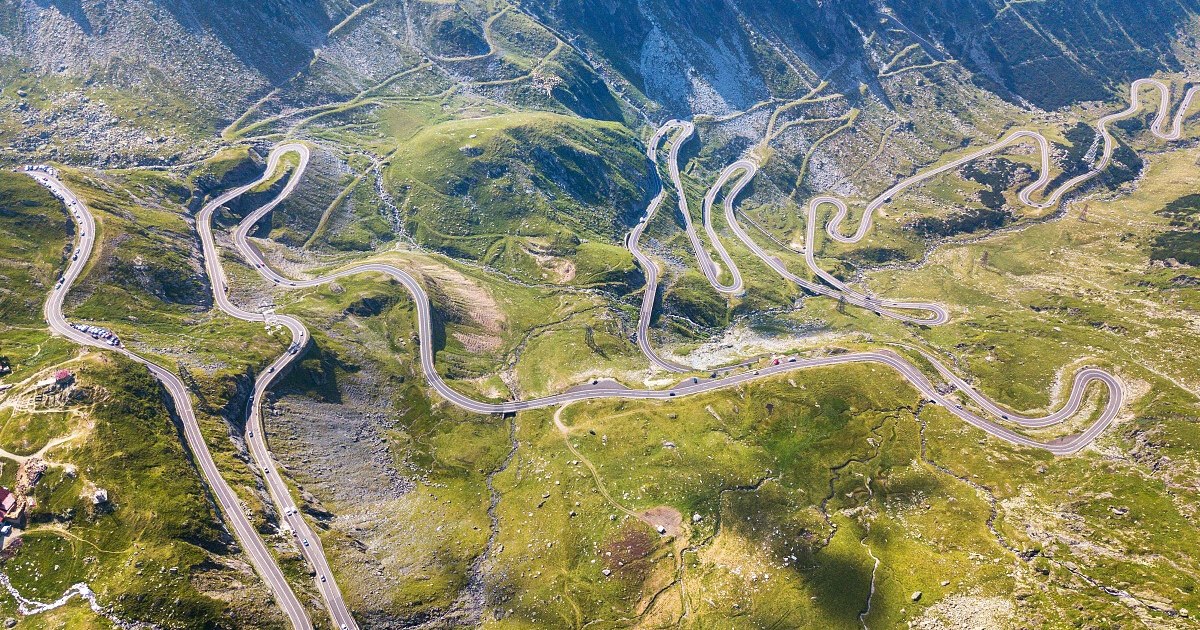
“Beyond the natural miracles, the cultural heritage of the region is equally convincing. The Transfǎgǎrasan highway, a trip on a 56 mile (90 -kilometer) serpentine through the Fǎgǎraș Mountains, at 8,000 feet, is the highest part of the Alps of Transylvania. It offers travelers. It represents good basic camps ”, Write the publication.
Warm recommendations for accommodation in Sibiu
“With a population of over 154,000 inhabitants, Sibiu emanates a medieval character. The old medieval city of the city is divided between a city from above, perched along a terrace, and a lower city, located along the Cibin River, reminiscent of Bern from Switzerland and its similar design on two levels on the river.
Founded by the Saxon colonists in the 12th century, the historical center of Sibiu still presents its past with remains of the red brick walls to counteract the Turkish attacks from the fifteenth and 16th centuries-nicknamed the “red city”. Three original waking towers testify to the mastery of the colonists. Cultural attractions include the Brukenthal Museum in Austrian Baroque style, full of paintings, engravings and rare books and impressive religious architecture that includes the Lutheran, Orthodox and Catholic traditions. ”
Brașov, a fortress founded by the Teutonic Knights in 1211
Brașov became one of the seven cities with walls of Transylvania, founded by the Teutonic Knights in 1211. The city has won its German name Kronstadt (Crown City) through the richness of those German merchants who prospered at this crossroads of the Ottoman and Western-European commercial routes. Today, it is a charming city, accessible on foot, with 277,945 inhabitants, with centuries -old fortifications and towers reminiscent of Lucerne, Switzerland.
Visitors can slip through Slorii Street, 4 feet wide, one of the narrowest passages in Europe, where the legend claims that the couples who kiss here will never separate. The imposing Black Church (the Black Church) takes its name from the “Great Fire” of 1689, which darkened the walls, and inside, it houses the largest organ in Eastern Europe. From the terrace of Mount Tâmpa, the letters that write “Brașov” are visible by kilometers, such as the emblematic sign of Hollywood.
The Alps of Transylvania may not have the recognition of the name of their Swiss counterpart, but this is their charm. Among these less traveling mountains, visitors find not only high peaks, but also a preserved portion of Romania, where the traditional ways of life continue. It is a slow pace place where adventurous travelers can experience a wild, authentic and wonderful Europe.
“” Where to stay and what to eat “
For contemporary rusticity, try Matca, a relay & châteaux property with 18 rooms and 20 villas, located in Simon, Romania, recommends National Geographic: “The beautiful wood and stone hotel offers activities such as beekeeping, bathed in hay and hiking and offers a luxury spa, gym and restaurant overlooking the Bucegi Mountains.
For a less ostentatious stay, take into account the Valea Verde resort in Cund, located in a restored Saxon village, where the rooms have hand-woven textiles and textiles ”.
As for the food, the publication states that “The Romanian cuisine offers delightful alternatives to the Swiss basic products for travelers who want to taste local foods. ”
“Caș, a traditional sheep’s sheep’s milk cheese is found in the markets of local farmers. While Emmental and Gruyère cheeses are other Swiss favorite, Transylvania comes with bellows cheese (outdated pine peel or animal leather shell) that offers as long as possible. The Romanians swallow the muffin ”, notes the publication.
