
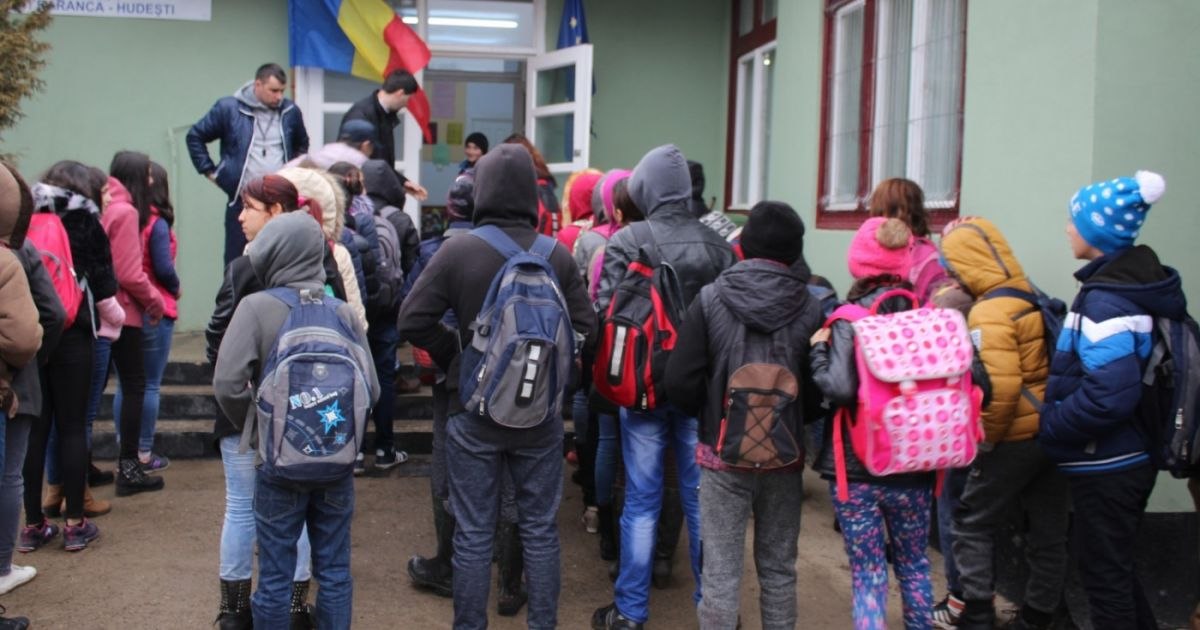
Romania has the highest school dropout rate in the European Union. Especially in poor rural communities, students stop going to school as early as middle school. Most remain without a qualification. The main cause is the low interest of parents in school education.
Absenteeism remains high at the school in the village of Baranca PHOTO Cosmin Zamfirache
According to official statistics, Romania has the most children who drop out of school in the European Union. More specifically, it has a dropout rate of around 15%. In contrast, the European average is 9%. Although the percentage of children who give up going to school has decreased in recent years, the phenomenon persists especially in poor rural communities. Teachers and education authorities are, in many cases, struggling with windmills, because everything starts from the parents’ mentality. They do not consider that the educational system, i.e. the school, can offer a future to children, nor do they consider it a priority. This is how we got to communes in Romania where 7th and 8th grade students drop out of school only to work during the day and then go to work abroad, especially in agriculture or as unskilled workers. And the effects can be seen on the labor market, where, in poor counties like Botoșani, most of those with no income have a maximum of eight classes and no opportunity to follow a qualification course.
“They are waiting until they are 16-17 years old to go abroad to make money”
School number 4 in Baranca village, Hudești commune, Botoșani county, is one of the country schools with many students from needy families or vulnerable groups. There are dramatic cases where siblings change shoes or clothes to go to school, especially if some study in the morning and the others in the afternoon. “In general, the children come from poor families. They don’t really have support from home”confesses priest Sergiu Gavriliuc, who teaches religion at the School in Baranca, subordinate to School number 1 in Hudești. There are children who barely collect the minimum supplies to attend classes and put on whatever shoes they can. It is no wonder that absenteeism was a constant problem at the school in Baranca. That is, there are enough students who stop school at eight grades at most. Nor does it participate in the National Assessment.
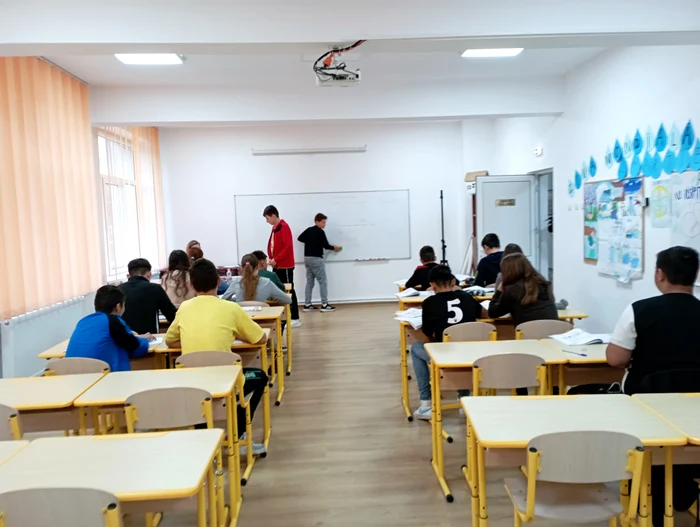
The Hudești school was modernized to attract students to the school PHOTO Cosmin Zamfirache
“We have a high dropout rate. In the last year, we had 10 repeaters. Our structure at Baranca has always had problems in this regard.”says Mirela Apătăchioaie, director of School Number 1 in Hudești. The situation is dramatic, especially because some of the girls, say the teachers, drop out of school and actually start their family life. Either get married or end up living in cohabitation. Boys, on the other hand, wait until they reach the age of 16 to go to work abroad. “They think about turning 16-17, going abroad, making money. We cannot make them come to school in any way.”, says Ana Maria Filip, mathematics teacher in Hudești.
Parents’ mentality the main cause of school dropout
Teachers say that the main reason why children drop out of school, as early as middle school, is the mentality of their parents. In many cases, teachers say, parents do not consider schooling a priority for their children. Rather than letting them do homework or study, he prefers to put them to work around the house. To take care of the animals or go to work in the fields. After reaching the appropriate age, many of these young people go to work abroad. The vast majority work as unskilled laborers in agriculture or construction because they have little schooling and no qualifications. Parents consider school unnecessary, especially after the eighth grade level, because they believe that life experience is more important than going to high school or college.
“It is about the mentality of parents who do not consider education as a priority for their children, that it is not a future perspective for them. The children reach the 7th and 8th grade and that’s when the dropout phenomenon occurs. They leave the village with one of their parents and we try, we re-enroll them but we fail to bring them back to school“, states Mirela Apătăchioaie.
And poverty plays an important role. There are also families so needy that they cannot send their child to high school. And this in the conditions where high school means, for a child from the country, commuting or rent, plus supplies, clothing and food.
Condemned to poverty and a hard old age
Children who drop out of school during secondary school do not even have the opportunity to attend level II qualification courses, i.e. known, common trades and many of them quite well paid. For these level II qualification courses, a minimum of 10 completed classes is required. For those with eight grades or less there are very few qualifications including agricultural laborer or maid. The phenomenon of school dropouts is also reflected in the labor market. No less than a third of the population of Botoşani county has less than 10 classes. More than 40,000 of the inhabitants have no job and do not participate in qualification courses.
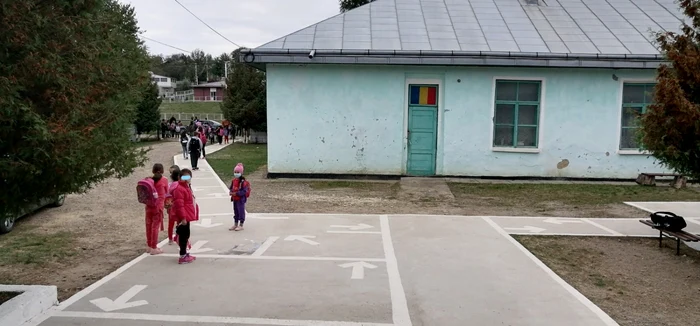
Dozens of children study at Baranca Hudești PHOTO Cosmin Zamfirache
“The level of qualification is a big problem of the people who currently exist in the records of the AJOFM. We try to guide them to complete basic primary or secondary education, a second chance. And let’s guide those who have completed the minimum compulsory education to attend vocational training courses”says Anca Apăvăloaie, director of AJOFM Botoșani.
Dozens of schools caught up in dropout reduction programs
Considering the current situation, dozens of schools in Botoșani county were included in the National Program for the Reduction of School Dropouts (PNRAS). It is a program funded through the PNRR that provides funding to schools experiencing dropout to do all kinds of activities to keep or attract students to school. Activities are varied from clubs and circles in various fields, from reading, to science or film, to trips, camps or even preparing and solving homework at school. At the school in Hudești, caught in this PNRAS project, reading clubs and science clubs are already established, remedial classes are held for students with poor results. “Through this project we proposed four categories of activities. Remedial activities, extracurricular activities, small equipment and facilities, plus the digitization component. That means we will have some reading spaces as well as a multifunctional room with different software and equipment. Depending on their presence and active involvement in everything we do, we will be rewarded with prizes, we will make trips every year of the project, but also school camps”, states Mirela Apătăchioaie.
Excursions and camps have the biggest impact, especially because most of the children from those communities have never left the commune or the county. “I hope that this project also means good results at the National Assessment. I have started the remedial classes, everyone comes to the training, every week. Through the trips, they will see new places, especially because they are children who have not left the locality or county.“, adds Ana Maria Filip.
