
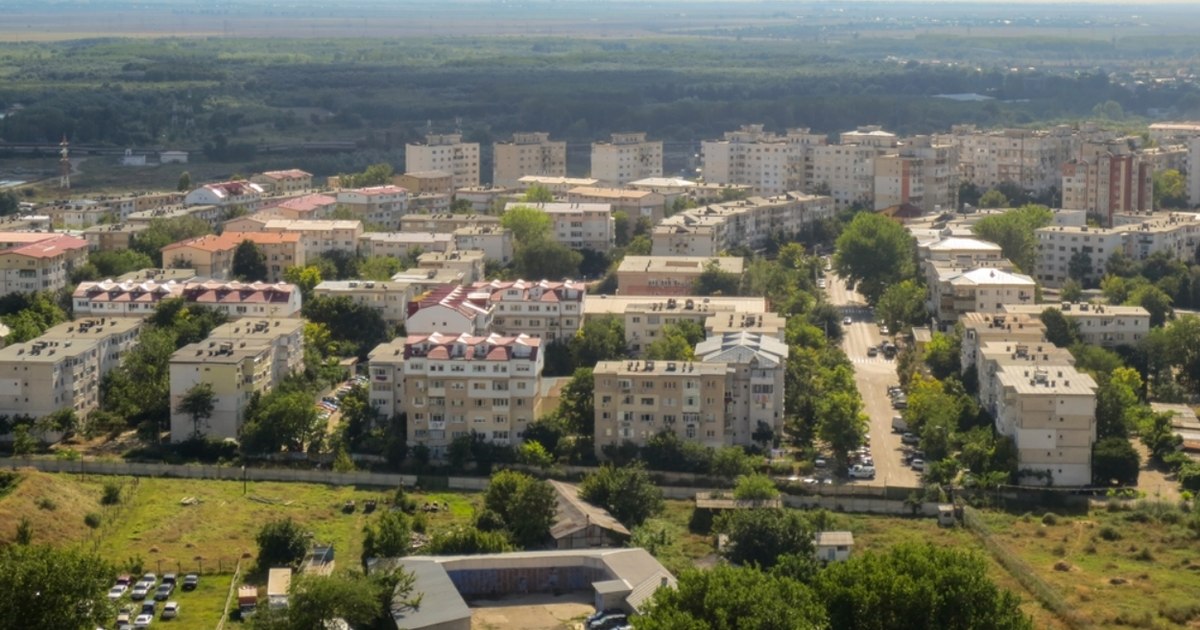
Romania, Slovakia and Hungary are the countries where people live in rent the least. 68% of people living in EU households own their homes and only 32% are renters.
With one exception, Germany, in the countries of the European Union citizens who live in a household that they own are in the majority. The highest share of home owners is recorded in Romania – 94%, followed by Slovakia – 93%, Hungary – 92% and Croatia – 91%.
Germany, on the other hand, is the only country where renters outnumber owners, with renters representing 53% of the population. Austria – 46% and Denmark – 39% also register high figures regarding the share of renters, according to Eurostat data.
The distribution according to housing type is balanced at EU level. In 2024, 51% of the EU population lived in a house, 48% – in an apartment, and 1% in other types of accommodation.
Houses are most preferred in Ireland, where 90% of the population live in such a property. In the Netherlands and Belgium, 77% of citizens live in houses, and a high percentage is also found in Croatia – 76. In contrast, 65% of citizens in Spain, 64% in Latvia and 63% in Malta prefer to live in an apartment.
The proportion of those who live in an apartment is higher in big cities – 73%, while the data starts to decrease for small towns and suburbs, so that in rural areas the figures are reversed (83% of the population lives in houses).
When it comes to home size, the data shows that, on average, an EU citizen owns 1.7 rooms. The highest figures are in Malta – 2.2 rooms/person, followed by Belgium, Luxembourg and the Netherlands – 2.1 rooms.
And if Romania has the highest proportion of owners, we are also the country with the lowest figures regarding the size of the home. A Romanian has, on average, 1.1 rooms, the same as a Slovak. The situation is similar in Poland and Latvia – both with 1.2 rooms on average per person.
Regarding the number of people sharing the house, the EU average in 2024 was 2.3 people/household. The highest number of persons/household was recorded in Slovakia – 3.1 persons, followed by Poland – 2.9, Croatia and Ireland – 2.7, falling below 2 persons in Germany, Denmark, Sweden, Finland and Lithuania.
In 2024, 17% of the EU population lived in overcrowded homes, down from 19% in 2015.
And here we are in the first place, 41% of the population in Romania living in overcrowded households, similar data being also recorded by Latvia – 39% and Bulgaria – 34%. At the opposite pole, Cyprus has the fewest inhabitants living in overcrowded households – 2%, followed by Malta (4%) and the Netherlands (5%).
An indicator that has remained at the same value for the last 15 years is the one that measures the under-occupancy of houses. A third of the EU population lives in under-occupied housing, the classic situation of elderly people or couples who stay in their home after the children have grown up and left.
In 2024, the highest shares of unoccupied housing were recorded in Cyprus – 70%, Ireland – 67% and Malta -64%, and the lowest in Romania – 7%, Latvia – 10% and Greece – 13%.
Which Europeans have the hardest time heating their home
Eurostat data also show that in 2024, 9% of the EU population was unable to heat their homes sufficiently, an indicator with an impact on the quality of life.
Bulgaria and Greece recorded the highest figures regarding the impossibility of keeping the home at an adequate level of heat – 19%, followed by Lithuania and Spain – 18%. The lowest shares were instead in Finland, Slovenia and Poland, all with less than 3%.
In terms of population heating and cooling pollution, average EU greenhouse gas emissions were 607 kg/capita, down from 921 kg in 2010. Luxembourg had the highest emissions at 1,257, while Sweden had the lowest emissions at 29 kg/capita. High values were also recorded by Belgium – 1,104 and Ireland – 1,007, and low pollution from home heating/cooling was recorded in Malta – 77) and Finland – 117.
House prices have risen by 53% in the EU over the last 10 years
The evolution of house prices and rents from 2010 to 2024, an indicator that looks at how affordable housing is in cities and in rural areas, shows that house prices have risen by 53% in the EU.
“In the EU, between 2010 and 2024, there was an upward trend between 2013 and 2022, with significant annual increases of 8% in both 2021 and 2022. In 2023, prices saw a slight decrease of 0.3%, followed by a 3% increase in 2024. Overall, there was a 53% increase between 2010 and 2024. There were increases in all EU countries except Italy and Cyprus. The biggest increases were seen in Hungary (+231%), Estonia (+228%) and Lithuania (+179%)”, says Eurostat in the “Housing in Europe – 2025 edition” report.
And rents rose across the EU between 2010 and 2024 by 25%. The increase was recorded in all EU countries except Greece, which registered a decrease of 16%. The biggest increases were recorded in Estonia (+208%), Lithuania (+177%), Ireland (+108%) and Hungary (+107%).
Romania, which has the highest share of owners, is also among the first countries in terms of the arrears that the speakers register on mortgages, rents or utility bills. The EU average is 9% of inhabitants living in households with arrears on mortgage loans, rent or utility bills, the highest share of debtors being in Greece – 43%, followed by Bulgaria – 19% and Romania – 15%. The countries with the least debtors are the Czech Republic – 3%, the Netherlands and Poland – 4%.
“Even though house prices rose between 2010 and 2024, the share of people living in households with arrears on mortgage loans, rent or utility bills fell in the EU from 12% in 2010 to 9% in 2024. Shares fell in 20 EU countries and rose in 7. The biggest decrease was seen in Croatia (from 30% in 2010 to 9% in 2024), while the highest increase was found in Greece (from 31% to 43%)”, it is specified in the Eurostat report.
In 2024, the countries that granted the most building permits were Poland – 287,000 (out of a total of 1.5 million at EU level), closely followed by France, with 284,000. Luxembourg granted the fewest building permits – 3,900. The most permits were granted in the last 10 years in the year 2021, when a peak of almost 2 million was reached.
“Overall, between 2010 and 2024, there was a 5% increase in the number of building permits for housing in the EU. Among EU countries, the number increased in 18 EU countries and decreased in 9. The largest increase was recorded in Bulgaria (+211%), followed by Malta (+98%), Spain (+96%). Decreases were seen in Italy (-50%), Finland (-49%) and France (-36%)”Eurostat also shows.
