
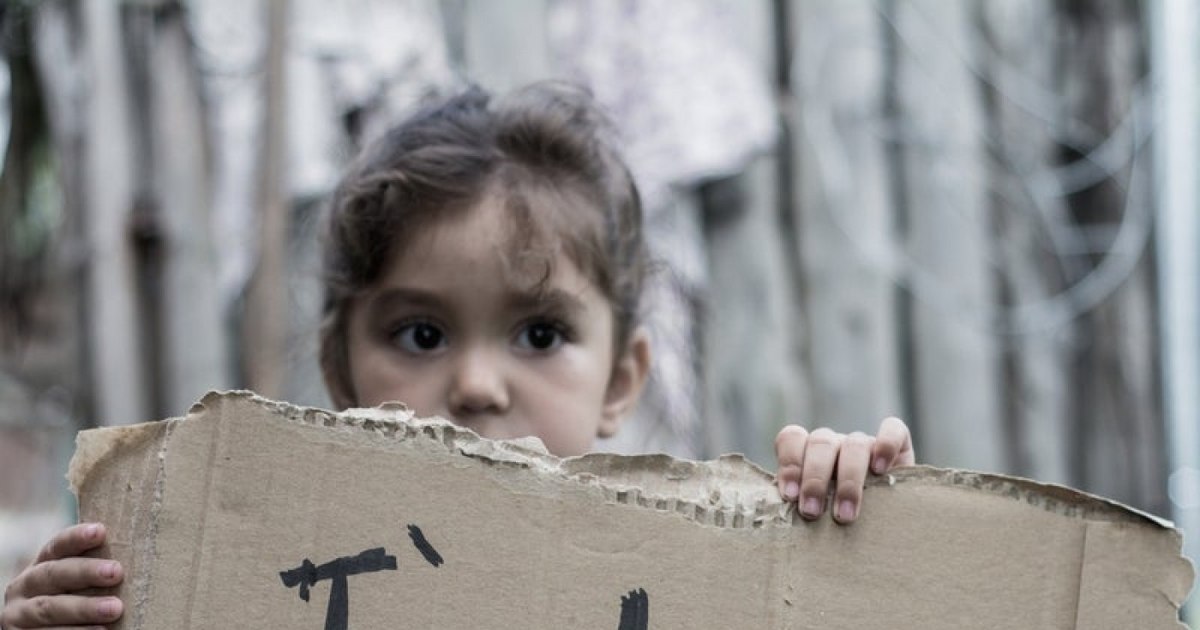
Romania occupies the first position in Europe in terms of the significant degree of poverty faced by children and young people.
Romanian children, the poorest in Europe – Photo Archive
More precisely, in 2021, over 40% of Romanian children and young people, aged between 0 and 17, were at risk of poverty or social exclusion.
“The highest incidence of poverty was recorded between 2018-2021, with 3 out of 10 children aged up to 18 being affected”, specified in the document “The National Strategy for Supporting Parents“, put up for public debate by the Ministry of Education, according to G4Media.
“According to the National Institute of Statistics, in 2021, 41.5% of Romanian children and young people in the 0-17 age group were at risk of poverty or social exclusion, Romania registering the highest rate among EU countries, followed by distance, from Spain (33.4%). The highest incidence of poverty was recorded between 2018-2021, with 3 out of 10 children aged up to 18 being affected, and among young people aged between 18-24, about 1 out of 4, the poverty threshold being well above the corresponding adult poverty levelr”, the document also mentions.
According to the mentioned source, in 2021, the households that were most affected by poverty were those formed by two adults and three or more dependent children, registering a percentage of 56.4%, increasing compared to 2018, when the percentage was 53.4%.
Single-parent families are also at risk, concretely, three out of ten single-parent families (single parent with at least one dependent child). In 2021, they continued to face poverty, recording a poverty rate of 28.8%, still down from 2018, when the rate was 41.6%.
How the Ministry of Education wants to help parents
“National Strategy for supporting parents 2024-2030”, put up for public debate by the Ministry of Education, does not include statistical data after 2021 regarding poverty.
Among the measures proposed by the Ministry of Education are concrete actions to support parents in a situation of poverty, not only by granting social benefits, but also by guaranteeing jobs and increasing the offer of jobs, especially for parents from marginalized areas.
In addition, it highlights the importance of developing settlements to become sustainable, resilient and open to all, as part of the strategy to support parents in poverty.
Major discrepancies: Roma children versus Romanian children
Statistics reveal significant differences between Roma children and those from the majority population in terms of monetary poverty, school participation and school dropout.
“Even if support measures have been implemented in the field of education (separately allocated places for Roma at high school and university) or literacy programs of the “Second chance” type for people who have exceeded the appropriate age by at least four years, half of the people of ethnic Roma who have completed at least 8 classes do not know how to write or have great difficulties in writing. In addition, the share of Roma children who attend compulsory education is 78%, compared to 95% for the children of the majority in the neighborhood. The gap increases again in the case of access to high school education, where we find less than a quarter of Roma students (22%), two thirds of ethnic Roma have either not completed any class, or have completed a maximum of secondary education“, highlights the data presented by the Ministry of Education.
In fact, a recent analysis by the Save the Children Romania organization shows that one in five Romanian children does not finish their studies on time.
The Save the Children analysis draws attention to the fact that almost 23% of families with children are unable to afford, at least once every two days, a meal with fish, meat or equivalent vegetable protein, according to data from 2022. The situation has become dramatic “iamong families with three or more children, over a third of them (37.7%) not being able to afford adequate food in 2022, compared to 17.5% in 2019 and 23.6% in 2021″the study shows.
