
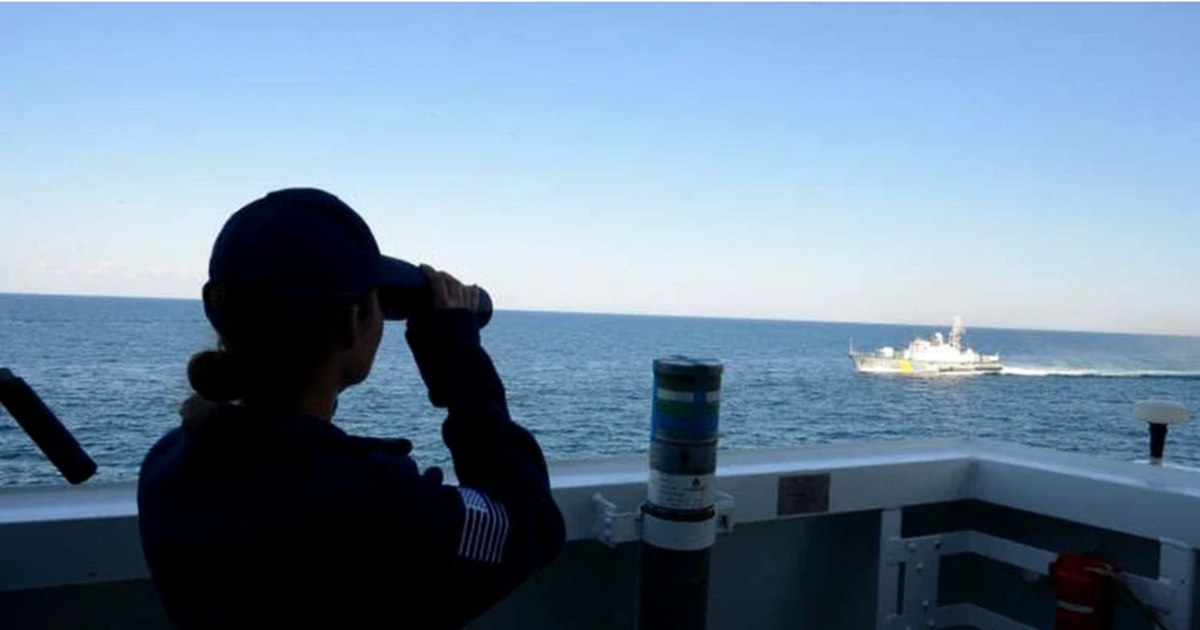
Several Romanian sailors are on board ships anchored near the Strait of Hormuz, after maritime traffic in the area was blocked by Iran. The situation, affecting hundreds of commercial and oil tankers, has prompted operators to halt their voyages and wait in the Persian Gulf or Gulf of Oman until sailing conditions clear.
“The situation of Romanian citizens who are on ships in transit in the area is in our attention. There is a mechanism through which we are in contact with shipowners, unions and agencies that employ seafaring personnel”, stated Andrei Țărnea, the spokesperson of the Ministry of Foreign Affairs (MAE).
The representative of the MAE stated that, at the moment, he cannot provide an exact figure of the Romanian sailors in the area, some of them not yet being officially registered.
“Not all of them announced their presence. Some of them are, unfortunately, used to the existence of risks in the region. Navigation stopped, there were risks of piracy activity”, Șarnea added.
Regarding the political component, the MAE emphasizes that the closure of the waterways represents “a flagrant violation of international law and freedom of navigation”.
The Romanian official also emphasized that Romania joins all the countries that request that the freedom of maritime traffic be ensured and that the main waterways must remain free.
The Ministry maintains permanent contact with the Romanian sailors who announced their presence and monitors the evolution of the situation to guarantee their safety.
Iran is threatening to permanently close the Strait of Hormuz and attack any ships trying to pass through it, in an escalation that could damage one of the world’s most important sea routes and strain relations with China, the world’s biggest crude importer.
According to a senior official of the Iranian Revolutionary Guards, the strait is considered “closed”and any ship that tries to pass risks being attacked, reports CNN.
The Strait of Hormuz, located off the coast of Iran, is a strategic channel through which nearly 20% of global oil consumption transits.
