
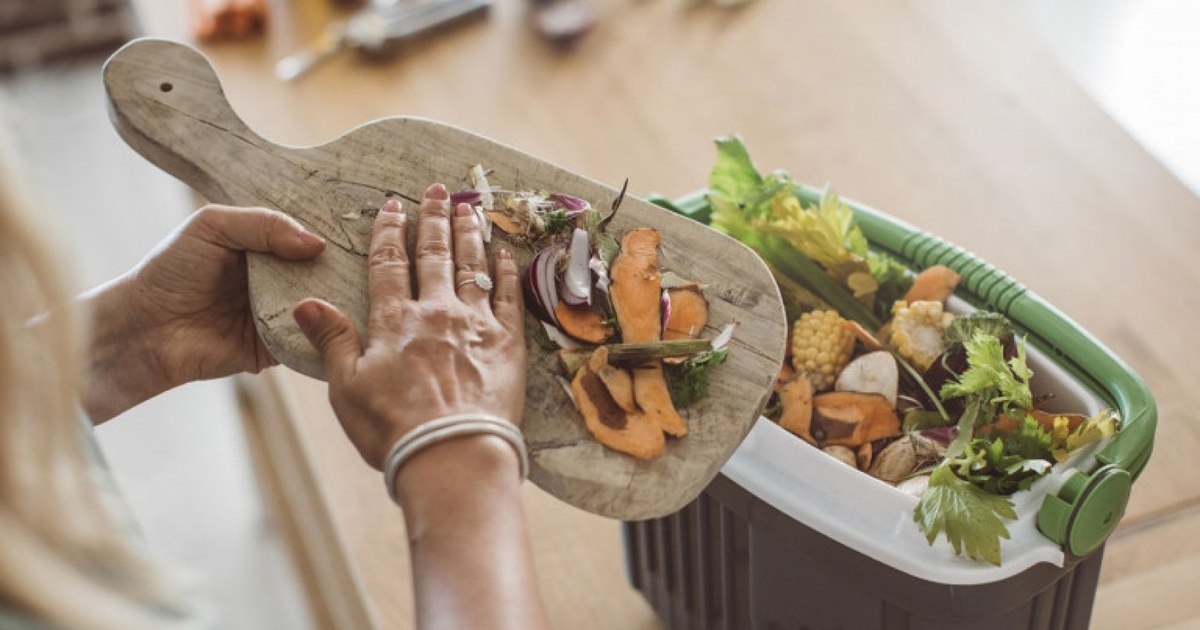
Romania disassembles about 2.5 million tons of food annually – the equivalent of about 150 kilograms per person – and the reduction of this waste by 50% by 2030 is no longer only a European obligation, but also a common responsibility for public health.
A Romanian throws on average 150 kg of food per year / Photo source: Archive
Households and restaurants are the main “wasteful” food in Romania. What do the authorities want to do
The European Union throws up to 10% of the foods produced, and Romania contributes to this waste of about 2.5 million tonnes annually – the equivalent of about 150 kilograms per person – which is why the reduction of food waste until half until 2030, throughout the chain, from farms to consumers, is no longer only a European obligation, but also a common responsibility for public health, Agerpres.
“Food waste is a problem of our society that concerns the entire European Union (EU) and can reach about 10% of foods made available to consumers. The EU has been committed to the world -long food waste by 2030, both at the retail and consumers, as well as during the production and food. European, but also a common responsibility for public health and food safety. said ANSVSA president Alexandru Bociu.
According to the quoted source, in Romania special attention is paid to both awareness and legislative measures. Starting with 2024, a legislation has been adopted that obliges all the operators in the food sector to take measures to reduce food waste, including: awareness of employees and consumers, selling products close to reduced price, redistribution through donations, use of intelligent stock management systems, as well as adapting the technological processes.
Institutions at the highest level of state will need to take measures to reduce food waste
In parallel, the institutions involved – in particular the Ministry of Agriculture and Rural Development (MADR), the Ministry of Environment, Water and Forests (MMAP) and ANSVSA – must carry out campaigns for information and education of consumers and operators, in order to emphasize the importance of reducing food waste.
“Households generate more than half of the EU food waste, followed by restaurants, public food units and retail points, such as supermarkets and food stores. The rest represents during production and manufacture. Some studies show that the main cause of waste in public food is the increasing dimensioning. Causes are: the residues resulting from the preparation of the menus, the supply dysfunctions or the excess of prepared food, which must be thrown at the end of the day. said the president of ANSVSA.
Last but not least, Bociu stressed that everyone involved has a role in preventing and reducing food waste. “We are talking here about farmers, food producers, retailers, Horeca sector workers and all of us, as consumers”he added.
The Ministry of Agriculture mentions that, according to estimates, approximately 2.5 million tonnes of food (about 150 kg/person) are thrown annually, but MADR has no attributions to directly measure or report these quantities, but only to support the prevention of waste, and therefore does not have its own official data on the level of food waste.
Who are the biggest food “waste” in our country, according to a study
According to a study conducted by the National Institute of Research for Food Bioresurse for the Ministry of Agriculture and Rural Development (MADR), the largest “waste” of food in Romania are the restaurants and domestic consumers in the urban environment, which generate 8.6% and 6.5% of the total losses. Also, in primary agricultural production, about 4.2%are lost, in food processing – 3.8%, and in retail and distribution – 0.9%. “However, the tendency is to decrease: the waste in urban households decreased from 10.4% in 2016 to 6.5% in 2020, and the forecast for 2030 is about 2%,” says MADR representatives.
Specialized studies show that in the European Union, over half of the food waste (54%) comes from households.
“The food cooked, the fruits and vegetables are most often discarded, either because of too high portions, the faulty programming of consumption, or because many people avoid consuming the debris from day to day.” reveals official data.
In this context, ANSVSA plays an essential role in reducing food waste, ensuring food safety in donations, informing and educating consumers about the benefits of reducing waste and providing support for economic operators for the correct implementation of specific measures, such as redistributing food or selling at low price. The institution has developed technical instructions for the operators in the food sector, informative materials for the public and carries out awareness campaigns, such as Safe2eat, or educational podcasts, in collaboration with the European Food Safety Authority.
What are the rules provided by the laws in force in Romania regarding food waste
The current waste legislation imposes on the operators on the food chain, mainly producers/processors and distributors, a clear hierarchy of measures to prevent the generation of food waste: the development of an anti -aging plan and awareness, the sale of food at a reduced price, the donation of the food, the valorisation of the animal or for the consumption or for the biog, and for minimum durability.
“A particularly important aspect in reducing food waste is the awareness of consumers regarding the difference between the deadline and the date of minimum durability. Consumers must correctly read information on the data of minimum food. They can be expressed in two ways depending on the perishability of the food, respectively” it expires ” – it is not possible to consume, Consume preferably before the date ” – informs us about the quality of food, and these can be consumed after that time under the conditions of a safety assessment”explained the president of ANSVSA.
In order for these measures to be effective, it is essential to raise consumers, cooperation between institutions and operators, as well as strengthening the network of food banks and their partnerships with the food sector, the head of the authority mentions.
Romania applies from 2024 a consolidated legislative framework for reducing food waste (Law 217/2016 amended by Law 49/2024), which obliges all operators in the food sector to take all the preventive measures. MADR representatives also warn that food with a consumption-deadline can only be donated until this date is reached, while products with minimum durability can be redistributed after, but only after evaluating their safety.
Romania has assumed the reduction of food waste by 50% by 2030, through the UN 2030 agenda and the Paris Agreement
Romania has assumed the reduction of food waste by 50% by 2030, through the UN 2030 agenda and the Paris Agreement, and MADR is the institution responsible for applying national law, consolidated by Law 49/2024. Agro -alimentary operators are obliged to apply measures to prevent, donate and capitalize on food, and those who donate benefit from fiscal facilities, following which from 2026 they will report donated or lost quantities annually.
In parallel, Romania will adopt a national strategy for the prevention and reduction of food waste, and the emphasis is now moving to the concrete implementation of the legislation and the awareness of operators and consumers, have supported MADR representatives.
This month, the European Parliament has adopted a harsh law against the waste of food
The European Parliament adopted on September 9, 2025, definitively, a law against food and textile waste, especially those generated by the fast fashion sector, a term that refers to the millions of cheap items imported from China.
According to the data of the European Commission, each European generates 132 kg of food waste and 12 kg of clothing and footwear per year.
The new law introduces mandatory objectives to reduce food waste, which must be met at national level until December 31, 2030: 10% of food processing and production and 30% per capita in retail, restaurants, food services and households. These objectives will be calculated compared to the quantity generated as an annual average between 2021 and 2023. Following Parliament’s request, the EU countries will have to take measures to ensure that economic operators who have a significant role in preventing and generating food waste (to be identified in each country) facilitates the donation of unsuccessful foods that are safe for human consumption.
The final proposal continued to be rejected from the restaurants and hotels, who opposed the obligatory objectives and pleaded for an education of the audience regarding the waste.
In order to achieve their goals, the member countries will be free to choose how they will achieve their objectives in terms of dietary waste.
“The idea is to adopt target solutions, which could include promoting the so-called” ugly “fruits, clarifying the labeling of the expiration date and donating unsold, but consumables,” explained the Polish MEP Anna Zalewska.
Instead, no goal was imposed for the agricultural sector, which is criticized by NGOs such as WWF. After the waste of households and food industry, “Losses that take place before, during and after harvesting or growth represent an important part of food waste along the value chain.”emphasizes the NGO.
The law will now be signed by both collectors, before its publication in the EU Official Journal. The EU countries will have 20 months from its entry into force to transpose the norms into the national legislation.
