
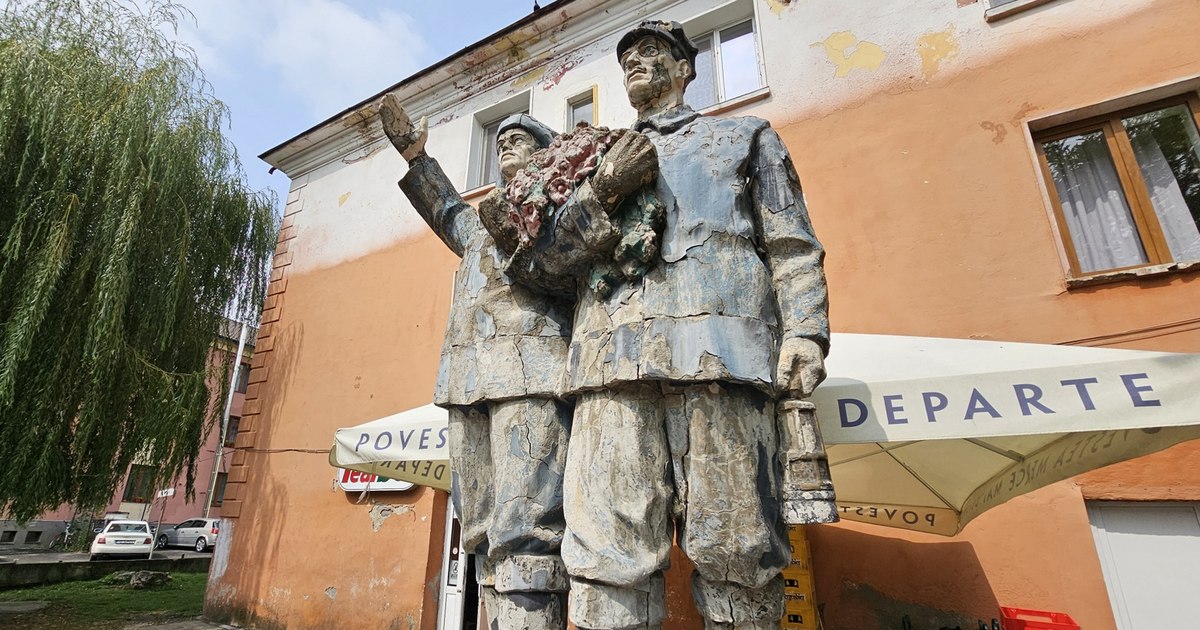
More than 30,000 Romanians worked in extreme conditions at the beginning of the 1950s in the coal mines of Valea Jiului, then controlled by the Soviets. The lives of many of them often hung by a thread, the secret notes of American espionage showed.
The statue of miners from the '50s, from Uricani. Photo: Daniel Guță. TRUTH
In the early 1950s, more than 30,000 people worked in the coal mines of Valea Jiului, which were booming. The mining region had come to the attention of the Central Intelligence Agency (CIA) of the United States of America, and the institution's informants frequently provided it with reports on mine activity.
Former secret CIA notes, preserved in the digitized archives of the institution, provide details about life full of dangers in the coal mines, located in the early 1950s under the command of the Soviets, who controlled the Romanian-Soviet companies called Sovroms. The coal mines in Valea Jiului were controlled, until 1954, by Sovrom Cărbune.
Cities in the Jiului Valley with thousands of miners
A secret CIA report from 1953 described mining towns in the Jiu Valley and Hațeg region.
Seven decades ago, the city of Petroșani had 8,000 workers, most of them employed in the mines in the area, and about 900 of them at the Petroșani Construction Enterprise (ICP) where machinery and tools used in mining were manufactured.
“The ICP workshops comprise an iron and copper foundry, a winding section for electric motors and a lathe section. There is also a mining research laboratory in Petroșani”, it showed the secret note from 1953.
The city of Lupeni (video) had about 8,000 miners, who produced about 45,000 tons of coal each month. The mining facilities in Lupeni were, at that time, modern, having been brought from the countries of the Soviet Union.
3,500 families lived in the mining colonies of the city of Vulcan, where the construction of the first blocks of flats began.
According to the CIA report, increasing Soviet demand for coal led to the reopening of the Vulcan mine in 1950 (video), closed after the First World War.
In the first years of communism, mining operations were established or reactivated at Vulcan, Uricani (video), Paroșeni, Dâlja and Cimpa, the Paroșeni Thermal Power Plant, the Coal Preparation in Coroiesti, the Mining Equipment Plant in Petroșani, a weaving mill at Vulcan, food factories, the limestone quarries at Peștera Bolii and Bănita were opened, several forestry operations, and the Vâscoza textile fiber plant from Lupeni.
“Aninoasa has 2,000 workers. The mine galleries are so low that the miners are forced to work in a bent position most of the time,” the CIA report said.
In the town of Petrila, 4,000 people worked in mining, and in its neighboring towns on the East Jiului valley, Cimpa and Lonea (video), almost all the locals worked as miners.
“A veritable underground city was built beneath Petrila, comprising power stations, offices and emergency repair shops. Cimpa has 3,000 workers, most of whom are employed at the Lonea mine. But the Cimpa mine is ready for reopening. Lonea has 5,500 miners. The required monthly production from the Jiu Valley coal mines is 80,000 tons. The Lonea mine yields 10,000-12,000 tons of coal every month”the CIA report said.
The Uricani coal mine was reopened in the early 1950s, and the town had 1,000 workers, most of them employed at other mines in the Jiului Valley.
About 500 people worked in the village of Baru, where there was a stove factory and a small mining enterprise that produced braziers, also controlled by Sovrom Cărbune, and in Hațeg, about 300 workers worked in the metal mines around the town, at the small hydroelectric plant from the Calan area and at a cannery, the CIA report informed.
The life of the miners in Valea Jiului
A confidential report kept from 1954 in the archives of Radio Free Europe (RFE) revealed the living conditions in the mining region of Văia Jiului. Dangers lurked at every step, people were not sure of tomorrow, and if they got sick their fate was sealed.
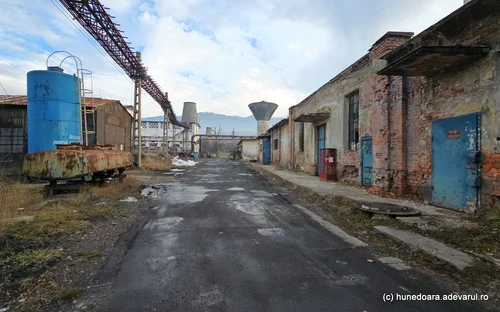
Image 1/29:
Lonea mine from Hunedoara ji valley Photo Daniel Guță THE TRUTH (27) jpg
“Nine exploitations are operational in the area: Petroşani, Petrila, Lupeni, Uricani, Vulcan, Lonea, Jiu, Cimpa and Aninoasa. Some of these mines are interconnected so that each mine does not need its own separate facilities, the authors of the report informed. The poor health conditions and the presence of labor battalions (soldiers with “unhealthy social origins”) demonstrate that the regime continues to exploit the workers“, said a 1954 report found in the RFE archives.
The important coal resources were spread over vast areas along the Jiu Valley, in the mountains surrounding the city of Petroşani. The work in the coal mines was incredibly difficult and intense, said a former worker, in a report kept by RFE.
“In some mines, such as the two wells in Aninoasa, water enters through several places and infiltrates large amounts of dirt and sludge. The workers employed to drive the horse-drawn coal wagons through the galleries were all affected by severe attacks of rheumatism. They have to wade through water and mud for the entire eight-hour shift.”said the author of the informative note, about the Aninoasa mine (video).
The amount of air in the underground was limited, and the ventilation was poor, so the workers in the underground had difficulty breathing. No one escaped the harmful effects of coal dust, especially when detonations took place.
“Those with weak lungs begin to vomit until they pass out and many of them die after being transported to the surface. Miners are strictly forbidden to talk about such cases which could be avoided if the mine management would take proper measures for better ventilation etc.,” the confidential 1954 report said.
The workers came out of the shaft, not only covered in thick coal dust, but also wet because water was continuously pouring underground from all sides.
“When coming out of the shafts, the miners had to be very careful, hold on to the ropes because everything was slippery because of the humidity. When they finally reach the surface, they are as wet as if they had come out of the sea. They have to make sure their gear is dry again by the time they start the next shift because no one has more than one uniform“, said the author of the note.
Accidents and disease wreaked havoc
Lung diseases were wreaking havoc among the miners, as well as ailments such as jaundice and rheumatism, and the lack of medicine in the Vulcan hospital, poor nutrition added to their suffering.
Accidents in the Jiu Valley coal mines occurred every day and claimed lives among miners and soldiers sent to work underground.
Security measures were extremely low in the early 1950s, when mining was done intensively and in a hurry so that much of the coal could be sent to the Soviet Union. Rocks and ceilings often collapsed on workers, causing numerous casualties.
“The heads of the mines, Romanian or Russian (no until 1954), are not interested in the miners and none of them went underground”, the information note showed.
A Security unit was responsible for maintaining authority in the coal mines and acted brutally to prevent acts of rebellion. The mines were surrounded by barbed wire fences, giving the appearance of labor camps.
