
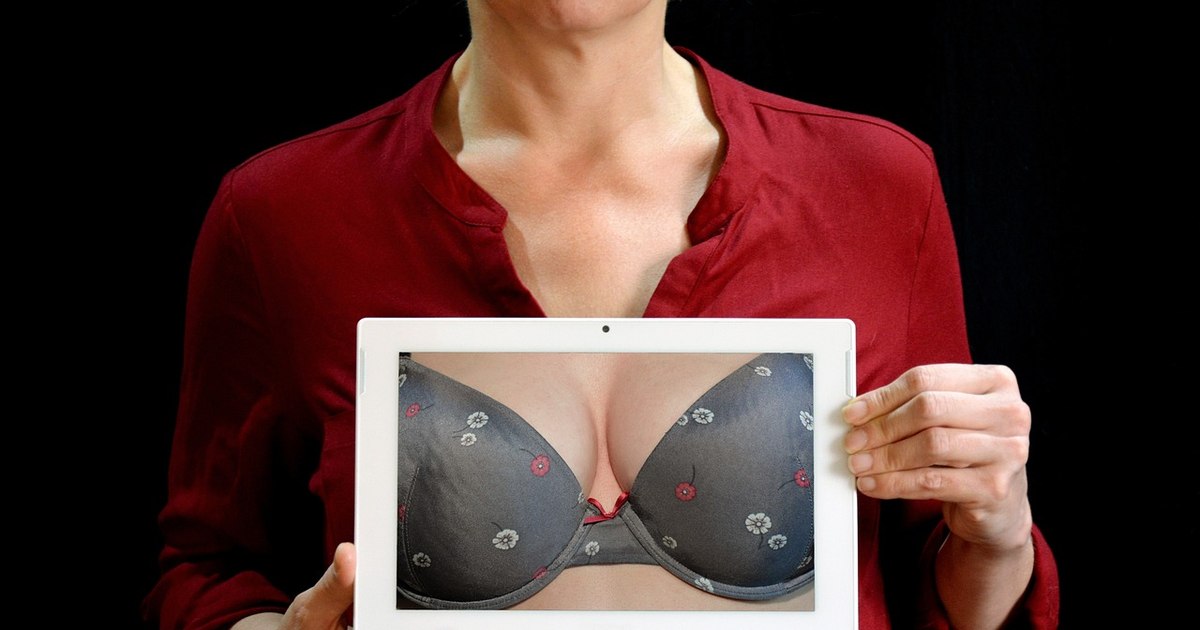
British researchers at Nottingham Trent University are developing a device that fits inside a bra and could monitor whether a breast cancer tumor is growing. They hope that this, very easy to use at home, will improve tracking the evolution of the disease, “The Guardian” reports.
A breast cancer monitoring device could be fitted into a bra, file photo
The device, being developed by Nottingham Trent University's (NTU) Health Technology Innovation Facility, will use an electric current to scan and detect small changes in fluids inside and outside breast cells.
Specialists say that tumor tissue is denser than healthy tissue and contains less water, so the device will be able to measure changes and tumor growth in real time down to a size of just 2 mm.
They believe this device will provide a new non-invasive method of detecting tumor growth that patients can use “in the comfort of your own home”. Two possibilities to produce it are considered: either as an insert in a patient's bra, or as a new bra that incorporates the device. It would record the data and send it to the wearer and the medical team via a smartphone.
The team behind this device aims to move to a clinical trial in the next few years.
“The technology would measure changes in the breast tissue and help improve the patient's chances of survival,” said Dr. Yang Wei, an expert in electronic textiles and electronic engineering at NTU.
“Breast cancer can grow so quickly; it could be 1 mm in six months or 2 mm in six weeks. This would be an additional measure to see how fast the tumor is growing. We open the door to investigating an alternative breast cancer screening that could be performed in the comfort of the patient's home, conserving critical hospital resources while providing a viable solution for detecting early signs of cancer“, said the specialist.
According to Cancer Research, there are more than 55,000 new cases of breast cancer and more than 11,000 deaths in the UK each year. Of the new cases, about 23% are preventable.
In this context, Dr Simon Vincent, Director of Research, Support and Advocacy at Breast Cancer Now, said that research into better detection and treatment of breast cancer is urgently needed and that he is currently skeptical about this new device.
“Although this new technology could provide a new way to monitor the growth of breast cancer tumors and we look forward to seeing the final results, the device has not yet been tested in humans and we need to understand a lot more before we can think whether or not it could be used in the medical environment”, he said.
