
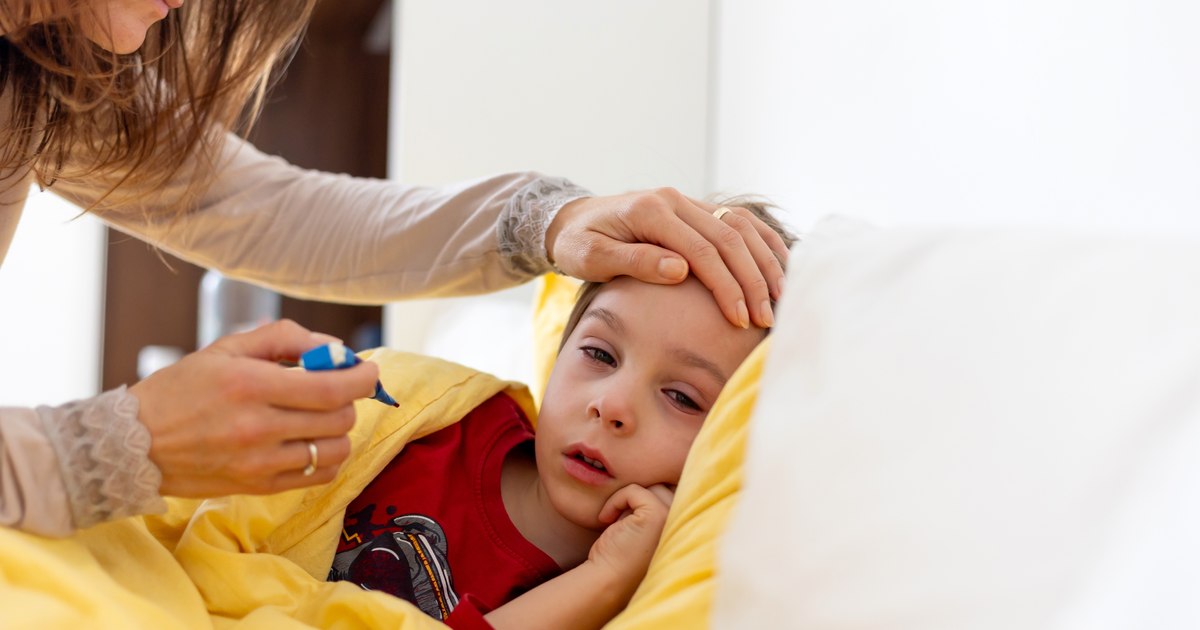
The increase in the number of flu cases is also felt in schools. More and more children are diagnosed with strains of the virus, and parents are divided into two categories: those who notify and those who do not, to the revolt of the others, scared that the disease is spreading. Schools also don’t have many clear tools at hand when it comes to illness. Because there is no uniform regulation at the country level or at least locally, at the inspectorate level, it remains up to the decision of each educational unit whether or not to go online when several cases of illness appear. Doctors draw attention to the fact that subvariant K spreads more easily and can lead to an epidemic wave.
Revolt among parents
Although we are facing what epidemiologists call “the most severe flu season in the last 10 years”, many parents report that students are sent to school even if they have specific symptoms.
,,Children come to us coughing, some after the flu and with little time at home. The conductor tells them not to come if they are like that, but who will listen to him?”;
“No notice is given! Those with common sense stay at home until it passes, those who don’t… keep coming. Although I don’t know, as a parent, how you can send your child to school with a cold, poor concentration or a fever…”;
,,Child came to school sick, knowing that the brother has influenza type A… Sent to the doctor’s office and then home. But I wonder: what parents are those who see the sick child, with another sick child at home, and still send him to school???”are just some of the situations exposed on a Facebook group.
Someone else described things as: “The law of the jungle: whoever is stronger resists, whoever doesn’t get sick.”
Teacher: I sent 15 students to the cabinet from the first lesson
There are also teachers who, under the protection of anonymity, complain about similar situations:
“Today I sent 15 students to the office from the first class. All with symptoms, sent by parents to school. They were sent home, the parents were very disturbed by this, that they were losing material. We teachers are exposed. When we get sick, we are suspected of not coming to school because we don’t want to. Medical leaves are no longer given, anyway no one pays for the first day. And that’s how people will come to the classes who have no other option. It’s a vicious circle. What is being done to prevent this?”;
“Kindergarten, children are delivered with fever, purulent secretions, of course well doped with antithermics. After a maximum of two hours, he has a high fever of 39-39.5, you call his father to take him home, he comes, he tells you with egg and vinegar that he has to work, that his temperature drops at home and he has to take care of him and he doesn’t have time etc etc etc. The next day he is brought in the same way, the nurse sends him home every day, they come back with a certificate of clinical health… I look at the child and realize that he is only on antithermic drugs and that’s it. We don’t know how to proceed either. And yes, the inspectorate calls and tells us not to send the children home. (…) We resist as much as we can, we come to the group sick, as much as possible”.
What measures are taken at school level
Even at the level of communication on the part of educational institutions, things are not always good, parents say:
“The parents don’t inform the school either, but the school doesn’t further inform either”;
“Nothing is communicated! I test for every virus, having a case of viral induced asthma (with many hospitalizations)”;
“No action is taken. We had eight cases in the kindergarten group. Internal room disinfection protocol only. In the school as well, it is full of flu cases. When some finish with the virus, others begin”.
Zeno Daniel Șustac, the founder of the parents’ group, draws attention:
“The lack of epidemiological triage is a real problem. If during intense periods from an infectious point of view attention was paid to this aspect, the lack of foresight of the parents would be replaced by the responsibility of the school.”
However, there are also cases in which both parents and educational institutions choose the path of transparency:
“Private school. It is announced by parents on our group (they are very ok and responsible parents) by the medical office by email + triage in the morning. Classrooms are disinfected and ventilated. But now we all realize that by the time children with the flu are disinfected and sent home, it will spread to others. With all the good intentions, ours and the school’s, if one child has something, others also take… you can’t help but take when you spend 8 hours together”.
In another educational unit, state this time, classes with physical presence were suspended:
“Since the middle of last week, students have been online, due to the very high number of illnesses, both among students and teachers”.
When can schools suspend in-person classes?
However, such institutions are punctual, because, according to the answers received from the competent authorities, there is no protocol regarding illnesses in schools, neither at the national level, nor according to each individual inspectorate.
This means that there is no numerical threshold – of illnesses in a class, for example – from which the suspension of classes can be automatically decided. Public health departments do not have such provisions either. Taking such a decision remains only in the hands of the directors of the educational units.
What ROFUIP provides
If we refer to the framework regulation for the organization and operation of pre-university education units (ROFUIP), it provides that physical courses can be suspended “in objective situations, such as epidemics, bad weather, calamities, other exceptional situations”.
Furthermore, in the same regulation, it is shown that, at the level of some groups or classes within the educational unit, but also at the school level, suspension can be done “at the director’s request, based on the decision of the board of administration of the unit, with the information of the general school inspector/of Bucharest, respectively with the approval of the general school inspector and the information of the Ministry of Education”.
If we are talking about several schools in the same county, then we need “the request of the general school inspector, with the approval of the ministry”.
The Ministry of Education can come up with prevention recommendations to schools only if it receives instructions to this effect from the Ministry of Health.
Family doctor’s recommendations
We asked Cosmina Berbecel, primary family doctor, what measures should be taken in educational institutions that face many cases of flu. The main recommendations are:
- a rigorous epidemiological triage, daily, during the first hours of class;
- observational triage, first of all, done not only by the medical staff in the educational unit, but especially by the teaching staff;
- children with a bad general condition, cough, fever, should be referred to the medical office, with the subsequent recommendation to be kept at home until the symptoms subside;
- a rigorous hygiene of the educational spaces, with daily disinfection of the classrooms, with ventilation at every break
The family doctor also gives advice to parents to avoid children getting sick:
“To teach them to wash their hands before eating their packet, to teach them to avoid hand-eye, hand-mouth contact if their hands are not sanitized beforehand. Do not send children to the collective if they have a fever, bad general condition, vomiting or cough at the onset. To teach them to cough into the elbow. Take care of the child’s diet and sleep schedule. And, perhaps most importantly, to vaccinate them against the flu, if they haven’t had time to do it already”.
Based on the principle of “good care prevents bad danger”, there are also parents who choose not to send their children to school even if they are healthy, when several cases of flu have been announced in the classroom. Dr. Cosmina Berbecel says that this additional prevention is recommended in several cases:
“When that child has certain chronic conditions or there are vulnerable people in the family (siblings with chronic diseases, parents with chronic diseases, pregnant women, grandparents with chronic diseases). But even in this case, all this can be avoided if both the children and the rest of the vulnerable people in the family are vaccinated against influenza. Absence from the community is not recommended in the long term, because it is difficult to recover the material (especially if we are talking about schoolchildren), and the work schedule of the parents is clearly disturbed when the child stays at home”.
“Subvariant K is spreading very quickly, but there is no evidence that it causes more complications”
Regarding the K subvariant, which scares by its novelty, the doctor points out that “Parents don’t need to panic”. At the same time, complete:
“Newness does not automatically mean a greater danger, because the phenomenon of adaptability of viruses is a natural one. Subvariant K spreads very quickly, especially if we are talking about preschool and school-age communities, and can lead to the “epidemic wave” effect, that is, to an increase in the number of illnesses. But there is no evidence that it causes more complications than other flu virus variants.”
