
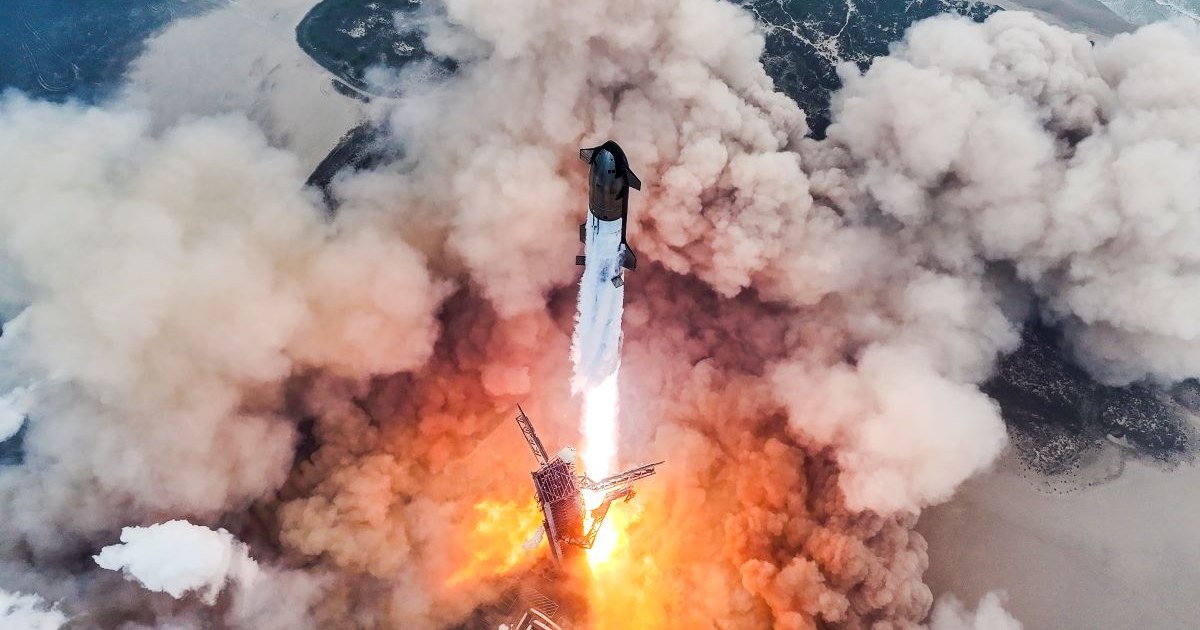
Elon Musk's company conducted the fourth test launch of the Starship rocket, the largest in history, from Starbase near Boca Chica, Texas, reports CNBC.
Minutes after launch, the rocket's booster successfully crashed into the Gulf of Mexico, a major new achievement for its development. It's the first time SpaceX has managed to recover an entire propellant — such a controlled maneuver is critical to the company's goal of being able to launch and land periodically, a practice it has made routine with its Falcon 9 rockets.
Starship is both the tallest and most powerful rocket ever launched. Photo X/ Space X
About an hour after launch, the rocket resisted re-entry into Earth's atmosphere, and the company confirmed it crashed into the Indian Ocean to end its mission.
“Landing confirmed!” announced SpaceX on the X social network.
Shortly after the mission ended, NASA Administrator Bill Nelson congratulated SpaceX on its progress.
“We're one step closer to getting humanity back to the Moon via Artemis – then we're looking to Mars”Nelson said in a social media post.
There were no people on board the spacecraft's fourth space flight. Company management has previously stated that SpaceX hopes to fly hundreds of Starship missions before the rocket has any crew on board.
SpaceX has carried out three more test flights, respectively in April 2023, November and March. With each of the test flights results were obtained, but the other three test launches were also accompanied by incidents.
The Starship system is designed to be completely reusable and is intended to be a new method of transporting goods and people into space. The rocket is also central to NASA's plan to return astronauts to the moon.
SpaceX won a multibillion-dollar contract from the agency to use Starship as a manned lunar landing module as part of NASA's Artemis program.
