
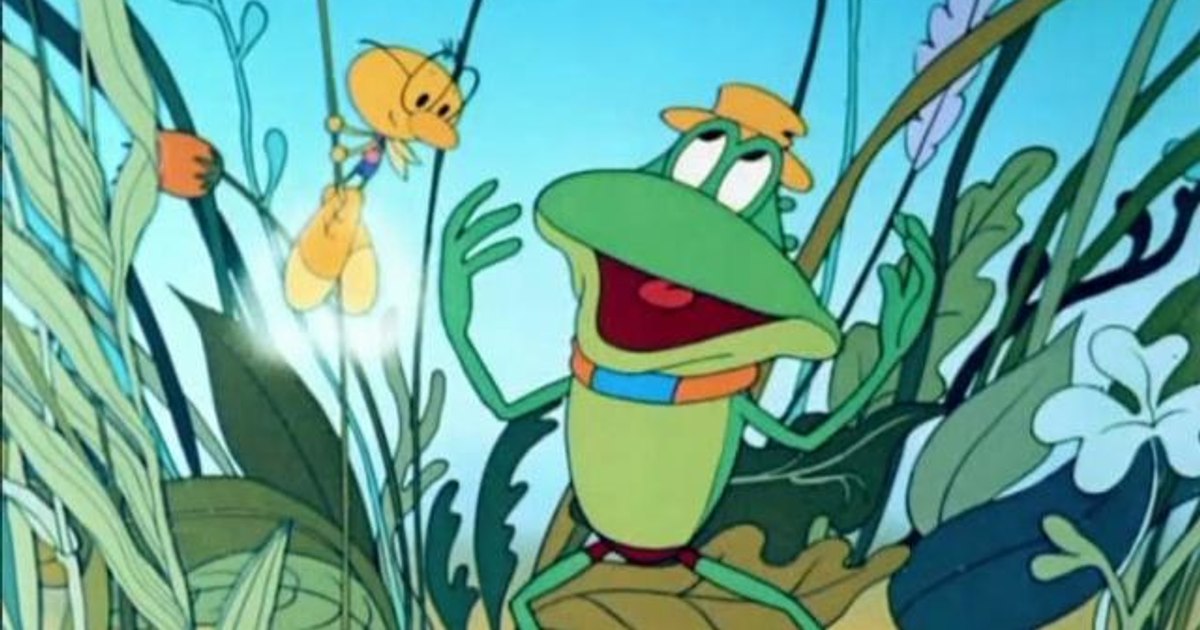
60 years after its establishment, the famous cinematographic studio Animafilm, through which both the cartoons that delighted the childhood of millions of Romanians, as well as the beloved slide films were made, has practically become a shadow of the institution that produced no less than 534 films – most of them also requested for export – only between 1971 and 1980.
Childhood cartoons produced by Animafilm. PHOTO: Facebook
In fact, Animafilm lives on only in name today. The last cartoon from the record of the studio founded on July 1, 1964, at the initiative of Ion Popescu-Gopo and Mihnea Gheorghiu, was made 20 years ago. It is about a five-minute film entitled “Un alt fel de Love Story”, commissioned by the Bucharest Public Health Directorate, in which Miaunel and Bălănel do sex education.
Animafilm does not even own the copyright on its most important films, all the films made until 1994 being in the public property of the Romanian State and under the administration of the National Center of Cinematography. The institution was reorganized in the form of a joint-stock company by Romanian Government Decision no. 53/1991 regarding the establishment of independent directors and commercial companies in the field of cinematography, and at the moment, SC Animafilm SA is controlled by the Ministry of Culture and National Identity, which holds 29,538 shares, respectively 68.54%, while the rest of the shares have were acquired by former employees in the mass privatization process.
Almost the only income that the company has obtained in recent years comes from the rent of the spaces in the two buildings it owns: the one in Strada Franceză no. 10 (built in 1935), respectively the IV, V, VI and VII floors of the building in Gabroveni Street no. 2 (built in 1946). The two buildings were not consolidated and did not undergo capital repairs. Moreover, Animafilm does not hold title to the land on which the buildings are located, as both were in claim processes based on Law no. 10/2001 regarding the legal regime of some buildings taken over abusively between March 6, 1945 – December 22, 1989.
Not even one movie a year
If between 1990 and 2001, Animafilm still produced 15 animated films, all strategies to revive the brand collapsed on September 11, 2002. Just when there were serious intentions regarding the privatization of the company! An audit carried out as a result of the request of the Authority for Privatization and Administration of State Participations to the Ministry of Public Finance established that Animafilm owes a tax of 90% on the income obtained from rents. The management of the institution did not appropriate this debt and contested the decision in court, requesting in the course of 2003 the Bucharest Court of Appeal to cancel the debt of 344,764 lei by formulating the exception of unconstitutionality of the provisions invoked by the Ministry of Public Finance. After going to the Constitutional Court, the case returned to the courts, and at the end of 2005, the last appeal contesting the decision was lost.

Miaunel and Bălănel, among the stars of Animafilm
From then until today, the debts have been increasing, reaching 1,368,639 lei at the end of the previous year, and the option of debt cancellation is difficult to consider at present, considering the European Union’s rules on state aid. However, in 2023, the company obtained approval from the National Agency for Fiscal Administration of a plan to restructure fiscal obligations, by postponing the payment of the amount of 1,117,883 lei. Today, the company has only one full-time employee, the general manager Elisabeta Covaliu, who could not collect her salary, however, due to the difficult situation the company is going through. This while dozens of animation artists from the few private Romanian studios work, however, for large and small European companies, sometimes for 3D productions, and others are spread across different countries of the world.
However, Animafilm managed to create its own website in 2023, and on paper the plans to save the brand look very good: the creation of social media channels, to increase exposure and monetize activities, the creation of a modern production studio, which participate in competitions organized by the National Center of Cinematography, as well as creating an animation school for children.
A Palme d’Or, the cornerstone of Animafilm
Prominent personality of Romanian animation, Victor Antonescu (88 years old) was one of the basic creators of the Animafilm studio, being the director of the first Romanian animated feature film, “Robinson Crusoe”, but also of the beloved series “The Three Musketeers”, ” The New Adventures of the Musketeers” and “DELTA Space Mission”. “For me, the physical contact with the animated film began, literally, in 1961, when, after graduating from the animation courses initiated by the Cinematographic Production Center in Buftea, I was employed with two other colleagues in the animation department, which then occupied several rooms in the combined filming set. The one who had the idea of establishing an independent studio was Marin Pârâianu, who, taking advantage of the fact that Gopo had been awarded the “Palme d’Or” at Cannes and having the support of Mihnea Gheorghiu, the president of the Cinema Council, found understanding in the decision-making factors and , through the approval obtained on July 1, 1964 (no – Decision no. 482/1964 of the Council of Ministers regarding the establishment of the Animafilm Cinematographic Studio), laid the first brick for the establishment of the first Romanian animation studio”, recalled the venerable filmmaker. “At a certain point, Dumitru Popescu “God” gave the order to focus the entire production on films with hawks of the homeland and pioneers, ending once with “kittens and mice”. I think that if he had remained at the head of the Council of Culture and Socialist Education, the animated film would have disappeared as a cinematic genre in our country since then!”, says the director.
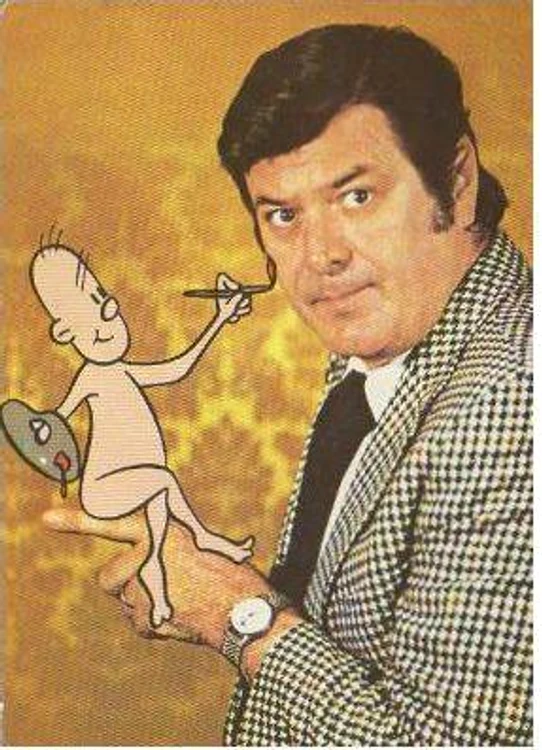
The little man and his creator, Ioan Popescu Gopo
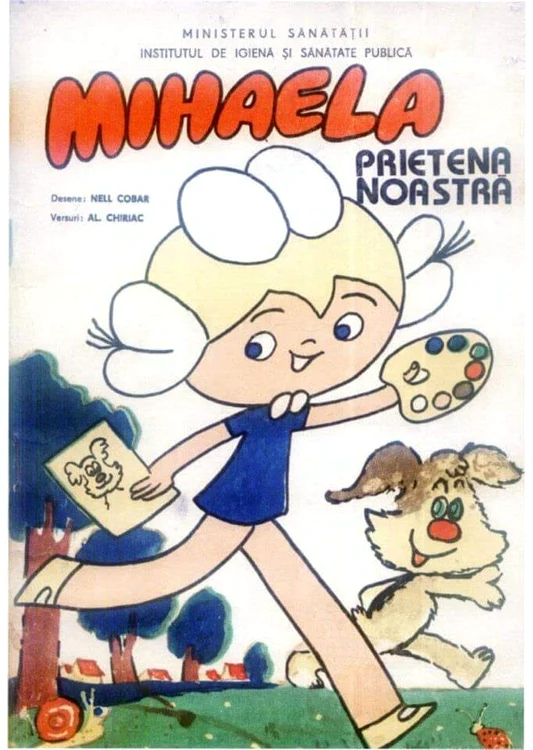
The impact was huge. If between 1951 and 1963 95 animated films were made, between 1964 and 1990, after the creation of Animafilm, 973 titles were made, and characters such as “Miaunel and Bălănel”, “Mihaela and Azorel” or “Pin- Pin” have been enjoyed by entire generations of children. In 1986 alone, for example, 60 films were completed, while between 1990 and 2000, the studio released only 56 titles. “The animated film was self-financed. To give you an idea of what Romanian animation meant, I can tell you that 40% of the currency obtained by the Socialist Republic of Romania from the export of films came from Animafilm productions. This in the conditions where an animated film costs about 300,000 lei, and a live-action film costs over 3 million lei”, recalled Victor Antonescu.
Anima International lived only one month
In 1991, the management of Animafilm tried to save the studio through an association with an Irish company, Daily Management Ltd. in Dublin. Thus was born, on May 6, 1991, Anima International, a Romanian-Irish joint venture with a capital of 5 million lei. Just one month after the young company started operating, coming with firm proposals for the production of animated feature films, the contract with the foreign partner was cancelled, following the intervention of Senator Sergiu Nicolaescu, on behalf of the National Cinematography Centre. “Attempts have been made to contract with foreign companies, but we don’t really have anything to offer them, with the exception of the Animafilm studio, which initiated such a contract, but it was stopped: it is said that dubious things would happen at this studio, both from a financial point of view and from the infiltration of the former Security”, noted Horia Pătrașcu in “Flacăra” magazine no. 32 (August 7-13, 1991), in the article “The state of Romanian cinema in two press conferences”.
Motanul Pusy, on the Bucharest ComicsFest stage
Created by Artin Badea and Zaharia Buzea, the motan Pusy was one of the most popular characters in the history of Animafilm, he could be found in the series “Meow and Bălănel”, “Pătrățel” and “Răzbunarea buldogului”, the feature film “Who laughs last” , even in some road education films. At the beginning of September, Pusy was brought back to the attention of the Romanian public by the creator of comics Octav Ungureanu, on the occasion of the exhibition of famous characters hosted by Bucharest, ComicsFest, the beloved event dedicated to lovers of Romanian comics.
The “Golden Pelican”, a victim of the “July Theses”
Another important moment, which put Romanian animation in a place of honor worldwide, was the establishment, in 1966, of the “Golden Pelican” International Animation Film Festival in Mamaia, which became the second specialized festival in the international hierarchy, after the Annecy Festival (France). “The inauguration of the biennial festival in Mamaia and its running in alternation with the one in Annecy will create for the first time a constant rhythmicity of world confrontations in the field of the eighth art. Integrated into the programs of the Council of the International Animation Film Association, entering the sphere of interest of other bodies of creators, producers and distributors of films, our festival, equally open to individual creators, aims to establish a new point of tradition on the map of life contemporary cinema. The filmmakers of the Animafilm studio in Bucharest, recently established and with a dynamic, growing production, are happy to consider themselves hosts of colleagues from over 40 countries, at a meeting that we wish to be of lasting usefulness, rich in satisfaction and full of by the luminous generosity of the Mamaia coast”, noted Marin Pârâianu in June 1966, in the preamble of the first edition of the festival. Unfortunately, only three editions were organized, the last one in 1970, the event being the victim of the “July Theses” 1971. Later, the license ceded by the Romanians was taken over by the Socialist Federal Republic of Yugoslavia. Thus, in 1972, Animafest Zagreb was founded, an international festival that still exists today.
The gap left by the disappearance of the “Golden Pelican” International Animation Film Festival from Mamaia was filled only with the appearance of the Anim’est International Animation Film Festival. Founded in 2006, the festival annually brings to the big screen hundreds of films from all over the world, in six competition categories, retrospectives, programs dedicated to famous animation schools, genre festivals, big names of the industry. Every year in October, Bucharest hosts film directors, producers, students, curators and journalists, who take part in discussions with the public, at premieres, hold workshops and master-classes, hold concerts and present new animated film projects. As of 2017, the winning short film of the Anim’est Trophy, chosen by a professional international jury, is among the eligible candidates for the list of nominations in the “Best Animated Short” category of the American Academy Film Awards. Of course, one of the most important missions of the festival is to revive local animation. The local competition within the festival has grown steadily since 2007, when it was launched, and in recent years Romanian animated films have been selected and awarded at major festivals.
