
Numerical illiteracy, more precisely the very low level of ability to understand, interpret and use mathematical information in everyday life, is among the students in an overwhelming proportion. It is the result of the most recent study of the Association for Education Values. In short, the Romanian students from the primary classes to the high school are “quarreling” with the figures, and the math is for many a total enigma. We are talking about a cruel reality and we have been facing for some time. Therefore, this conclusion of the study is not a surprise. However, a surprise is the way it can be interpreted.
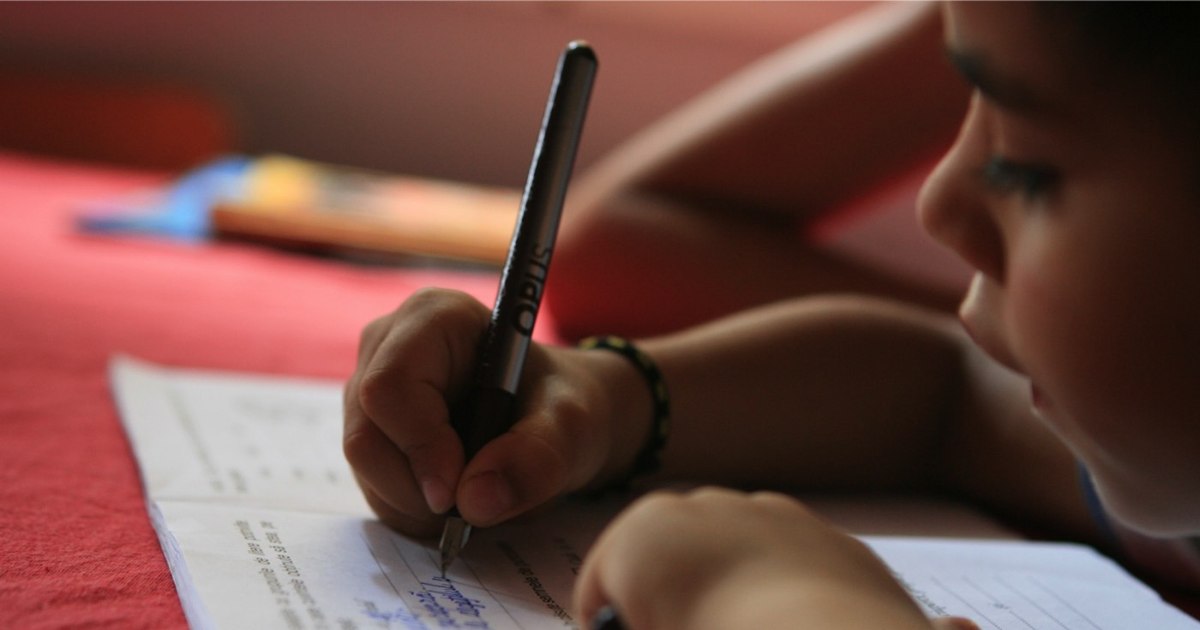
Romanian students, champions to numerical illiteracy. Archive
There are voices that claim that numerical illiteracy – spread as a plague among students of all ages – would not be the consequence of a deficient education system, but the low level of intelligence among children. Specifically, those in the rural area, where the figures are dramatic: according to the research Ave, if in the large urban the numerical illiteracy is 22.23%, in the rural it reaches almost 60%.
The correlation between the poor mathematics results of the children in the rural with their low intelligence level belongs to Andrei Caramitru, the son of the late actor Ion Caramitru, who posted on his page Facebook More personal conclusions. But Andrei Caramitru is in a serious error, he considers important voices in the system.
Andrei Caramitru’s full message
“A super detailed study of functional illiteracy. It is 45% in high school students (less in classes lower than there are simpler – 25% in primary school, 35% at gymnasium). Horror. Depending on the areas – you see below the situation (which is red is the hate). In the big cities it is as OK (similar to the western level). In villages, however – a clear majority are not functional. And they have 10 times less in the “Smart” cateogor than in cities. Do you know what this is? Fixed but fixed the distribution of IQ when the average IQ is 87 (reality from us) and it is considered that you are not functional below 85 and you have clinical problems below 75. It has no job with the educational system – it is the IQ distribution problem. This also explains the vote, and the underdevelopment of some rural areas, and the lack of economic activity in areas and sub -populations – explains practically everything. In short – we have a huge problem of IQ, structural – genetic, in villages ”, wrote Andrei Caramitru in a post on social networks.
Gelu Sunday: “A statement that has nothing to do with reality”
During the interwar period, he explained for the “truth” the sociologist Gelu Sunday, there was a current called eugenicism, promoted by the intellectuals of the times who said that the intellect of some is lower than of the others. At that time, there was talk about Romi vs. Romanian peasants. “Andrei Caramitru does nothing but take over an eugenist idea and transposes it today, with a clarification: it does not refer to Roma nor to the Romanian peasants, but to the students from the country and those from the city”, Explains the specialist.
However, continues the sociologist, Andrei Caramitru, when he issues such theories, does not take into account the reports of the European Commission, of World Bank, World Vision, UNICEF who shows us that the big problem is not the IQ of children, but the quality of the education they I receive from the school: “At the level of vulnerable communities, especially in rural environment, there is a much lower quality of education offered by the Romanian state. Quality that materializes by the quality of the teachers ”. Gelu Sunday said that they are much less prepared in the field in which they teach towards those who work in the educational institutions in Urban. On the other hand, children from the country do not have access to a 21st century educational infrastructure, as those in the big cities have. “Let’s just remember the banal heated baths and I said with it everything ”, says Sunday. Therefore, to say that students from the country would have a lower level of intelligence than those in the city has nothing to do with reality, the sociologist believes: “It is absolutely idiotic!”
The education system, for some mum, for others plague
How did children get from the country to have such weak school results compared to those in Urban? ” In Bucharest, let’s say, we have a lot nursery. There are only two in the country – and I mean here all the Romanian rural environment. This means that a child from the city acquires some skills, trains his motility, socialization ability, the ability to speak. This, compared to a child who does not have access to early education ”, says Gelu on Sunday.
Then, the sociologist continues, there are many kindergartens in the big cities. There is only one in a commune in the country. Therefore, while the parents in the city have the opportunity to choose the best for their child, those in villages do not have this freedom: “We no longer count that the kindergartens in the urban come with all kinds of educational offers and extra activities, while in the village the child is stored there and with that basta ”. At school we hit the same recipe for guaranteed failure. “In the city the parent has the opportunity to choose the child’s school. We do not discuss the methods here, the idea is that if he wants to. However, there is only one school in the country. Moreover, parents in Urban can take their children to various swimming clubs, dances, football .. Children can go to a museum, they can enter a library .. I am going to reading, robotics, IT..la The country does not happen the same thing. ”
The conclusion is obvious: a child from the city is infinitely more likely to develop faster and more complex than one from the village. And one more aspect: it matters enormously the model that children follow in the family: “While Mr. Caramitru’s children interact with educated people, they revolve in such an environment, children from the country have parents who go to the summer in the field and for which the most beautiful thing is to be households. The girls in the country are often prepared to become housewives, while the girls in the city want to be doctors. Here is the difference. ”
The sociologist explains that we offer these children only crumbs and remains, and then we consider them guilty for what happens to them: “When, in fact, the fault is the system, not theirs. ”
“It is a profoundly discriminatory theory and has no real basis. We do not face an intelligence deficit among these students, but with a problem of resources allocated discriminatory by the state in the educational system. Everything is reduced to the quality of education ”, added the sociologist.
The director of a school from the village: “Poverty, the reason for the school failure”
Delia Petran, a Romanian language teacher and the director of the Gymnasium School in Dobrin, Sălaj county, told “Adevărul” that Andrei Caramitru’s statements start from the beginning from a wrong premise: “The main cause that thickens the red thread of the Ave ratio in terms of numerical illiteracy among the students in the rural is poverty. Then we are also talking about a precarious education of the family from which these children come. Illiteracy is not related to IQ. I, for example, had in the classroom Roma children (in total we have about 30%) who entered the school without any knowledge bag, but they finished them with great
The teacher believes that the failure of the children is the consequence of the lack of state involvement in their education, not the fact that they would have a lower IQ than those in Urban: “It would be necessary for teachers to be supported in managing the situations of children with CES, you would need to have access to more free resources for differentiated teaching, it would be necessary to implement programs that prevent and stop school dropout: Students who stay away can come to school an hour later, local authorities to provide minibuses, schools to buy minibuses with money from donations To attract, the hot meal to address all children, the school after school program to work. ”
Mathematics teacher: “Much theory, practice not at all”
Children in the rural area do not have a smaller IQ than those in Urban – it is also the comment of Mathematics Professor Romeo Zamfir, the director of the National College “Vasile Alecsandri” in Galați: “I have not studied in this regard, I tell you this only from my experience as a math teacher. Students with weak results in this subject, those who are said to be numerically illiterate, get these results for completely different reasons. Many of these students come from families who do not have a solid education. Therefore, many of these parents do not support their children in this direction. ”
Buba leaves the family, from the environment in which these students live and develop, but the school does not help. “The system itself does not get sufficiently involved,” continues the teacher, who refers to the fact that the teachers in Urban are more qualified than those in the rural. “Good teachers, in general, are away from reaching schools in villages or common. Here, usually, they arrive in their first years of education, when they do not know what experience. There is, therefore, a weaker quality of teaching in the rural ”, add it.
Then, says Romeo Zamfir, the current education system is very insisted on the theoretical side, and the practice is completely missing; “The children find it difficult to apply in practice what they learn at school. Therefore, he considers that a change in school programs would be needed so that teachers can go down or raise the stake according to the performance of each child, as far as he can lead. “
